Unfortunately, we don't support Internet Explorer anymore as it has been replaced by Microsoft Edge.
Please try downloading Microsoft Edge or an alternative modern browser for the best experience.
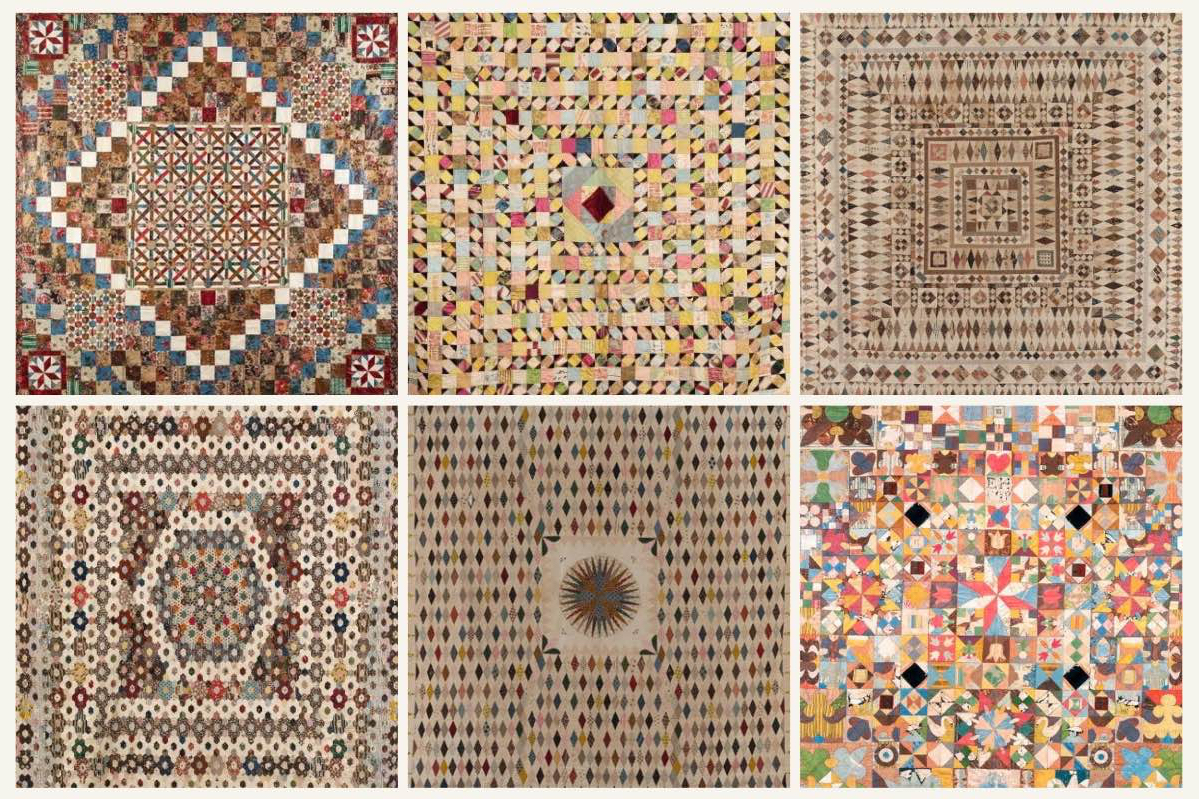
Stitched Into History: Six Remarkable Coverlets from The Quilt Collection
The Quilt Collection, cared for by The Quilters' Guild, holds extraordinary examples of British patchwork and quilting, preserving centuries of creativity, craftsmanship and textile history.
Among these treasures are coverlets that have survived for hundreds of years. Some were made to mark important occasions, others were passed down through generations, and a few still hold mysteries that researchers are working to unravel.
We've selected six remarkable coverlets, dating from the early 18th to the mid-19th century, each offering a fascinating glimpse into the past.
1718 | Maker unknown
Imagine creating something so intricate that, more than 300 years later, people are still studying and admiring your work.
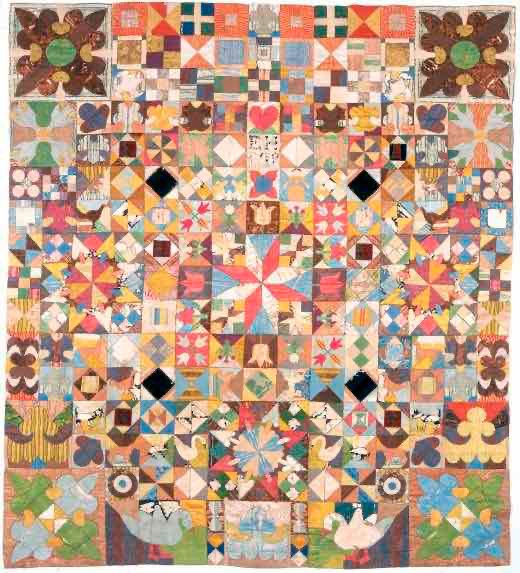
The 1718 Silk Patchwork Coverlet is one of the earliest known dated examples of British patchwork. Made using the mosaic technique of piecing fabric over paper templates, it features an extraordinary assortment of designs.
Look closely and you'll find people, flowers, hearts, pheasants, deer, cats, swans and even a lion and a unicorn. Alongside these are carefully arranged geometric patterns, each contributing to a wonderfully varied design.
At the centre of the coverlet are the initials 'E.H.' and the date 1718.
But who was E.H.?
Despite research, the maker's identity remains unknown. Before joining The Quilters' Guild Collection in 2000, the coverlet belonged to the Brown family of Aldbourne in Wiltshire, but no further information about its origins has been uncovered.
More than three centuries after it was stitched, the coverlet continues to demonstrate the imagination and technical skill of its unknown maker.
1720–1750 | Maker unknown
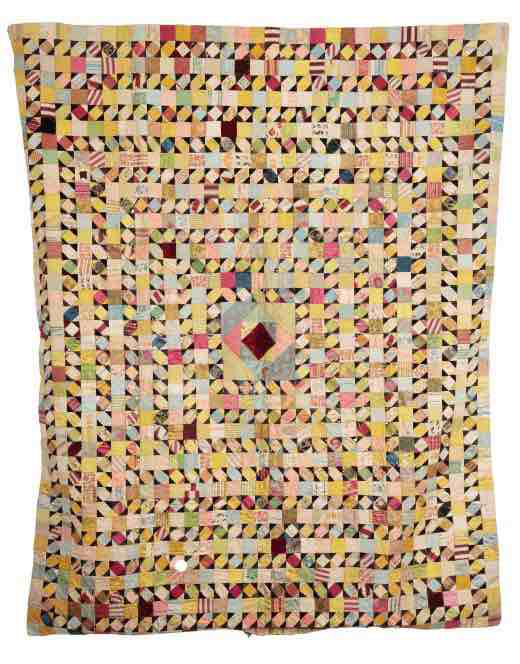
With its richly coloured silks, metallic threads and striking geometric arrangement, the King George Silk Patchwork Coverlet is a remarkable example of early 18th-century craftsmanship.
Its construction features alternating frames of squares, surrounding a central medallion of dark red velvet. Yellow is particularly prominent, alongside a wonderful variety of woven silks, striped fabrics, embroidered pieces and even early printed chintz cottons.
But it's the writing hidden among the fabrics that makes this coverlet especially intriguing.
One yellow silk features the words 'God Save King George', accompanied by a crown and the initials GR. These details suggest the fabric may have been produced to commemorate King George I, who reigned from 1714 to 1727.
Another silk contains incomplete lettering that may reference the monarch's title, Defender of the Faith.
Some fabrics appear to have been reused from garments or other textiles, offering a reminder that beautiful and valuable materials were often given a second life through patchwork.
Remarkably, the original paper templates remain inside the coverlet, providing a direct connection to the hands that assembled it almost 300 years ago.
1805–1810 | Maker unknown
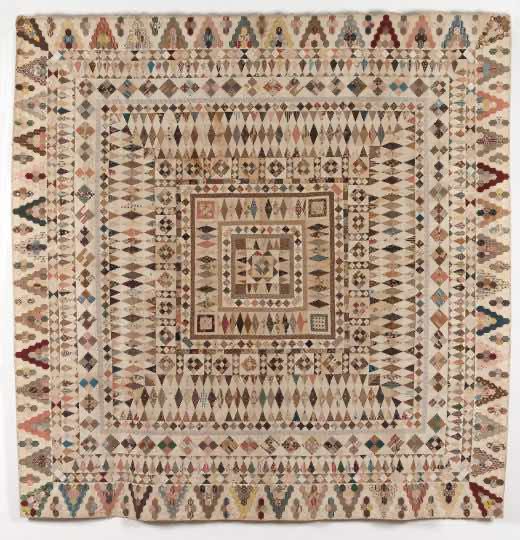
At first glance, the Billings Coverlet is a beautiful arrangement of geometric patchwork. Look a little closer, however, and it becomes something of a fabric archive.
Constructed from fifteen frames of printed cottons, it combines hexagons, squares set on point, kites and long diamonds formed from triangles.
Some of the fabrics date back to the 1770s, decades before the coverlet itself was made. Most are dress prints, although furnishing fabrics also appear throughout the design.
Several pieces retain three blue threads in their selvedges, a feature associated with British textile manufacturing regulations of the period.
The coverlet also has an interesting connection to Yorkshire.
It was passed down through the donor's family from her great-grandmother, who worked as a housekeeper in a large house in the Leeds area.
Although we don't know who originally stitched the coverlet, its survival through generations of one family has preserved an extraordinary record of fabrics and fashions from the late 18th and early 19th centuries.
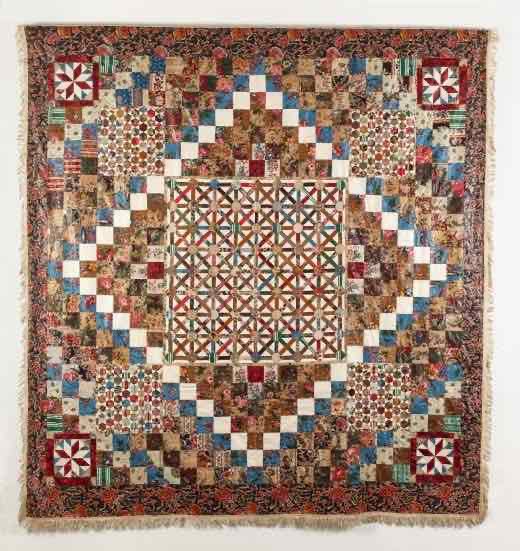
1820–1850 | Maker unknown
Not all historic patchwork was made using dress fabrics or silks.
This striking coverlet demonstrates the decorative possibilities of furnishing cottons, bringing together a variety of printed fabrics in an elaborate geometric arrangement.
Its central design features a pieced circle and lattice pattern, surrounded by squares arranged in a variation of the traditional 'Trip Around the World' design. Hexagons and diamond stars appear in the corners, while a floral border and white fringe complete the piece.
One particularly interesting detail is the remarkable condition of the fabrics.
Many still retain their original calendared finish, a treatment in which fabric is passed through rollers to produce a smooth, glossy surface.
Almost two centuries later, that sheen remains visible.
It's a wonderful reminder that the appearance and texture of historic fabrics could be just as important to a maker as their colours and patterns.
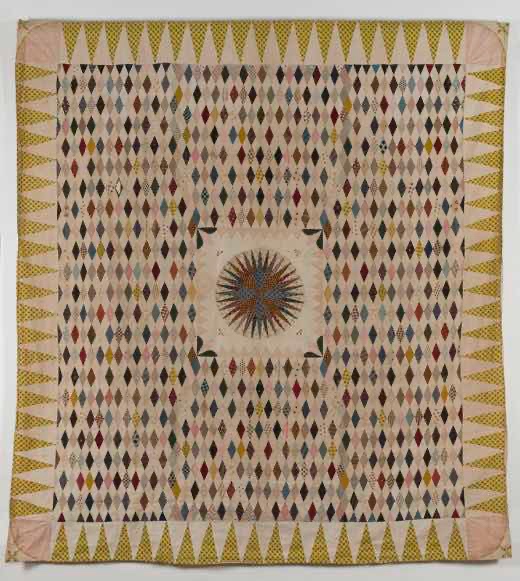
1820–1829 | Made by Mary Dennis Cann
Of the six coverlets featured here, this is one for which we know a great deal about the maker's life.
Mary Dennis was a farmer's daughter from Devonshire who created this beautifully constructed coverlet as part of her dowry before marrying Richard Cann in 1828.
The design centres around an intricate Mariner's Compass, assembled from carefully pieced diamonds in a wide variety of printed cottons, with a border of triangles surrounding the composition.
Mary and Richard went on to have seven children: six daughters and a son.
Sadly, Richard died of typhoid fever in 1842, leaving Mary with a young family to support. They moved from their farm to Hartland village, where Mary established a drapery and grocery shop.
She continued running the business for the next 50 years, until her death in 1891 at the age of 92.
The Guild holds five quilts associated with the Dennis Cann family. It is believed that Mary, possibly assisted by her daughters, made the other four.
This coverlet is particularly special because we can connect the extraordinary craftsmanship to the life of the woman who made it. What began as part of her preparations for marriage survived through decades of family life, loss and remarkable resilience.
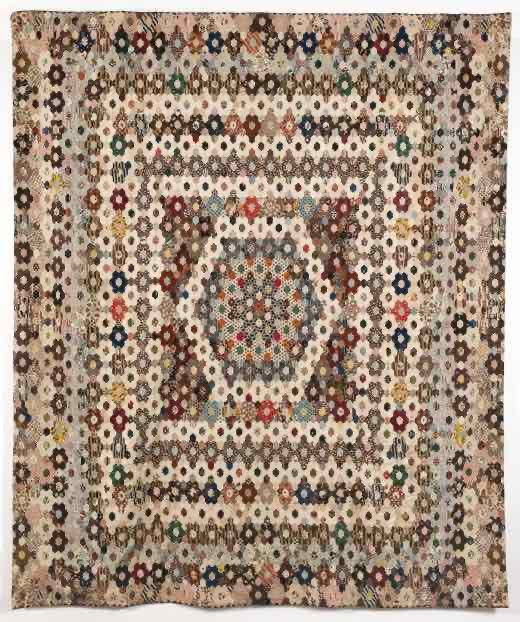
1803–1815 | Made by Mary Prince
The Mary Prince Mosaic Coverlet is visually spectacular, with its complex arrangement of elongated hexagons carefully organised by colour and tone.
It demonstrates exceptional skill in both stitching and design, but what makes it particularly fascinating is a mystery surrounding its date.
An embroidered date of 1803 appears on linen tape on the reverse. For many years, this seemed to offer a straightforward indication of when the coverlet was made. However, research by the British Quilt Study Group revealed something rather unexpected. Several fabrics contain three blue threads in their selvedges, a feature used by British manufacturers between 1774 and 1811 to demonstrate that their fabrics qualified for certain tax exemptions.
More intriguingly, some fabrics in the central section were produced using a printing technique known as Lapis printing, which wasn't invented until 1808.
So how could a coverlet dated 1803 contain fabrics produced using a technique that didn't yet exist?
Researchers have proposed two possible explanations.
Perhaps Mary Prince deliberately incorporated newer, more fashionable fabrics into the centre of the coverlet, creating a striking focal point.
Alternatively, the central section may have been replaced at a later date, perhaps because the original had become damaged.
We may never know for certain.
What we do know is that detailed textile research has revealed a far more complicated story than the embroidered date initially suggested.
The coverlet also has a more recent chapter in its history.
For many years, its fragile condition prevented it from being displayed or made available to researchers. Thanks to funding from the AIM Pilgrim Trust Conservation Grant, The Quilters' Guild was able to arrange professional conservation, helping to safeguard this remarkable piece for future generations.
These six coverlets represent only a small part of The Quilt Collection, but together they illustrate why preserving historic textiles matters.
They reveal changing fashions, developments in fabric manufacturing, extraordinary technical skills and personal histories that might otherwise have been forgotten.
Some, like Mary Dennis Cann's Mariner's Compass Coverlet, give us a glimpse into the lives of their makers. Others, like the 1718 Coverlet, leave us wondering about the people behind the stitches.
And pieces such as the Mary Prince Coverlet remind us that there is still much to learn, even from textiles that have been studied for generations.
The Quilters' Guild is committed to conserving, researching and sharing these important pieces of our textile heritage, ensuring their stories can continue to be explored and enjoyed.
Discover more of the extraordinary textiles in our care by exploring The Quilt Collection.

Meet quilter and quilt judge Liz Coleman, and discover why hanging sleeves and quilt labels matter ahead of The Quilters' Guild January Online Retreat.
Meet textile designer and quilter Jan Bevan, discover her creative journey and explore Florence, her travelling sewing caddy workshop for Guild members.
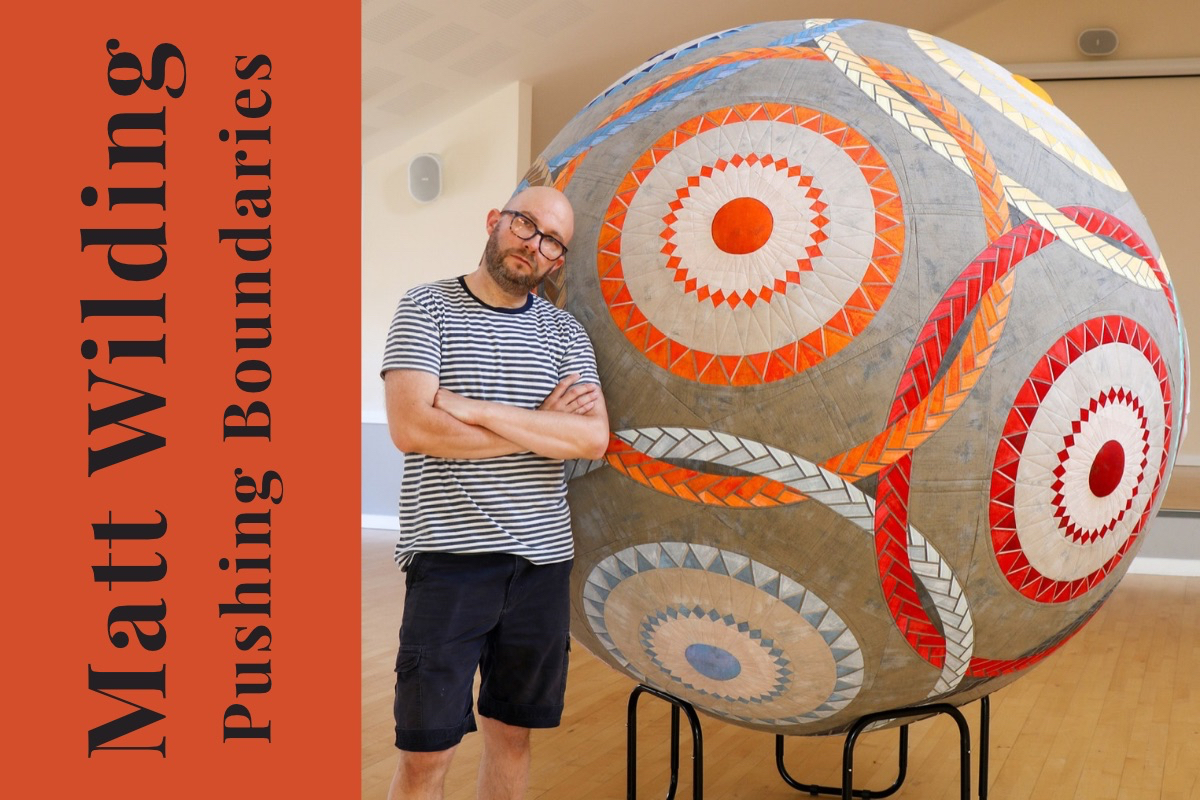
Discover textile artist Matt Wilding's extraordinary 3D quilting, from giant quilted sculptures to wearable art, and his creative journey into quilting.