Unfortunately, we don't support Internet Explorer anymore as it has been replaced by Microsoft Edge.
Please try downloading Microsoft Edge or an alternative modern browser for the best experience.
Discover how The Quilters' Guild conserves historic quilts, why old repairs matter, and what four remarkable pieces from The Quilt Collection reveal about preserving our textile heritage.
When we look at a historic quilt, we often admire its intricate stitching, beautiful fabrics and the skill of its maker. But look a little closer, and we might also notice faded colours, worn patches, fragile seams or evidence of earlier repairs.
Why not simply replace the damaged fabric and make the quilt look new again?
The answer lies in the difference between restoration and conservation.
Historic quilts are more than decorative textiles. They are records of the materials, techniques and lives of the people who made and used them. Their imperfections, alterations and signs of wear can all contribute to our understanding of their history.
At The Quilters' Guild, caring for The Quilt Collection means balancing the preservation of these historic objects with the need to protect them from further deterioration.
Four pieces from the Collection help illustrate why this work matters.
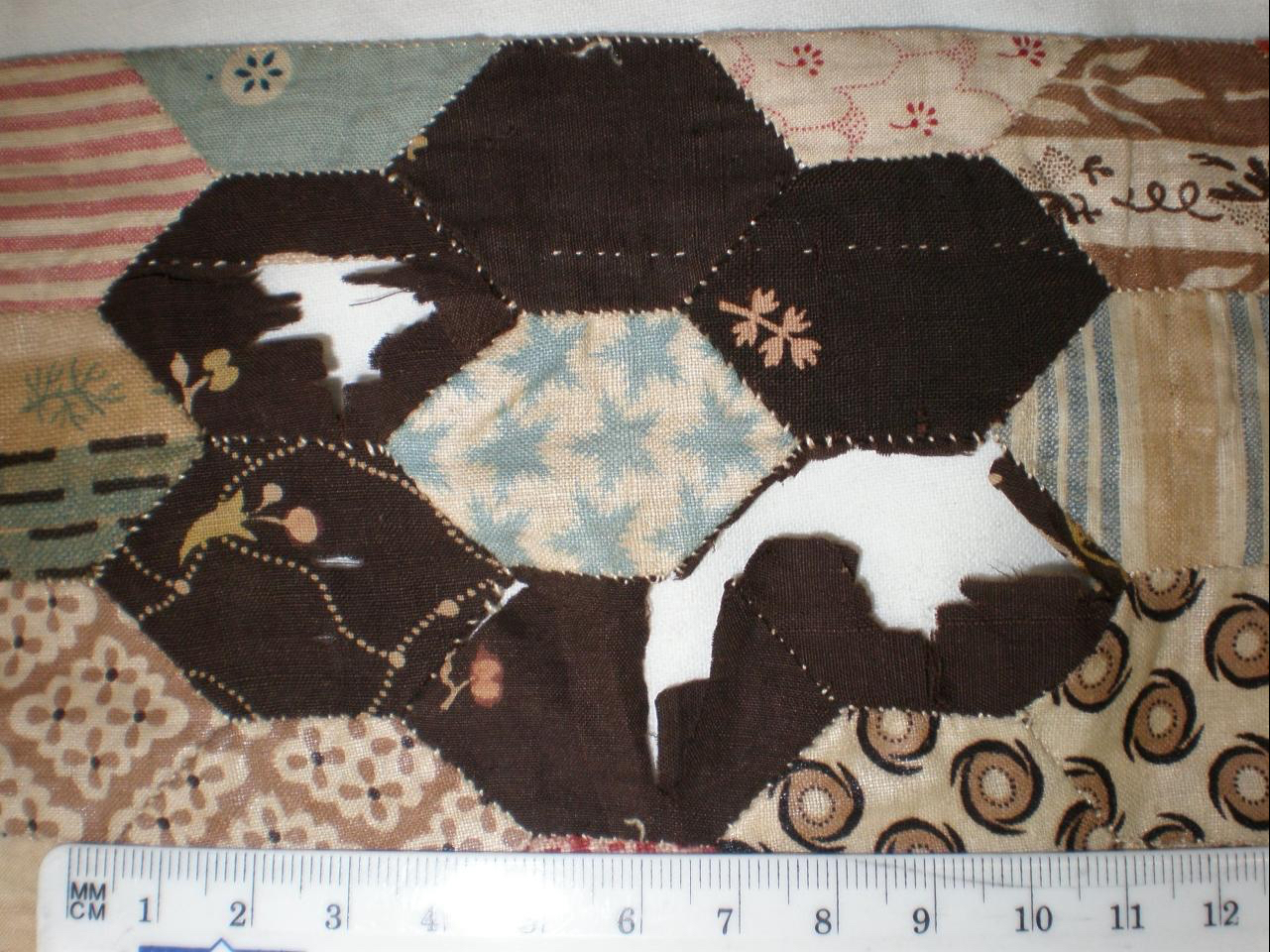
Mary Prince Mosaic Coverlet - before conservation
Dating from approximately 1803–1815, the Mary Prince Mosaic Coverlet is an extraordinary example of English paper piecing.
Its complex arrangement of elongated hexagons features printed fabrics from the late eighteenth and early nineteenth centuries, carefully organised by colour and tone.
However, its age and fragile condition once meant the coverlet could not be safely displayed or made available to researchers.
With support from an AIM Pilgrim Trust Conservation Grant, the Quilters' Guild arranged for professional conservation.
Where original fabrics had completely disintegrated, suitable fabrics from the same period were matched and inserted to help stabilise the piece and improve its appearance.
The work was carried out using reversible conservation methods, allowing interventions to be undone if necessary.
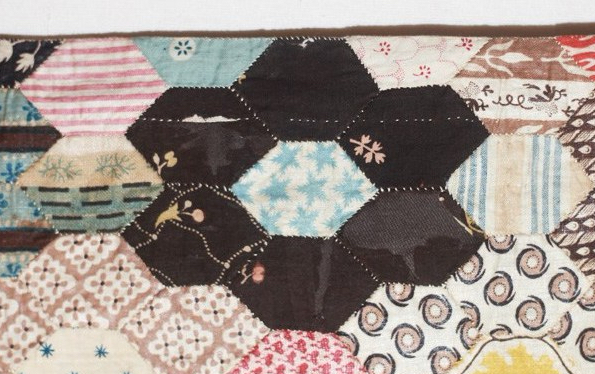
Mary Prince Mosaic Coverlet - after conservation
This demonstrates an important principle: conservation does not necessarily mean leaving every damaged area untouched. Carefully considered intervention can help protect an object while respecting its historic character.
The Mary Prince Coverlet also demonstrates why preservation matters for research.
Analysis by the British Quilt Study Group revealed that some fabrics were produced using a printing technique not developed until 1808, despite an embroidered date of 1803 on the reverse.
This has raised questions about when different sections were made and whether the central section was altered later.
Preserving the coverlet allows these questions to be investigated further.
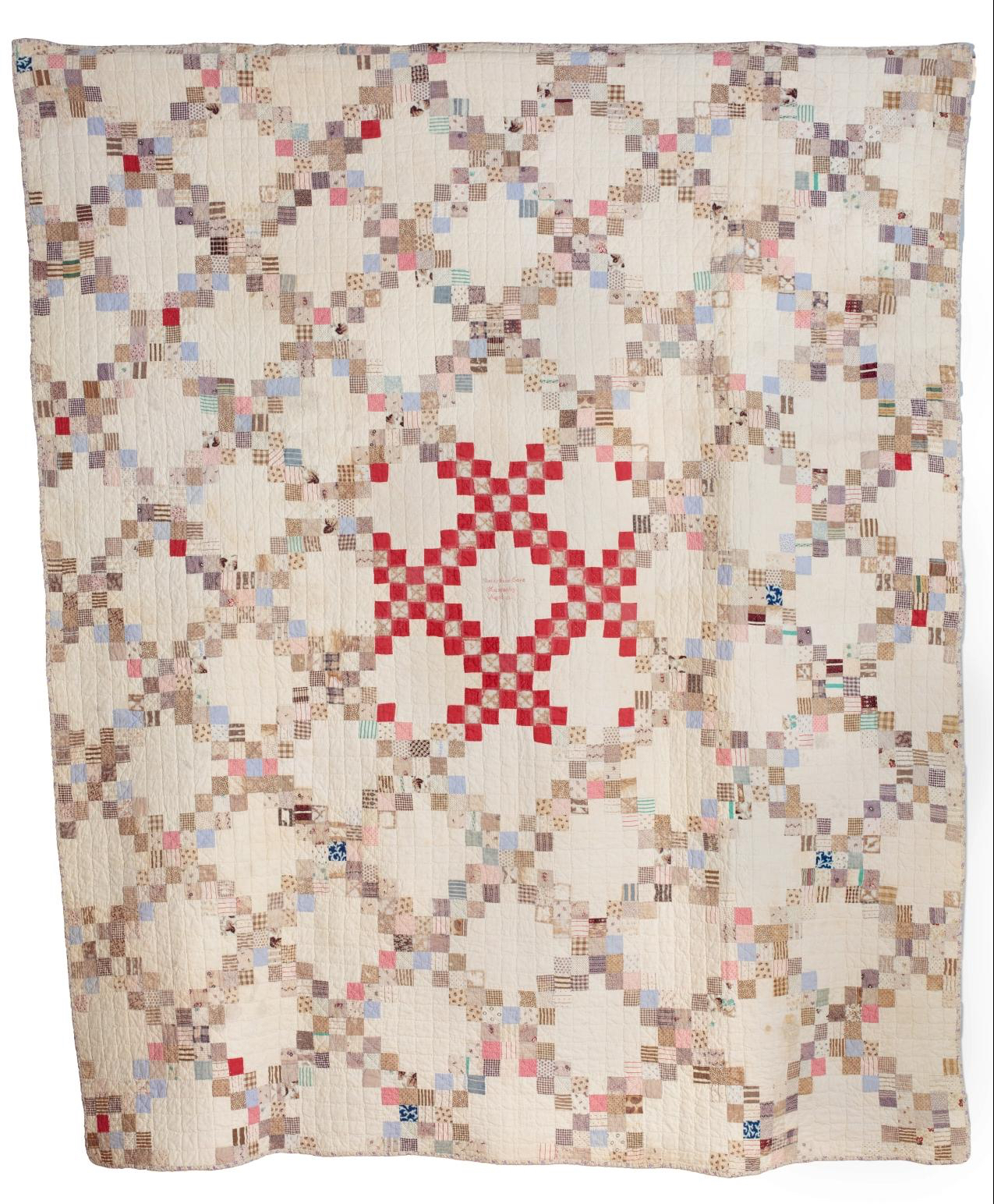
Betsy Cope Quilt
In 1872, thirteen-year-old Betsy Jane Cope of Hunmanby, Yorkshire, completed a double Irish Chain patchwork quilt.
Made from a variety of printed cotton fabrics, with Turkey Red squares forming a distinctive central design, the quilt also includes an embroidered inscription identifying its young maker.
Over time, some of its brown cotton prints deteriorated.
In 2019, one of The Quilters' Guild's conservation volunteers worked on the quilt, applying fine conservation netting to stabilise the fragile areas.
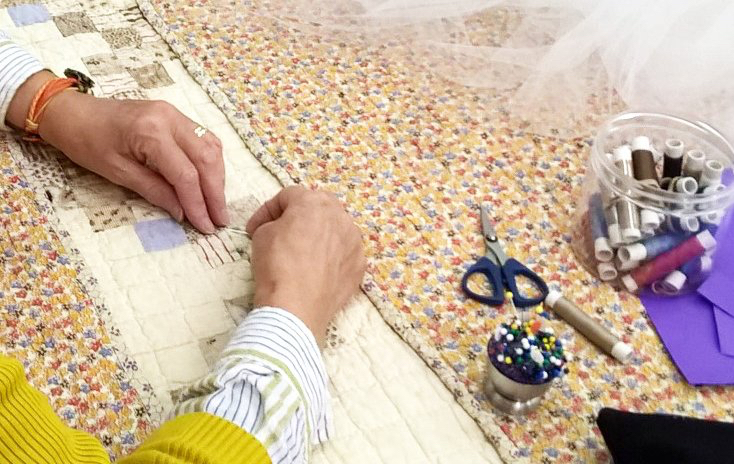
Conservation work on the Betsy Cope Quilt
The netting helps support the original fabrics without significantly changing their appearance. This allows the quilt to be handled and exhibited more safely while helping to prevent further damage.
Rather than replacing the deteriorating cottons, this approach retains the historic fabric and the evidence it carries.
It is a valuable example of how relatively unobtrusive conservation techniques can help safeguard an important piece of quilting history.
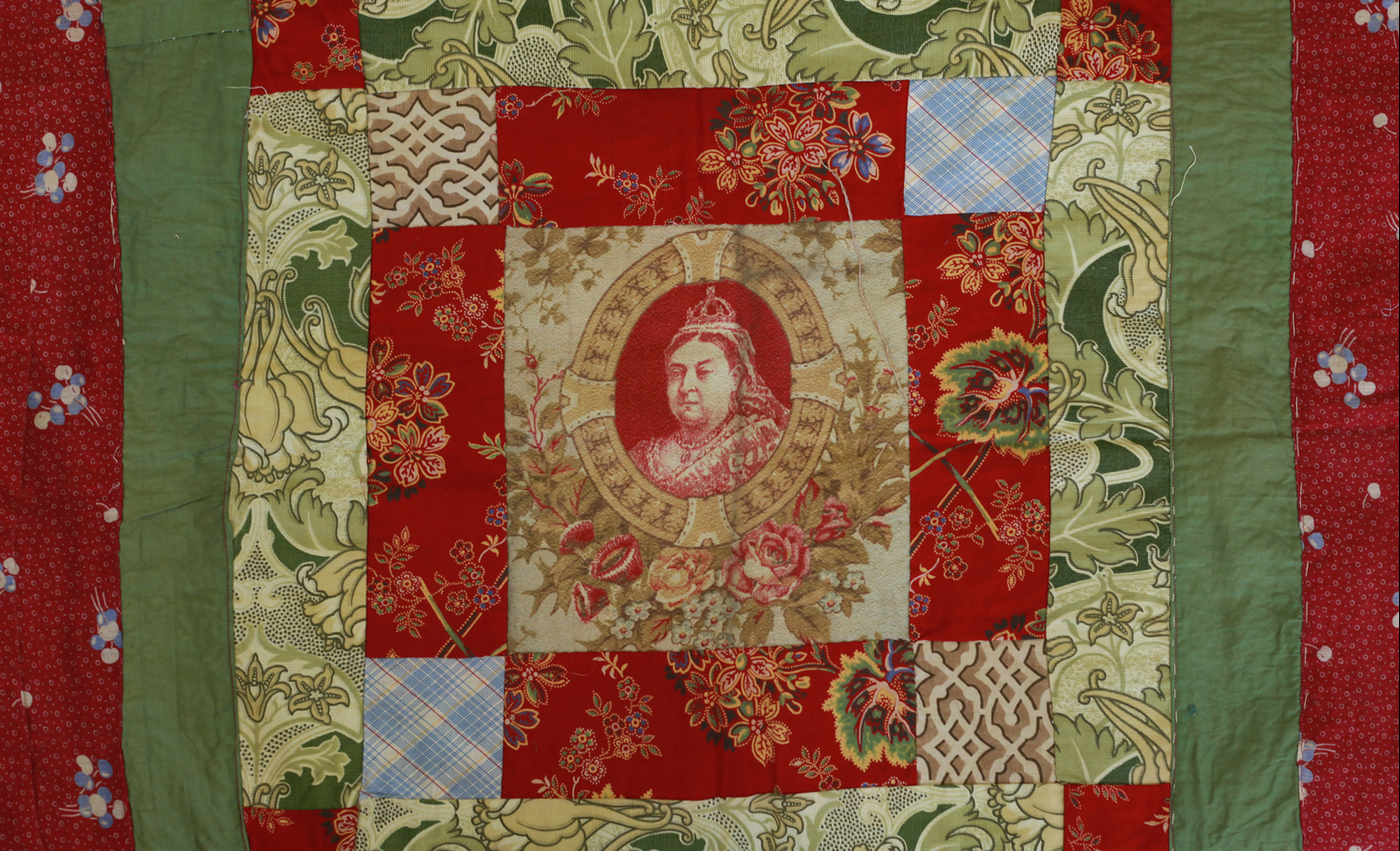
Queen Victoria Coverlet
Not every alteration to a historic quilt results from modern conservation.
The Queen Victoria Coverlet, dated approximately 1897–1920, features a central printed image of Queen Victoria, probably produced to celebrate her Diamond Jubilee in 1897.
Large patches of printed and plain cotton surround the central panel, sewn by machine.
These patches were likely added later, most likely as repairs.
From a modern perspective, the additional fabrics might appear inconsistent with the original design. However, they provide evidence of the coverlet's changing history.
Rather than removing them to recreate an assumed original appearance, preserving these alterations allows us to see how the textile may have been maintained and adapted during its lifetime.
The repairs are now part of the object's story.
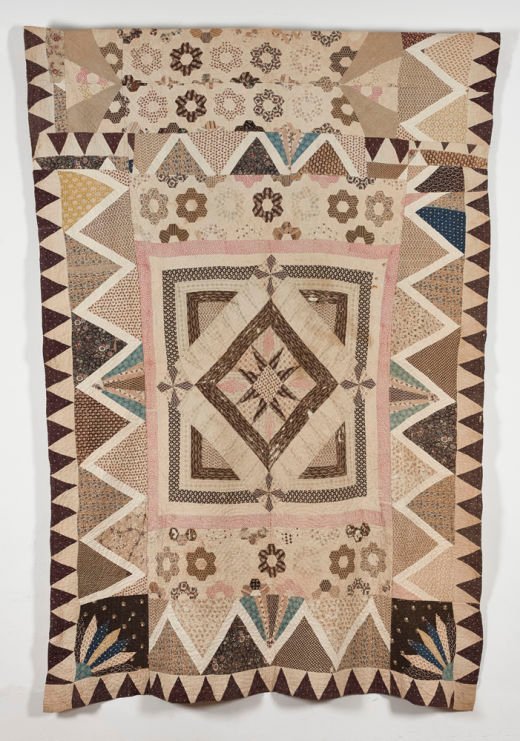
Brown Frame Quilt
The Brown Frame Quilt, dated approximately 1770–1820, is a hand-pieced and hand-quilted cotton quilt featuring browns, blues, pinks and creams.
Its quilting includes traditional North Country-style motifs, including cable twists, flowers, shells and diamond patterns.
Although originally hand-constructed, the quilt underwent substantial machine-sewn alterations after 1860.
Its side frames were removed and reattached at the top, possibly because of wear.
These changes offer insight into the quilt's practical life.
They also remind us that historic textiles were not necessarily static objects. Some continued to be used, altered and repaired long after their original construction.
Understanding these changes is part of understanding the quilt itself.
Textiles are vulnerable to damage for several reasons.
Many historic quilts were made for everyday use, so handling, washing, and wear could gradually weaken the fabric and stitching.
Environmental conditions can also affect their preservation.
Light exposure can cause colours to fade and fibres to weaken. Fluctuations in temperature and humidity may contribute to deterioration, while insects such as clothes moths and carpet beetles can damage susceptible materials.
Some fabrics are particularly vulnerable because of the dyes, treatments or manufacturing processes used in their production.
Conservation therefore involves more than repairing visible damage.
Appropriate storage, careful handling, environmental monitoring, and specialist treatment all help protect historic textiles for the future.
Each of these four quilts presents a different conservation question.
The Mary Prince Mosaic Coverlet demonstrates how professional treatment can stabilise an extremely fragile object.
The Betsy Cope Quilt shows how conservation netting can protect deteriorating fabrics without replacing them.
The Queen Victoria Coverlet and Brown Frame Quilt remind us that historic repairs and alterations can themselves provide important evidence.
Together, they demonstrate why making an old quilt look new is not necessarily the right approach.
A quilt's history exists not only in its original design, but also in the evidence of how it has survived.
The Quilters' Guild is committed to collecting, conserving, researching and sharing Britain's patchwork and quilting heritage.
The Quilt Collection provides an important resource for understanding historic textile techniques, materials and the people who made and used them.
Through the work of skilled volunteers, professional conservators, researchers and supporters, these objects can continue to be studied and appreciated by future generations.
Discover how historic quilts are conserved, why old repairs matter and how The Quilters' Guild protects four remarkable quilts.
Meet Katherine Gough and discover her research into Welsh quilting, her grandmother Sarah Marion Davies and the Rural Industries Bureau quilters.
Discover Julia Langley's creative approach to decorative machine stitches and join her for Stitch Bingo at the Quilters' Guild online retreat in January 2027.
