Unfortunately, we don't support Internet Explorer anymore as it has been replaced by Microsoft Edge.
Please try downloading Microsoft Edge or an alternative modern browser for the best experience.
Unfortunately, we don't support Internet Explorer anymore as it has been replaced by Microsoft Edge.
Please try downloading Microsoft Edge or an alternative modern browser for the best experience.
>Behind the Stitches, Quilt Collection>A Patchwork of Secrets: Ina MacRae and the Letters Hidden in Her Quilt
Hidden among the paper templates of a remarkable 1930s–40s patchwork coverlet are fragments of handwritten letters. Words such as "my own darling", "love" and "my dearest" offer a tantalising glimpse into the personal life of its maker, Ina MacRae.
But who wrote these letters, and why did they end up in her patchwork?

Measuring 199 × 219 cm, Mosaic Patchwork with Padded Centre is one of the more unusual mosaic patchwork examples in The Quilt Collection of The Quilters' Guild of the British Isles.
Its intricate geometric design is impressive in its own right, but the central circular medallion is particularly interesting. Unlike the surrounding patchwork, it is thickly padded, with a coarse, open-weave fabric on the reverse holding the wadding in place.
It is thought that Ina may originally have intended to make a cushion, before extending her work into a much larger coverlet.
The result is a wonderfully individual piece, reflecting both her creativity and the materials she had available.
Ina MacRae was born in 1904, one of three daughters of Scottish travelling draper John MacRae.
After her father's death in 1919, Ina moved with her mother, Alice, and sisters Anne and Joan from Colchester to Great Dunmow in Essex, where the family ran a haberdashery shop.
They returned to Colchester in 1933, and around this time Ina began working on her patchwork.
Drawing on materials from her scrap bag, recycled garments and remnants from the family business, she created an elaborate design that demonstrates the resourcefulness so often found in historic patchwork.
Every piece of fabric had a previous life, whether as clothing, an offcut from the shop or something saved for another purpose.
But the fabric wasn't the only material being reused.
Mosaic patchwork, often associated with English paper piecing, involves wrapping fabric around paper templates before stitching the pieces together. The papers are frequently removed once the work is complete, but unfinished pieces can preserve them, sometimes revealing fascinating details about their makers.
There's a romantic notion that historic patchwork was often made using old love letters. In reality, most surviving templates contain far more ordinary material: household accounts, schoolwork, printed documents and other unwanted papers.
Ina's coverlet is largely no exception. Many of her templates appear to have been cut from everyday printed papers, possibly recycled from clerical work.
But several pieces in the four corner blocks tell a different story.
Written in blue ink, fragments of handwritten correspondence contain affectionate phrases, including "my own darling", "love" and "my dearest".
Who wrote them? And to whom?
We may never know.
They could be expressions of affection between family members, or perhaps something more romantic. Without the complete letters, their meaning remains a mystery.
Yet their presence offers something special: a rare and unexpectedly personal connection to a woman whose life might otherwise be remembered only through the work she left behind.
Ina never married, although family history tells us that she was briefly engaged during the 1940s.
According to the family story, Ina broke off the engagement and may subsequently have lost enthusiasm for her patchwork, leaving the project unfinished with its paper templates still in place.
It's tempting to connect the handwritten letters with that broken engagement, but there is no evidence to establish such a link.
What we do know is that the unfinished coverlet has preserved something that might otherwise have disappeared.
The paper templates, which would ordinarily have been removed, remain part of the object and offer clues about the everyday materials, circumstances and perhaps even relationships that surrounded its making.
Historic quilts are often admired for their craftsmanship, colour and design. But they can also tell us about the people who made them, the resources available to them and the lives they led.
Ina MacRae's coverlet is a particularly moving example.
Its recycled fabrics speak of resourcefulness, its intricate construction reveals considerable patience and skill, and its surviving paper templates offer fleeting glimpses into a personal story we can never fully reconstruct.
We may never discover who wrote those affectionate words, but more than 80 years later, they remain carefully preserved among Ina's stitches.
And perhaps that is what makes this coverlet so compelling. It reminds us that behind every quilt is a person, and sometimes the smallest surviving details have the most interesting stories to tell.
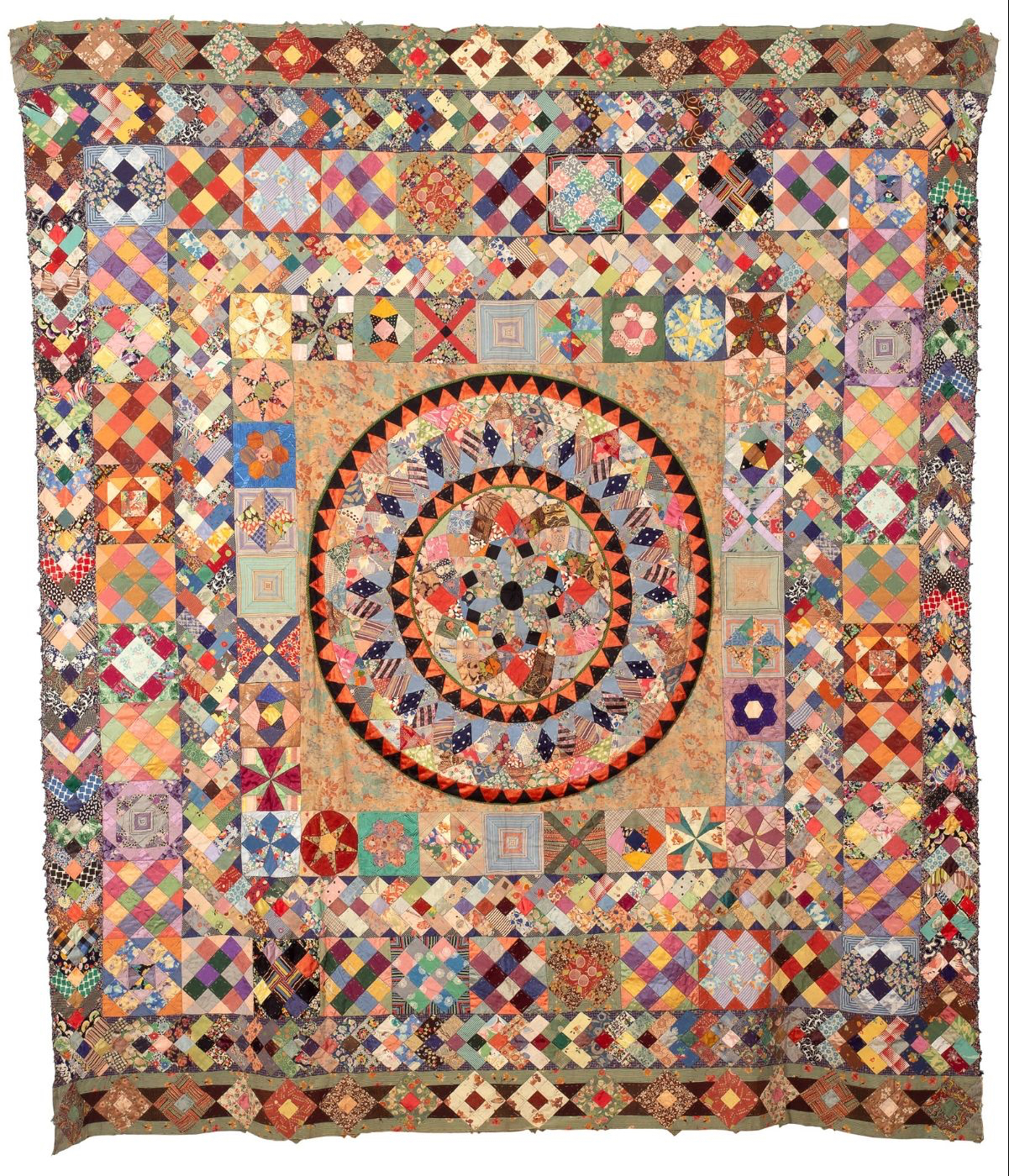
Mosaic Patchwork with Padded Centre (1930s–40s) by Ina MacRae is held in The Quilt Collection of The Quilters' Guild of the British Isles.
The coverlet's extraordinary geometric design has also inspired a new A5 notebook, featuring a reproduction of Ina's patchwork across its front and back covers.
Available from Quiltworks, the notebook offers a lovely way to celebrate this remarkable piece of quilting history while supporting the work of The Quilters' Guild.
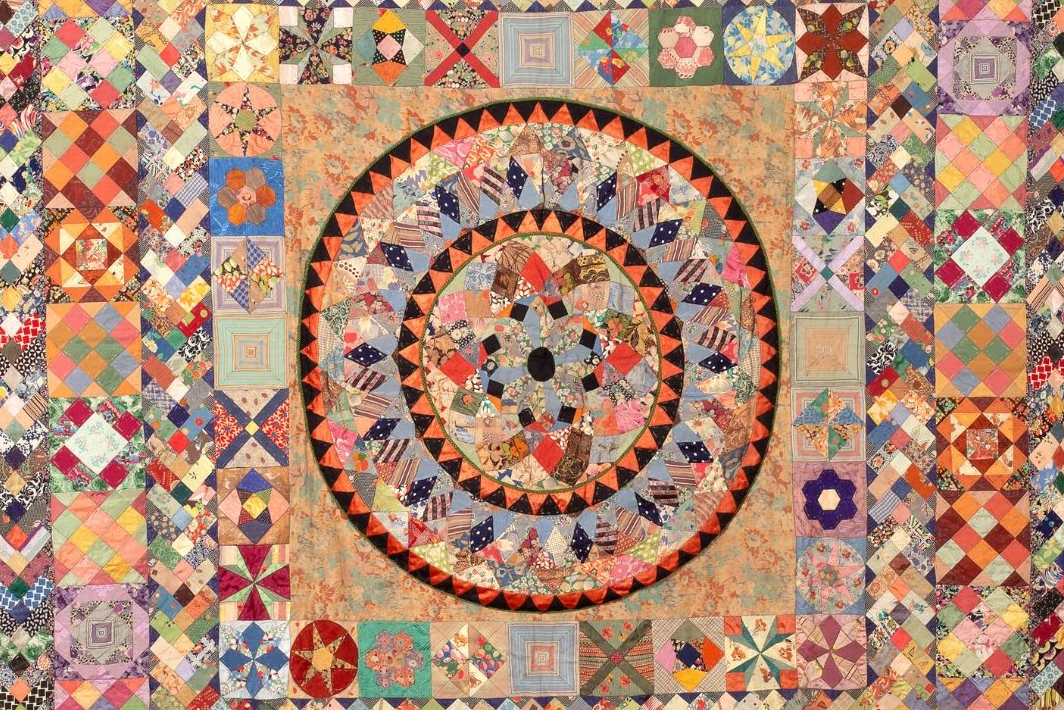
Behind the Stitches, Quilt Collection - 11th November 2026
Discover the story of Ina MacRae's 1930s patchwork coverlet, its intricate design and the mysterious handwritten letters preserved within its stitches.
Behind the Stitches, Quilt Collection - 4th November 2026
Discover how historic quilts are conserved, why old repairs matter and how The Quilters' Guild protects four remarkable quilts.
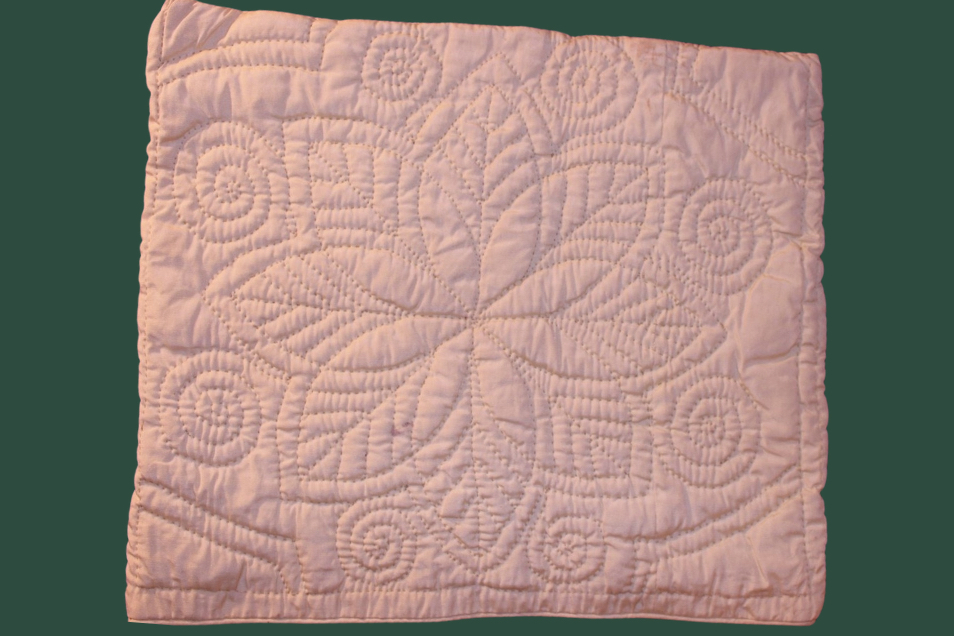
Annual Online Retreat, Behind the Stitches - 3rd November 2026
Meet Katherine Gough and discover her research into Welsh quilting, her grandmother Sarah Marion Davies and the Rural Industries Bureau quilters.
