Unfortunately, we don't support Internet Explorer anymore as it has been replaced by Microsoft Edge.
Please try downloading Microsoft Edge or an alternative modern browser for the best experience.
Quilting has never stood still. From its early practical beginnings to the diverse and expressive work seen today, the craft has continually adapted to the materials, needs and ideas of each generation.
Many of the quilts held in the Quilt Museum collection reflect this evolution - ranging from carefully structured traditional pieces to more experimental, contemporary designs. Rather than existing in opposition, modern and traditional quilting sit alongside one another, each offering a different perspective on the same craft.
Understanding how they differ, and where they overlap, can offer a useful way into both.
At its core, quilting remains unchanged. Whether traditional or modern, quilts are still made from layers of fabric stitched together for both function and expression.
This layered construction has been central to quilting for centuries, with early examples appearing across Europe and beyond before becoming widely established in Britain.
What has changed is not the structure itself, but how quilters choose to approach design, materials and technique.
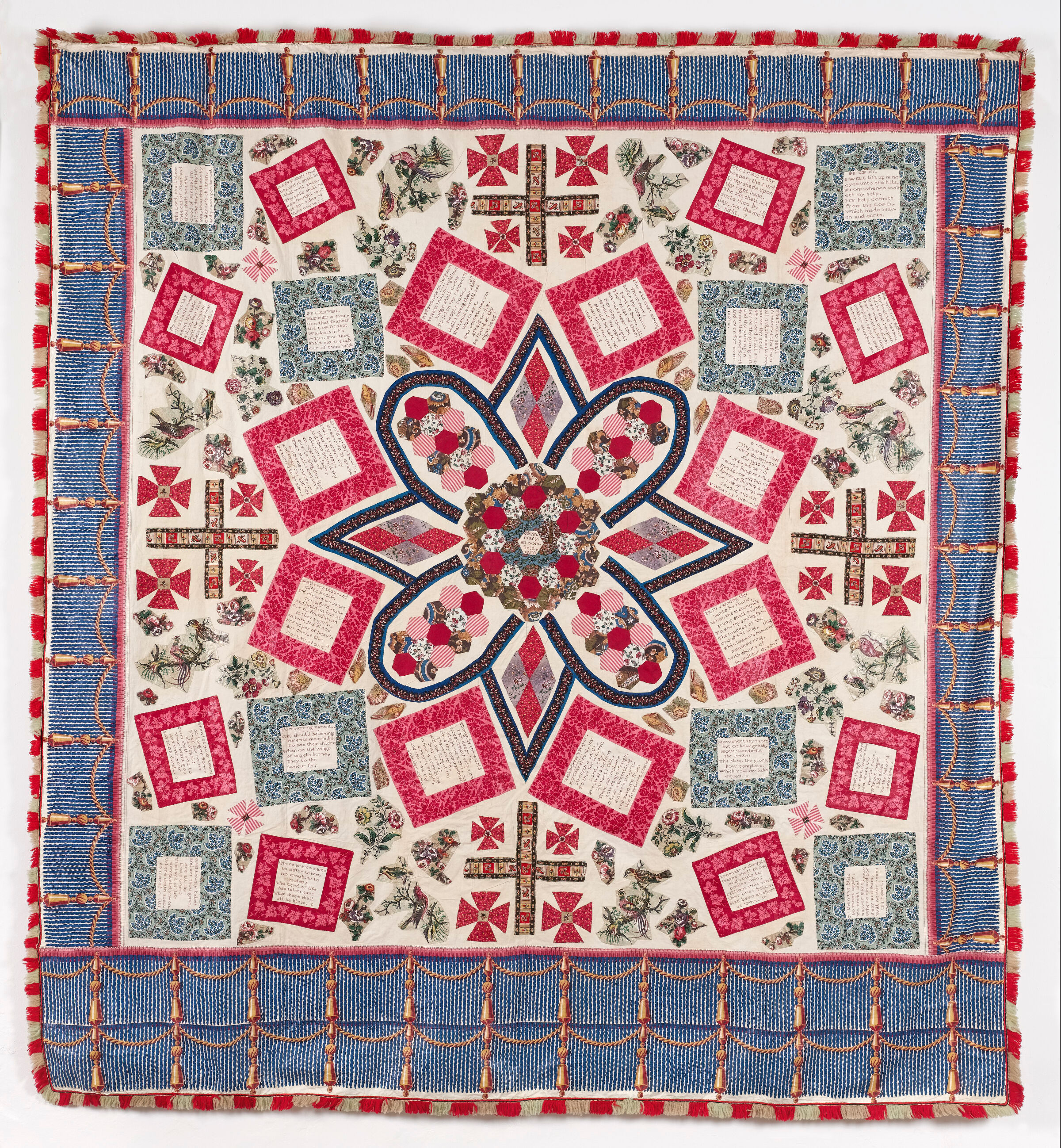
Edwin and Mary Bloomfield Coverlet 1850
Traditional quilting is often defined by its connection to established patterns and techniques passed down over time. Many well-known quilt blocks, such as log cabin or flying geese, have long histories, with designs often rooted in the 18th and 19th centuries.
These quilts tend to emphasise:
- symmetry and repetition
- structured layouts
- careful, consistent piecing
Historically, quilts were made for practical purposes - providing warmth, marking significant life events, or making use of available materials. Over time, they also became objects of decoration and storytelling.
Working in this way connects directly to the heritage preserved in museum collections, where patterns and techniques reflect both personal histories and wider social change.
This connection to heritage is also explored in stitching sustainably: reuse, recycle and repurpose.
Modern quilting, while still grounded in traditional techniques, takes a more flexible approach to design.
Emerging more visibly in the late 20th and early 21st centuries, modern quilting draws on influences from contemporary art, architecture and design.
It is often characterised by:
- bold colours and strong contrasts
- minimal or asymmetrical layouts
- the use of negative space
- improvisational piecing
Rather than following established patterns, modern quilting allows for greater individual expression. Designs may be simplified, abstract, or entirely improvised, with fewer constraints around symmetry or repetition.
This openness has helped attract new audiences to quilting, offering a way to engage with the craft that feels both current and personal.
In practice, the distinction between modern and traditional quilting is rarely absolute.
Many quilts combine elements of both - traditional block patterns reimagined in contemporary fabrics, or modern layouts built using established techniques. This blending is sometimes described as “modern traditionalism,” reflecting how fluid the boundaries between styles can be.
Even historically, quilting has always involved a degree of adaptation. As fabrics became more widely available during the 19th century, quilt designs evolved alongside them, reflecting changes in technology and access to materials.
In this sense, modern quilting is not a break from tradition, but part of its ongoing development.
Another point of difference lies in materials.
Traditional quilts often made use of available or repurposed fabrics, particularly in domestic settings. While not all historic quilts were made from scraps, many reflect a practical approach to fabric use.
Modern quilting, by contrast, may incorporate:
- newly produced fabrics
- bold prints and solids
- or even unconventional materials
However, the growing interest in sustainability has seen many contemporary quilters return to earlier practices - reusing and repurposing materials in ways that echo traditional approaches.
In terms of technique, both styles share many of the same foundations - piecing, appliqué and quilting stitches remain central across all forms of the craft.
What differs is often the approach:
- traditional quilting tends to prioritise precision and consistency
- modern quilting often allows for variation and experimentation
Neither approach is fixed. Many quilters move between styles depending on the project, combining careful structure with more intuitive making.
Quilting today reflects both continuity and change. While tools, materials and styles have evolved, the underlying principles remain familiar.
The Quilters’ Guild itself reflects this balance - supporting both traditional and contemporary quilting as part of a shared practice.
Rather than choosing between modern and traditional, many quilters find value in both - drawing on established techniques while exploring new ideas.
Modern and traditional quilting are best understood not as separate categories, but as part of the same continuum.
The quilts preserved in the Quilt Museum collection remind us that quilting has always adapted - shaped by available materials, cultural influences and individual makers. Today’s work continues that process.
In bringing together past and present, quilting remains what it has always been: a practical craft, a creative outlet, and a way of making meaning through fabric.
Victoria & Albert Museum – Quilting and patchwork
Heritage of quilting in Britain
History of quilting (overview)
Modern quilting characteristics (Modern Quilt Guild overview)
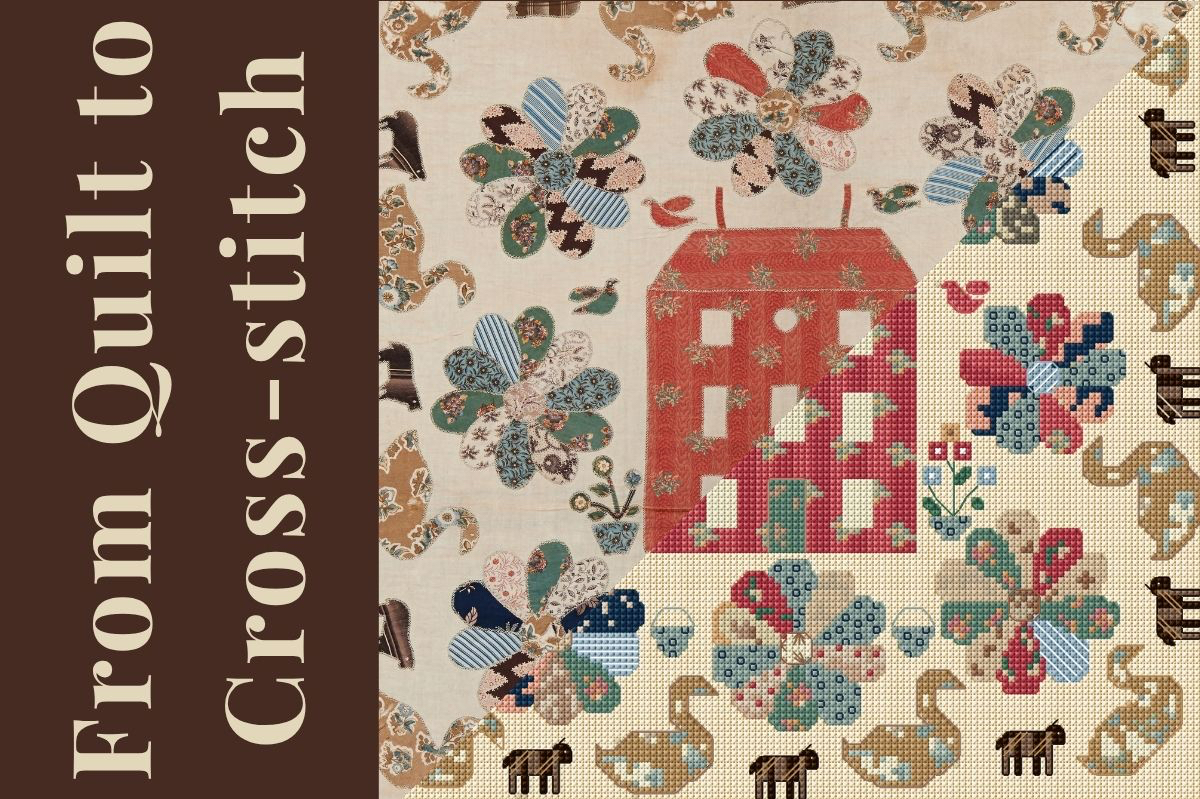
Discover how treasures from The Quilt Collection are being reimagined as cross-stitch and tapestry patterns, bringing historic textiles to today's stitchers.
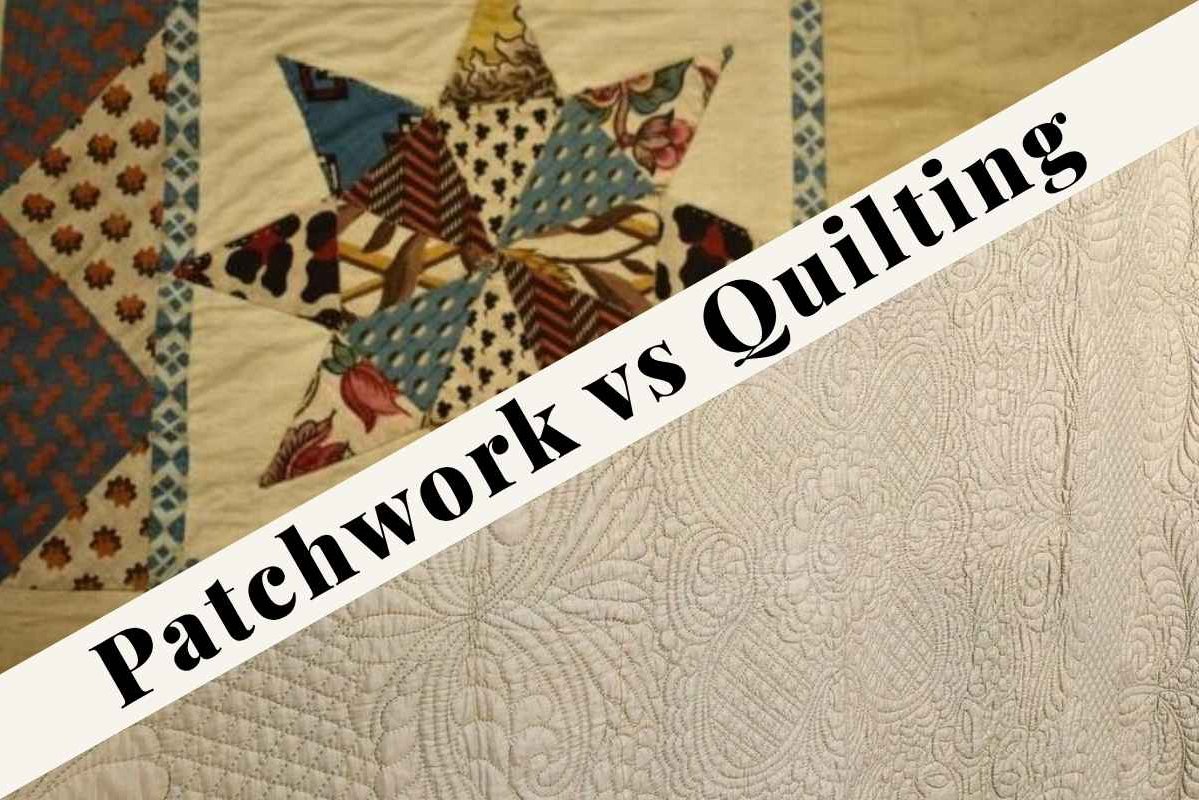
What's the difference between patchwork and quilting? Discover how patchwork, quilting and appliqué differ, with examples from The Quilters' Guild Collection.
Find quilting teachers and speakers offering online and in-person talks and workshops. Discover opportunities to learn, improve your skills and share your passion.
