Unfortunately, we don't support Internet Explorer anymore as it has been replaced by Microsoft Edge.
Please try downloading Microsoft Edge or an alternative modern browser for the best experience.
Alexandra Kingswell shares her solo exhibition experience
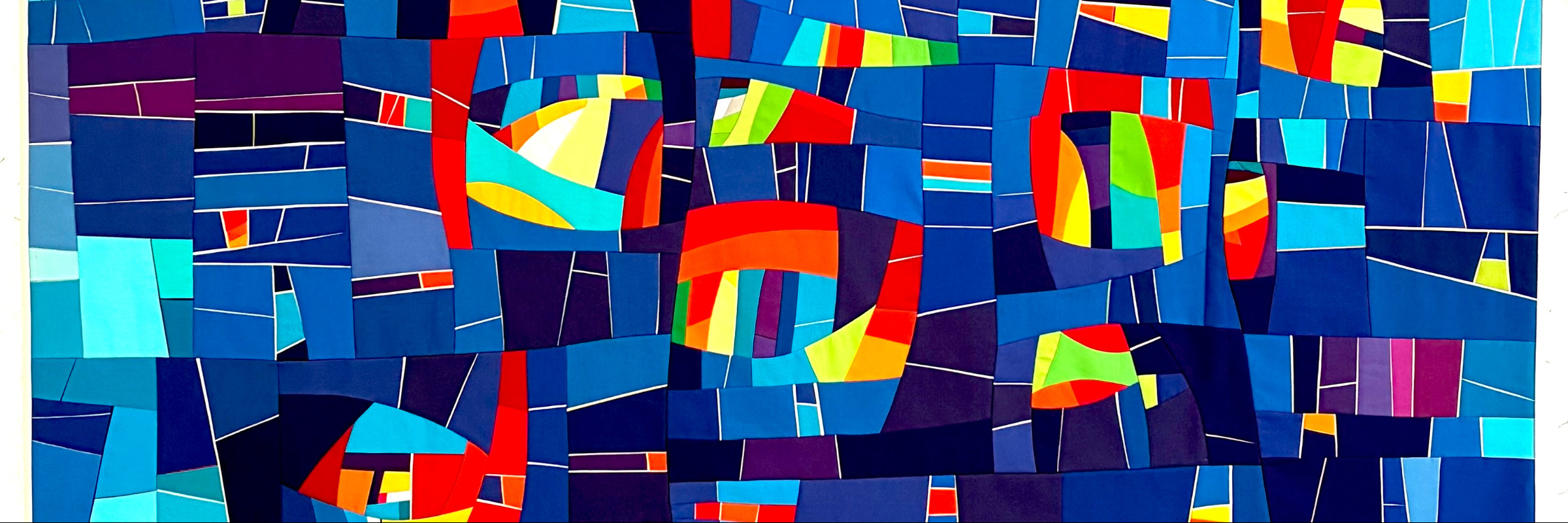
Into Blue Waters (detail)
Q. Alex, first of all where and when can we see your solo exhibitions in 2026?
I will be taking ‘Seeking the Light’ to Sheffield Cathedral and Ely Cathedral later this year. In Sheffield from 28 July to 13 August and in Ely from 23 August to 22 September. Other venues and dates are still to be finalised. We feel very privileged to be exhibiting in Sheffield and Ely - they are both beautiful buildings, but so different. For a start, Ely is HUGE, and the plan at the moment is to use the two nave aisles - that’s will be a first for me. I am working on creating, basically, two exhibitions! It will be a challenge to create impact in a space that large. Sheffield is a lovely building - lots of chapels and interesting spaces. It does not initially strike you as a large building. The challenges here are different from those of Ely.
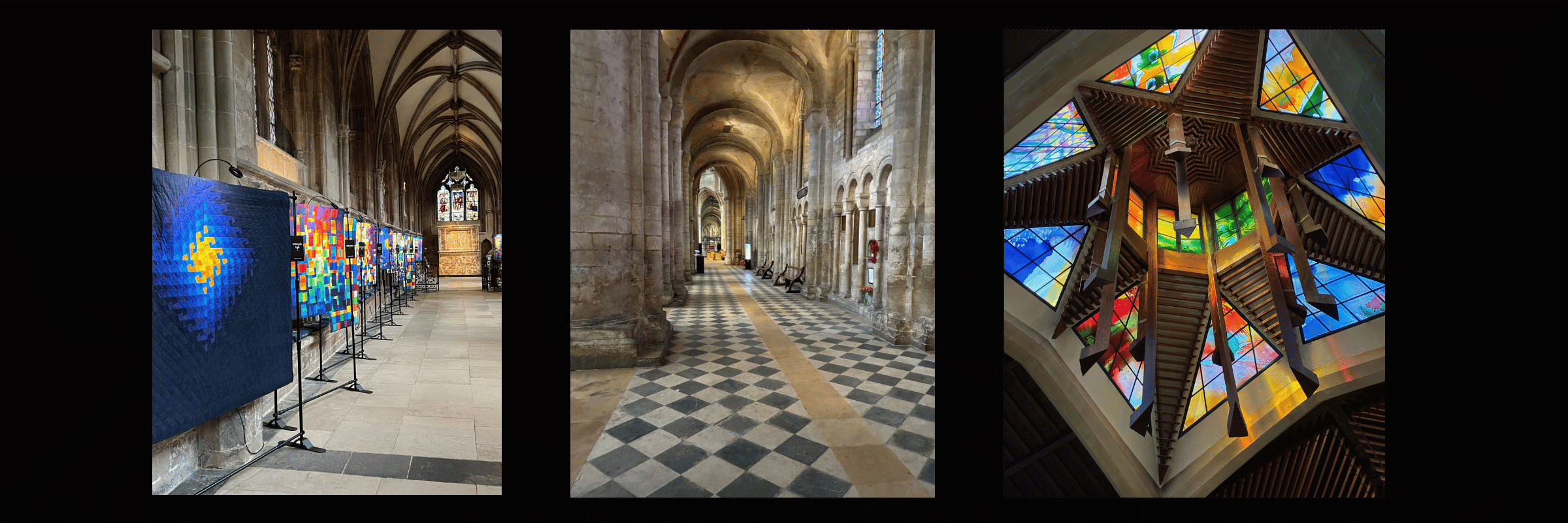
L-R Lichfield, Ely cathedral - aisle, Sheffield cathedral - octagon
Q. Many of us enjoy sending a piece to be part of a larger exhibition but the thought of mounting a solo exhibition is a bit scary. How does mounting a solo exhibition feel?
I love it. But yes, it is slightly terrifying! Often I feel very vulnerable - knowing that the success or otherwise of the exhibition is almost entirely in my hands! It's an odd feeling - having something so personal on display. The pieces have been my companions for years and mean a great deal to me, documenting, as they do, my journey through the later part of my life. But what if they have nothing to say to visitors? If the work doesn’t create a joyful and uplifting experience for viewers then, in my mind, the exhibition is in vain. It is such a huge privilege - and a great joy - to see my work in wonderful places and I just have to trust that the work will sing and communicate loudly. The quilting world is so welcoming and friendly that I am often able to put negative thoughts to the back of my mind.
Q. You say that with any exhibition, first impressions are crucial. Why is that?
The individual pieces are obviously important, but I think the initial impression of the overall exhibition is even more important. I like to think not so much of the individual pieces but of the exhibition itself as a work of art, which draws the viewer in and invites them to take a closer look. I try to create that initial ‘wow’ that inspires interest and anticipation so that people come with openness and curiosity. I take very close consideration of the space in which the exhibition is mounted and I try to work with it rather than simply regard it as a 'backdrop'. Sometimes, for example, this might mean displaying more or fewer pieces than originally planned. It can be an agonising decision choosing which pieces to drop - which I will do if I feel I need to display fewer for the sake of the overall impression.
Q. In many quilt shows the pieces are all the same size. Yours are all very different. Why do you not consider that when putting an exhibition together?
I think difference is good! In my mind each piece is an individual and I feel that, during construction, each one dictates to me the size it needs to be. I don’t get much say in the matter! I try to make sure that the pieces all get equal prominence. This can be done by where they are positioned in relation to each other and to the building. For a clean and streamlined impression, though, I always make sure that the tops of the pieces are all at exactly the same height.
Q. You’ve displayed in several very different buildings now. How important is it to plan for an individual location?
It’s crucially important. Take, for example, Coventry Cathedral and Lichfield Cathedral. One modern, the other ancient; one huge and cavernous, the other more intimate; one with minimally decorated walls, one highly ornamented; one with enormous windows, flooded with light, the other darker with more of a sense of mystery. The interplay between the structure and architecture of the exhibition space and the works themselves is of prime importance to me when considering where to position my work. In Coventry, for example, I could use the coloured light filtering through the modern stained glass to ‘converse’ with my own vibrant fabrics. The wide aisles in the huge nave area allowed me to spread out my pieces in a long line which drew people the full length of the Cathedral. In Lichfield and Leicester Cathedrals, on the other hand, the space was more limited. Here the pieces created more of an intimate ‘spot of light’ in one part of the building. It could be glimpsed through archways and across sculpted stone, intriguing the visitor and, I hope, making them want to come and look more closely. Working WITH what you have, to enhance the venue as well as the work, is trouble worth taking. It is what makes the visitors’ overall experience more more pleasing.
Taking time to understand the building, and how visitors move around it is also time well spent. Does the exhibition suddenly confront visitors when they enter the space, or do they have to seek it out more intentionally? When a space has natural light, the time of year, time of day, or the weather, can also change the overall impression. I bear all of this in mind at the planning stage. When we are setting up, I sometimes want to change the angle of each stand so as to enhance the experience of visitors approaching from a certain direction. And then I decide that that’s not quite right and want to change them all again - and again… Sometimes, when we’ve finished setting up, it’s a miracle the ever-patient helpers are still talking to me!
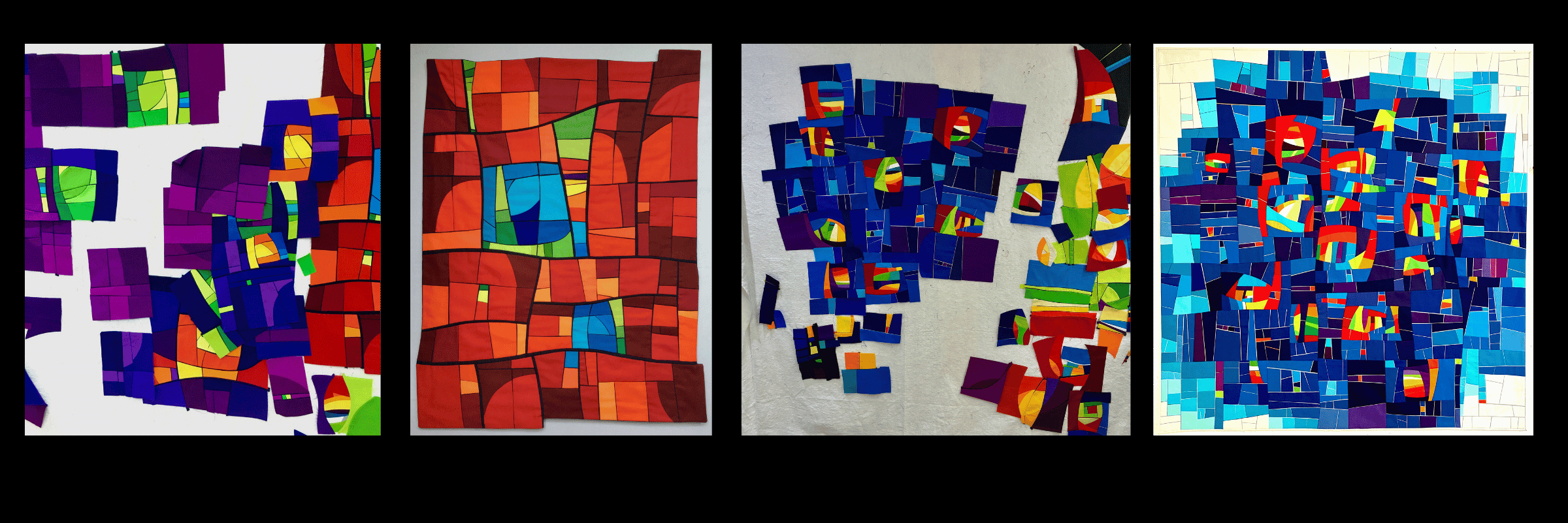
L-R work in progress, Lite will find a way, work in progress, Into blue waters
Q. What do you enjoy most about mounting a solo exhibition?
To me, by far the best bit is meeting and working with people. Cathedral staff, stewards and volunteers have been invariably friendly, helpful and supportive and that makes the process most enjoyable. Also, at all my exhibitions I have had chance meetings with lovely and interesting members of the public. I love interaction with fellow textile artists and I love answering questions about my work. And then there is seeing the work itself. I only ever get the chance to see all the work together and at a distance when it is on exhibition. It is always a thrill and a surprise to encounter those colours! It’s as though each piece comes alive and shouts its gratitude at being let out!
Q. What are the most common questions you are asked?
One of the most common questions I get is ‘How long did this piece take? This is impossible to answer! Am I ‘working on it’ when I’m out walking and thinking about my piece? Or when I’m making a decision about how to quilt while doing the shopping? Once a volunteer steward was asked this question about my work and he replied ‘She started during the Battle of Trafalgar and finished it last year’. Sometimes it feels like that. I am not prolific! Talking of which, I am very excited to be taking at least two new pieces to Ely this year - one of which took me well over a year to complete. That was a marathon!
Another popular question is about design and inspiration. Actually I never design a piece before I start making it. The idea, or feeling, is the incentive and motivation. I choose colours that express what I’m feeling, start making motifs, start playing, and see what happens. I generally have no idea where a piece is going when I start. (Unless I am making one of my mathematically inspired pieces - which is an entirely different process - and much easier in some ways!) My pieces evolve on the design wall. And I keep all my little experiments and motifs visible, so that when they start talking to me I can pull them from the outer reaches of the wall and start to work with them. A wonderful, exciting and illuminating process!
Q. What sort of questions do fellow quilters come up with?
FFF’s (‘Fellow Fabric Fanatics’) often ask about my wadding. I’ve found my intermediate layer has become thinner and more stable as my work has progressed. My latest pieces use a sheet of calico as the wadding and I love it! It stabilises the piecing on the front, irons really flat and eliminates loft when quilting. So my shapes and colours are all as flat as can be - exactly the effect I’m aiming for in my present work.
Whenever I am asked about thread I have an answer which raises many eyebrows! For my piecing and quilting at the moment (and depending the effect I want) I am using a 100 weight polyester thread. It helps me to create very crisp junctions and almost invisible quilting. It also makes creating very thin strips easier - a process I love to use. And that is something else people ask me, “How do you get your skinny strips so skinny” (practice!), and “What is the thinnest strip you’ve inserted?” (probably about 2 threads wide).
Q. What practical advice would you give to anyone wanting to go down the solo exhibition route?
Only do it if you genuinely love it, otherwise it might become stressful - it takes a huge investment of time and energy. Form good relationships with your contacts at the venue. These people are worth their weight in gold. Stewards and other volunteers can become great allies if you spend time with them explaining your work, so that they, in turn, can speak knowledgeably about it to visitors when you are not there.
Think about the practicalities of setting up. Where will you unload? Will you need a parking permit? Will you need to ask for bollards to be lowered to give you access? Can they provide a couple of large tables on which you can unroll your work without having to do this on the floor? (Cathedral floors are invariably dusty!). It is a good idea to bring a couple of clean sheets to place on these tables (or even to place on the floor if no tables are forthcoming).
If you bring your own lighting, make sure that all electrical equipment that is directly plugged into the mains bears a sticker to prove that it has passed the EET (formerly ‘PAT’) test. Check what the venue will do to minimise the risk of visitors touching the pieces. You might be offered temporary airport-style barriers, but how will these sit with the overall effect you are aiming for? I personally put a ‘Do not touch’ sign next to every piece and then urge the stewards to be vigilant. Ask about insurance too. How much would you want to be compensated if, heaven forbid, all your work should be damaged or destroyed?
Give some prior thought to whether artist’s statements will accompany each piece. If so, how will you present these - fixed boards or individual booklets? If the latter, will visitors receive one each and will you expect them to leave them for someone else to read when they have finished? In this scenario, calculate how many you expect to ‘lose’ when people absentmindedly (or otherwise!) forget to return them.
This year ‘Seeking the Light will be in Sheffield Cathedral from 28 July to 13 August and in Ely Cathedral from 23 August to 22 September. In 2027, it will be in Hereford Cathedral from 21 July – 22 August. Other venues are still being confirmed.
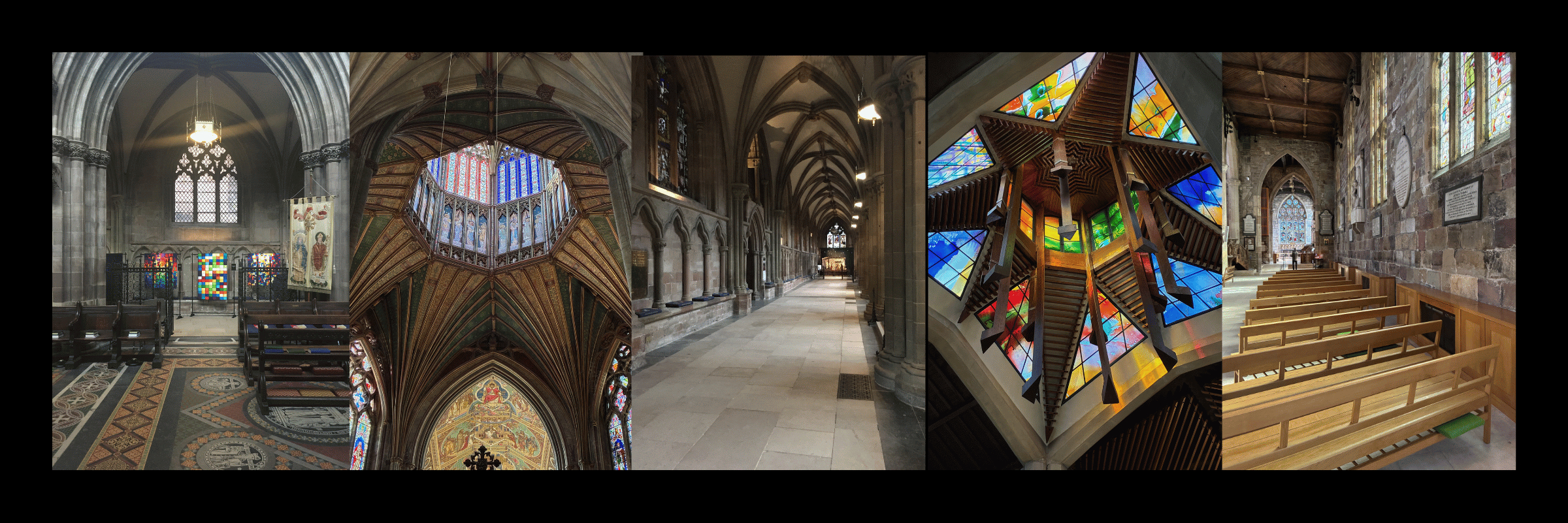
Beautiful details are everywhere in each cathedral (L-R Lichfield, Ely, Lichfield, Sheffield, Sheffield)
Facebook and instagram: @alexandra.kingswell
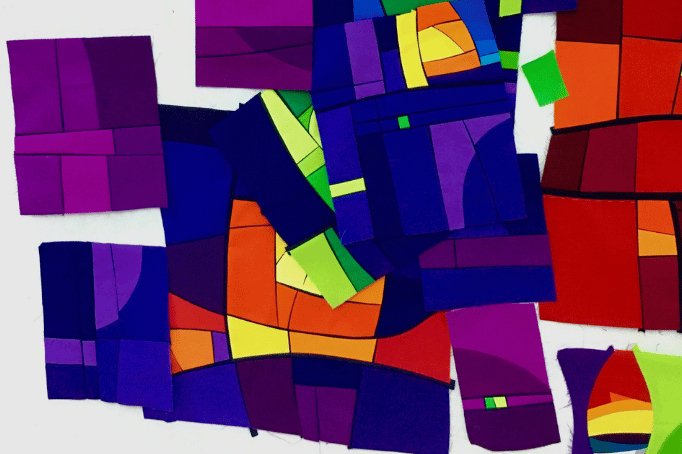
Alex Kingswell shares her experience organising and setting up her solo exhibitions.

our regular coffee morning with membership chair Carol Bowden
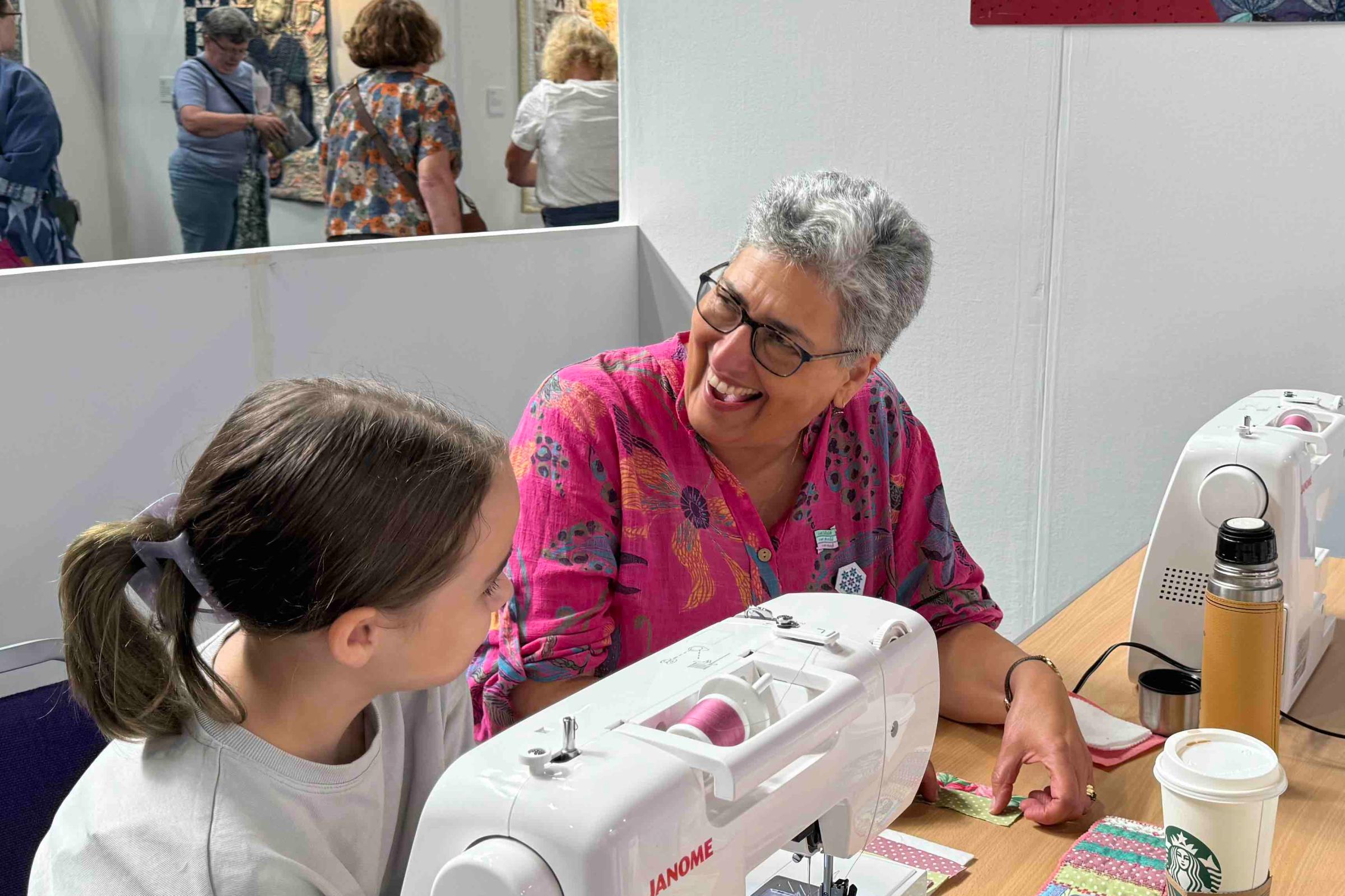
meet geraldine our new YQ officer
