Unfortunately, we don't support Internet Explorer anymore as it has been replaced by Microsoft Edge.
Please try downloading Microsoft Edge or an alternative modern browser for the best experience.
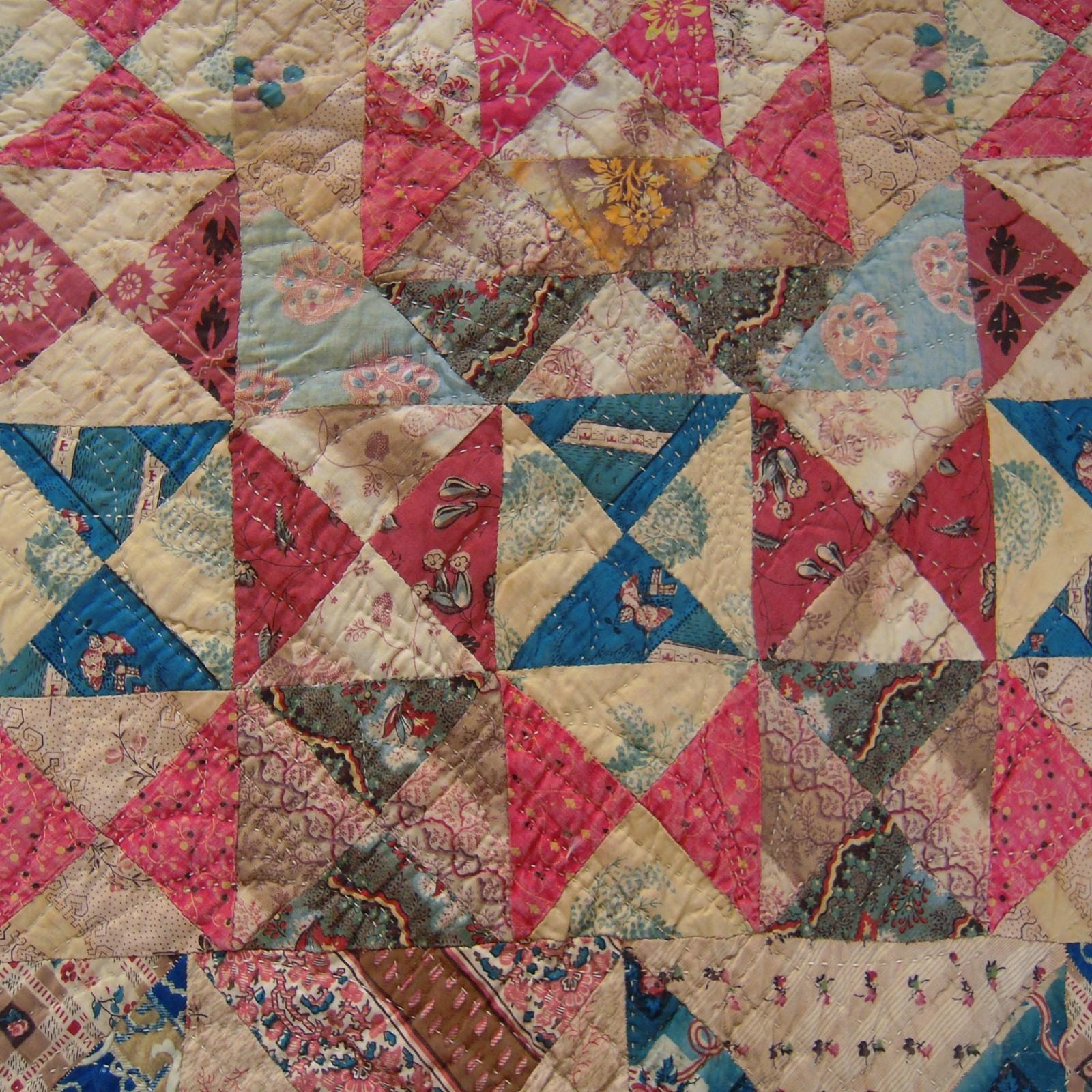
The coverlet, of which only substantial sections now remain, had a vase of flowers in the octagonal centre surrounded by an undulating vine border with tulips at the corners. Further flowers appeared on the outer border of hexagons in bouquets, vases, baskets and cornucopia.
(Private Collection) © Bridget Long, 2013
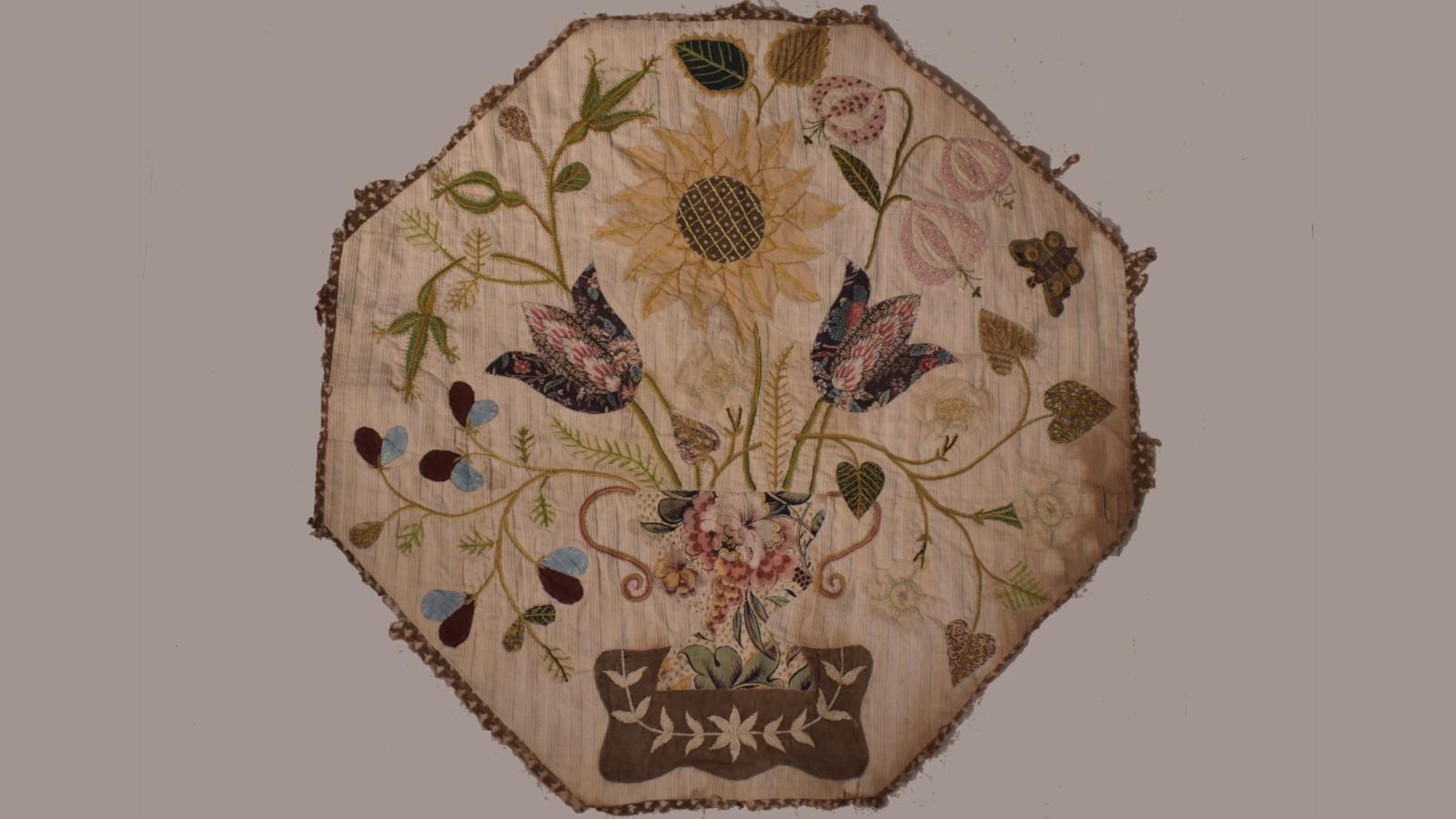
Octagonal centre featuring a vase of flowers with sunflower, lilies, sweet peas, tulips and roses with a butterfly.
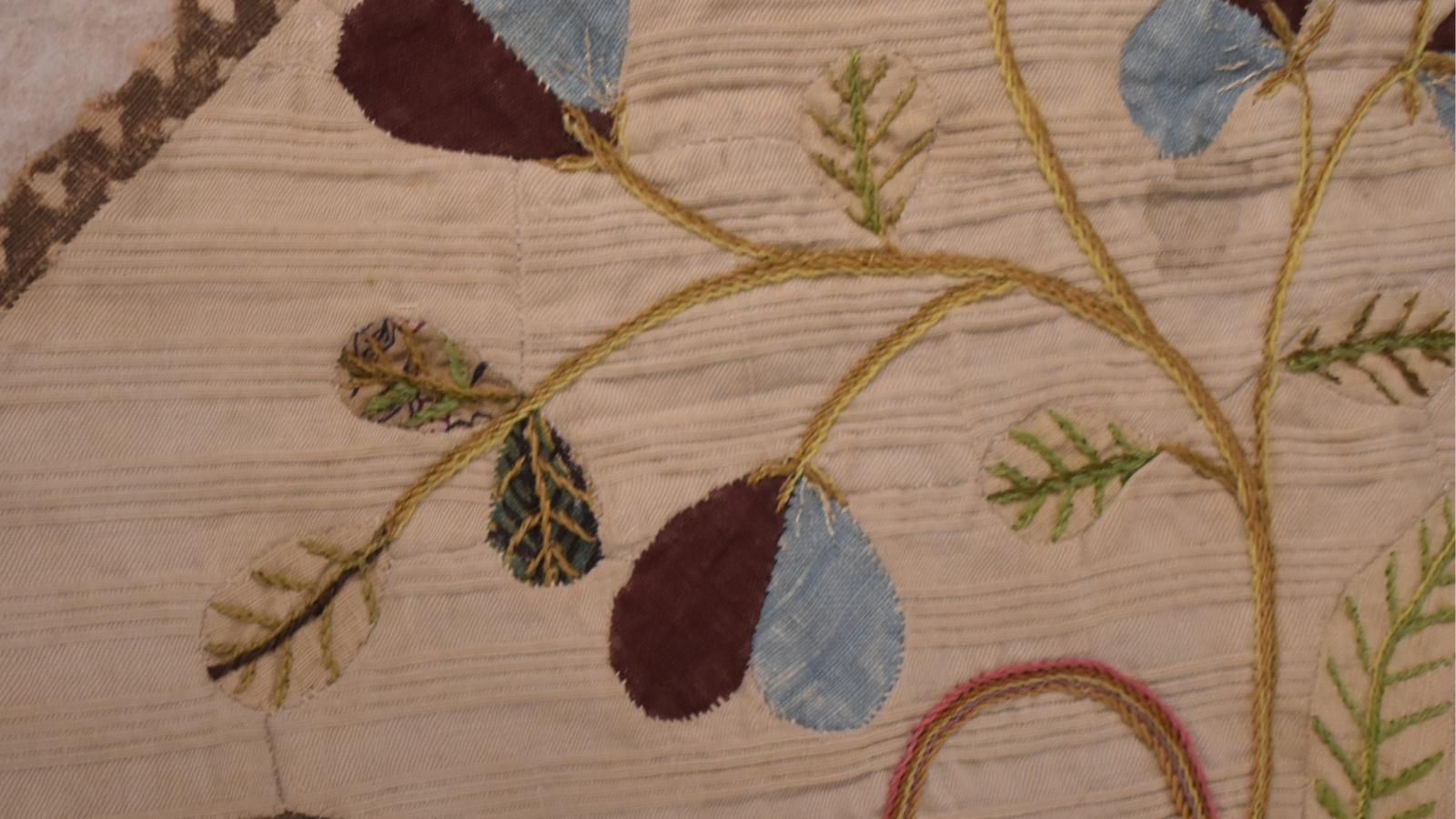
At first glance, many people would identify the fabric elements as having been appliqued onto the dimity background - but a study of the reverse side shows that this is not the case.,
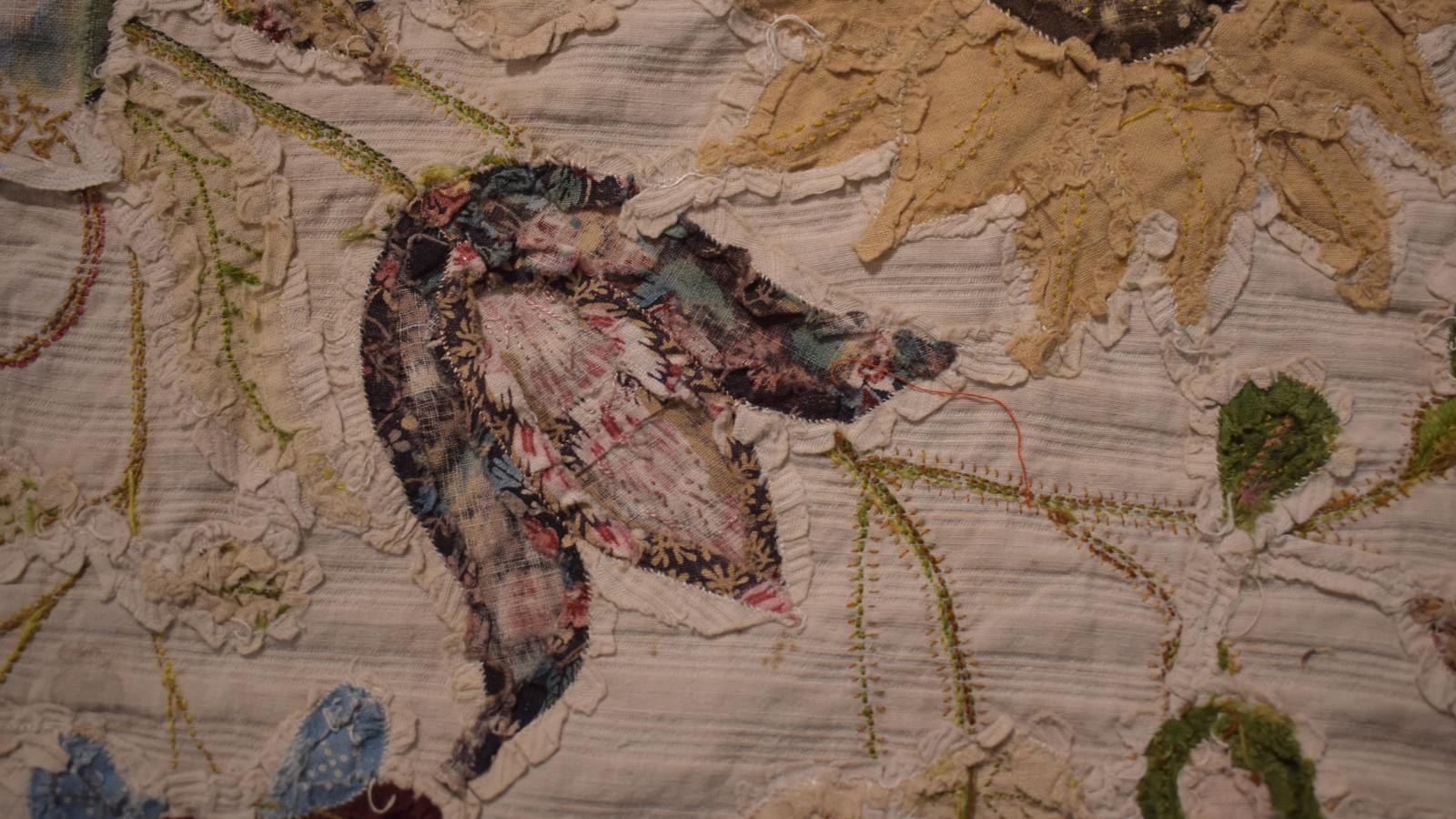
Inspection of the back of the piece provides evidence of the mosaic patchwork technique used - the tulip, sunflower and leaves were inlaid, not appliqued.
The
entire design was constructed using the mosaic patchwork technique with some
added embroidery embellishment providing stems and extra detail on the flowers:
a testing project for a very skilled needlewoman.
None of the paper templates remain in the piece.
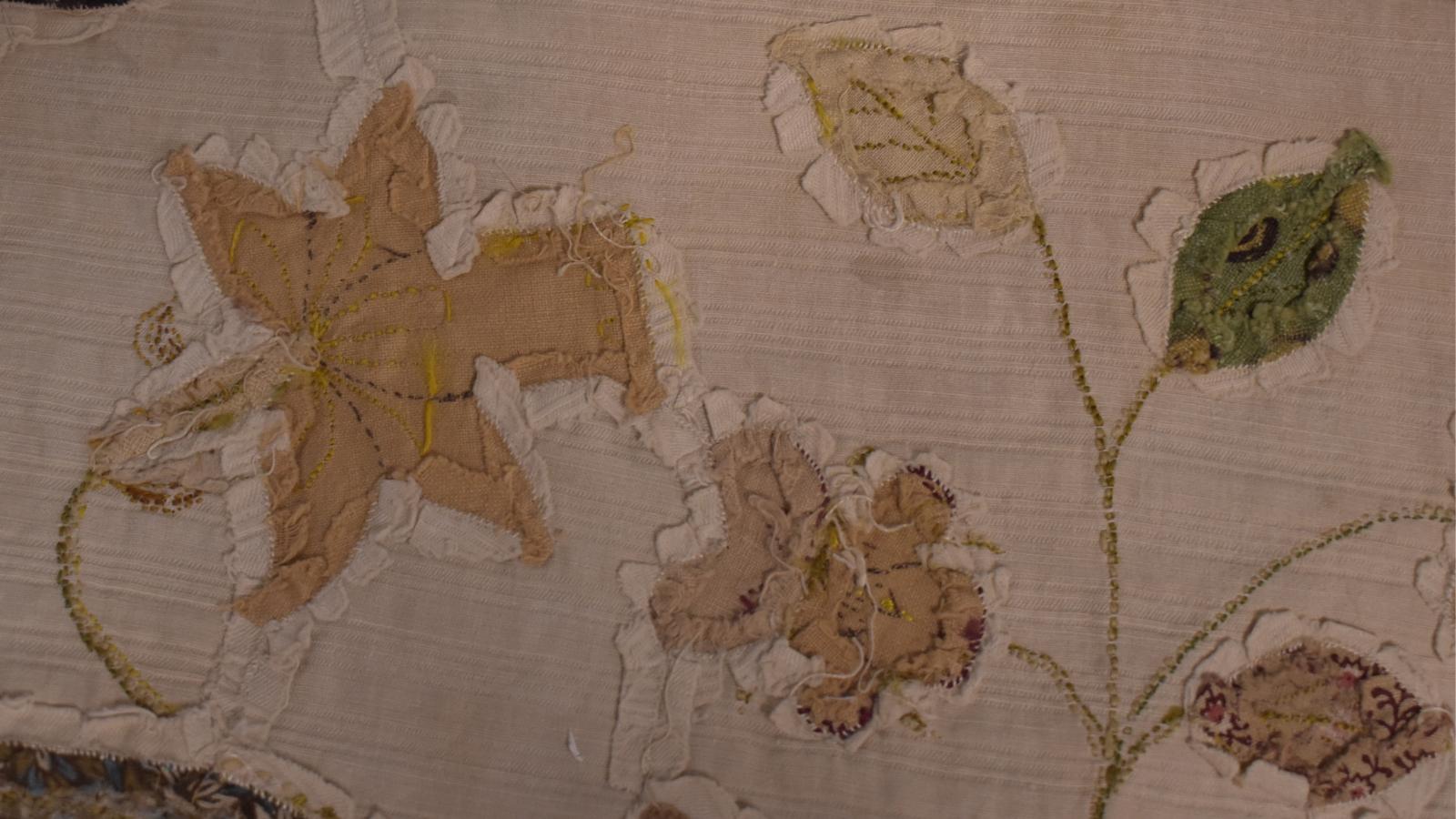
Inserting complicated shapes such as this daffodil required great skill.
Can you identify the other flower?
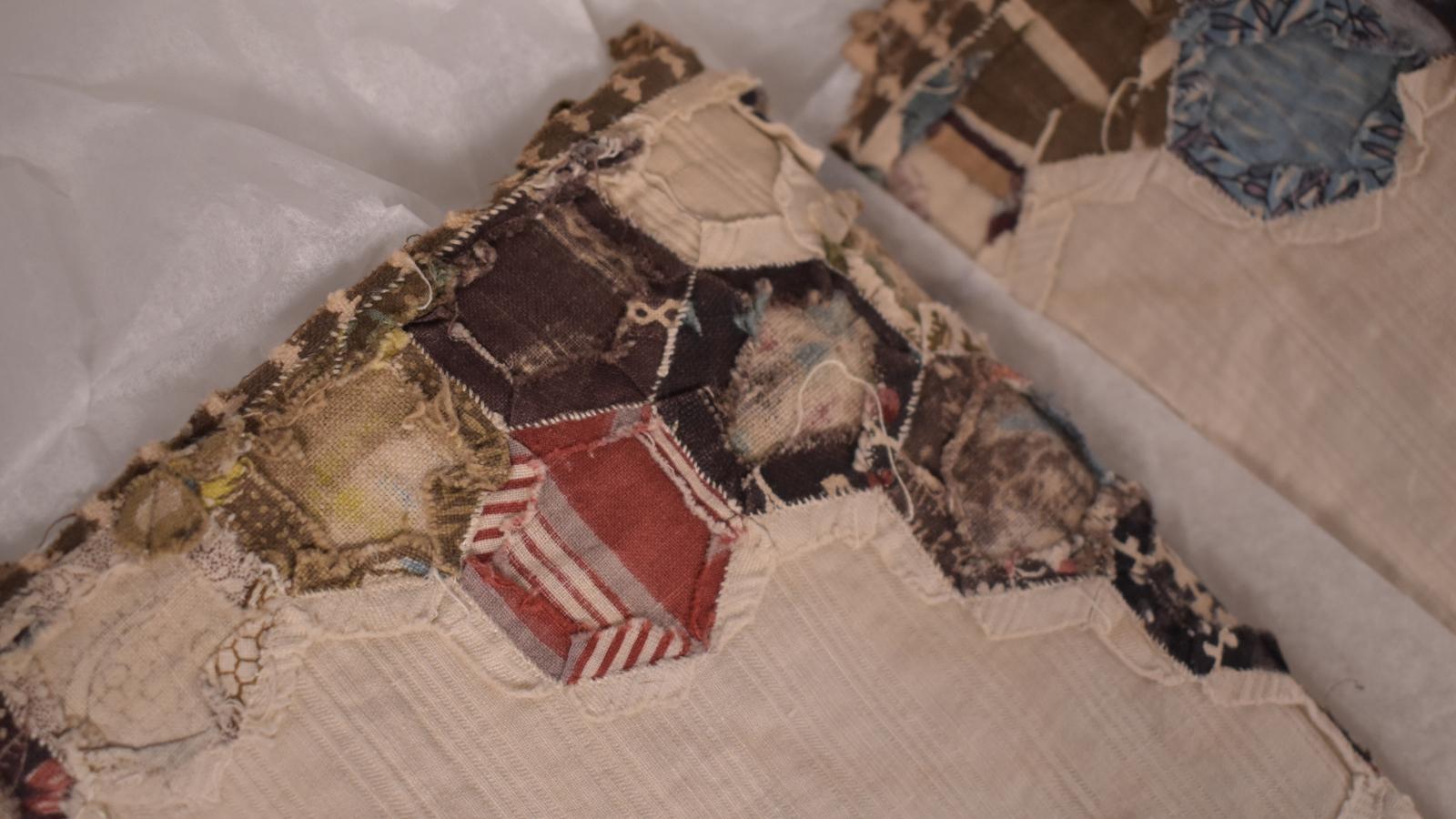
The edge of the background fabric is carefully shaped and turned back to be assembled against the hexagons in the border.
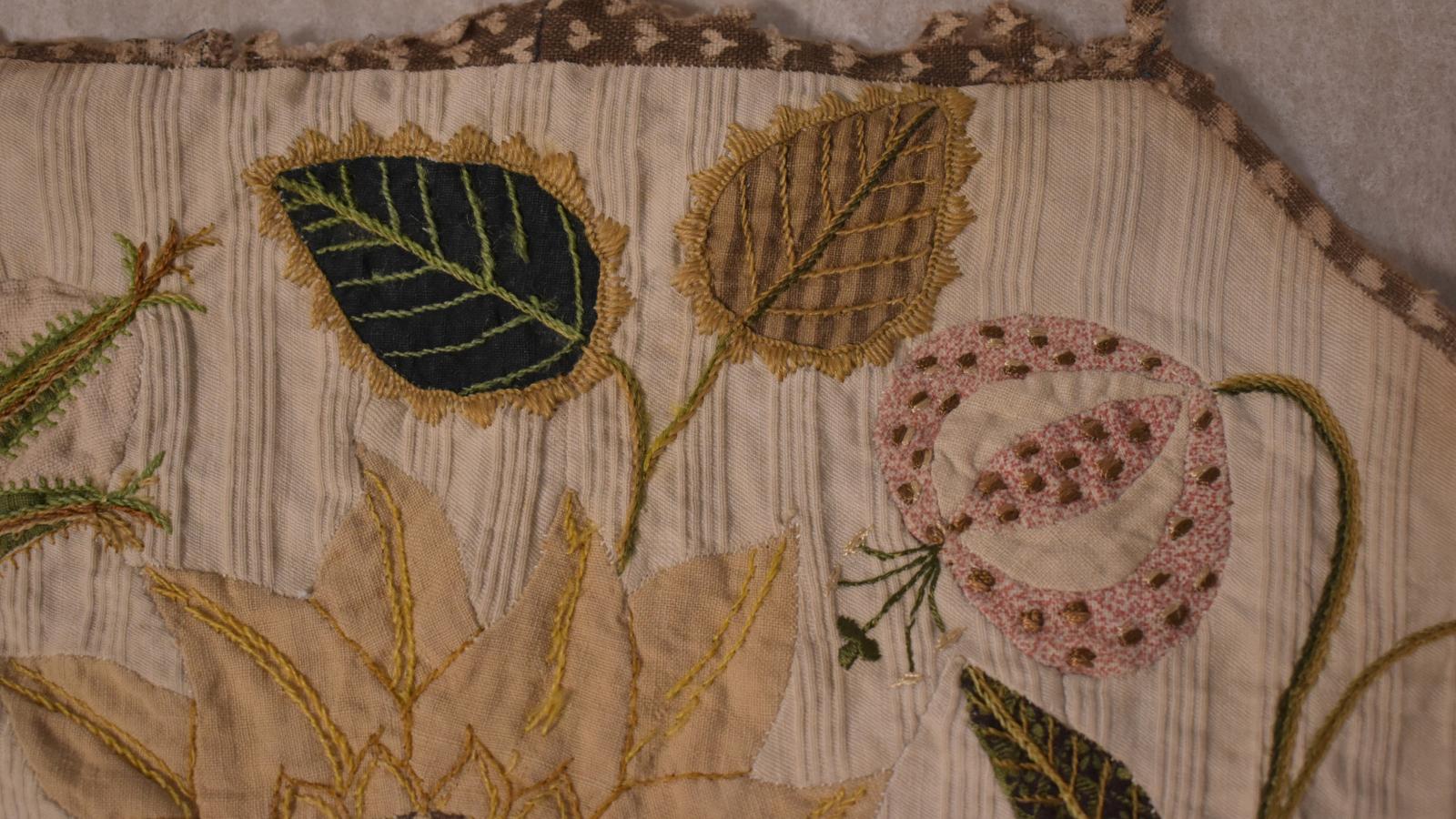
Embroidery is used to add features and decoration to the flowers
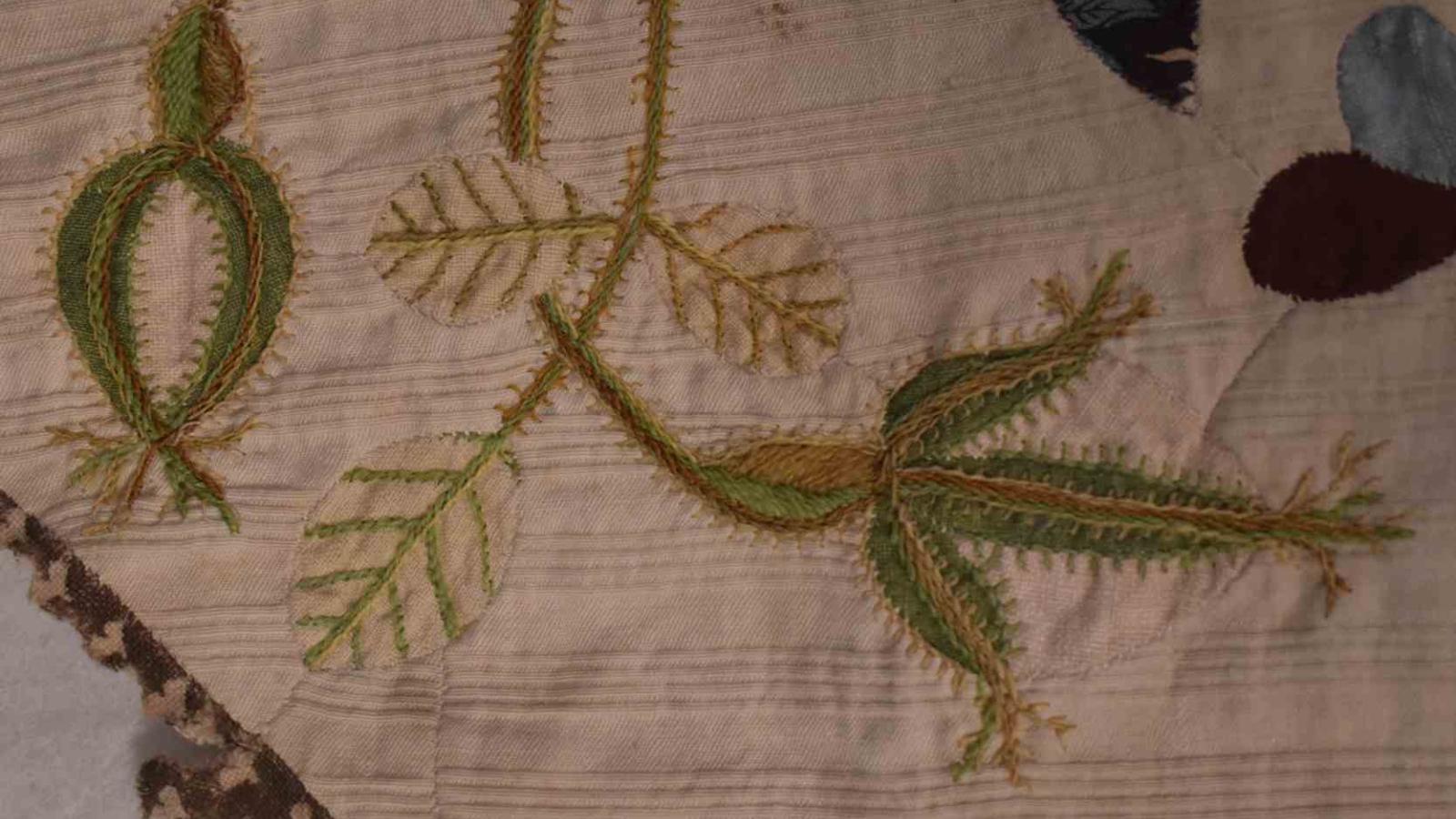
Blanket stitch, stem stitch and couching are all used to embellish the mosaic patchwork.
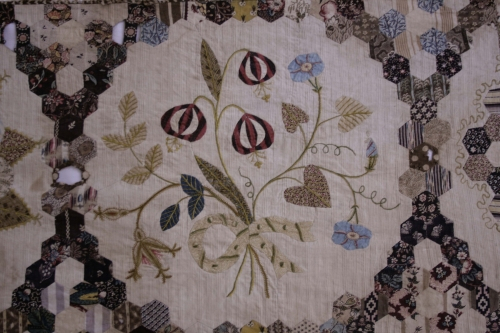
The patchwork hexagons form a series of medallions around the outer borders - this detail shows a bunch of flowers with lilies, convolvulus and roses
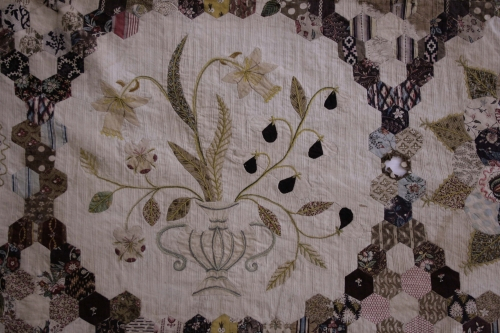
Another details of the outer borders - vase of flowers with sweet peas, daffodils and heartsease
This late eighteenth-century patchwork coverlet, which was originally 213 cm x 243 cm (84 in. x 95¾ in.), survived intact until the then owner cut it apart and removed worn borders at the centre of the design in the late twentieth century. The outer border is also missing.
The fragments were one of the exhibits in The Blossoming of Patchwork 1780-1820s at the Quilt Museum and Gallery, St Anthony's Hall, Peasholme Green, York 17 May - 31 August 2013, and are included showing the original layout in the accompanying catalogue
It has a very
similar design to a complete coverlet (complete with papers) that was recorded during the Quilters' Guild British Quilt Heritage Project, but this design is more complex with
finer drawn floral images (see Quilt Treasures, figs. 28, 29, p. 42).
To read a discussion of both coverlets, see Bridget Long, "Sibling, Cousin or Friend? Considering the Relationship
between Two Late Eighteenth-century Mosaic Patchwork Coverlets", Quilt
Studies, Issue 10 (2009), 89 - 112
The same inlaid mosaic patchwork technique is used in the Gooch Coverlet, now part of the Quilters' Guild Museum Collection.
See Bridget Long, "The Gooch Coverlet: Exploring Sociability, Fashion and Sewing Networks in the Late Eighteenth Century", Quilt Studies, Issue 26 (2025), 22-47.
