Unfortunately, we don't support Internet Explorer anymore as it has been replaced by Microsoft Edge.
Please try downloading Microsoft Edge or an alternative modern browser for the best experience.
At its most basic, the act of stitching a quilt is a form of mending. Repairing a tear between two fabrics to make a new whole, more functional, decorative, or serviceable than the materials alone. Making a simple stitch requires a complex interaction of hand and mind. The skills our hands need to stitch are hard-won, honed by time and experience. When you think about what we do as quilters in those terms, then the recent project which partnered The Quilters? Guild with the Royal College of Surgeons; two organisations brought together in a project by the Universities of Oxford Brookes and Lancaster, makes perfect sense. Surgeons also use their hands to make stitches to mend, improve, reinforce, yet the ?material? they work with is very different indeed!
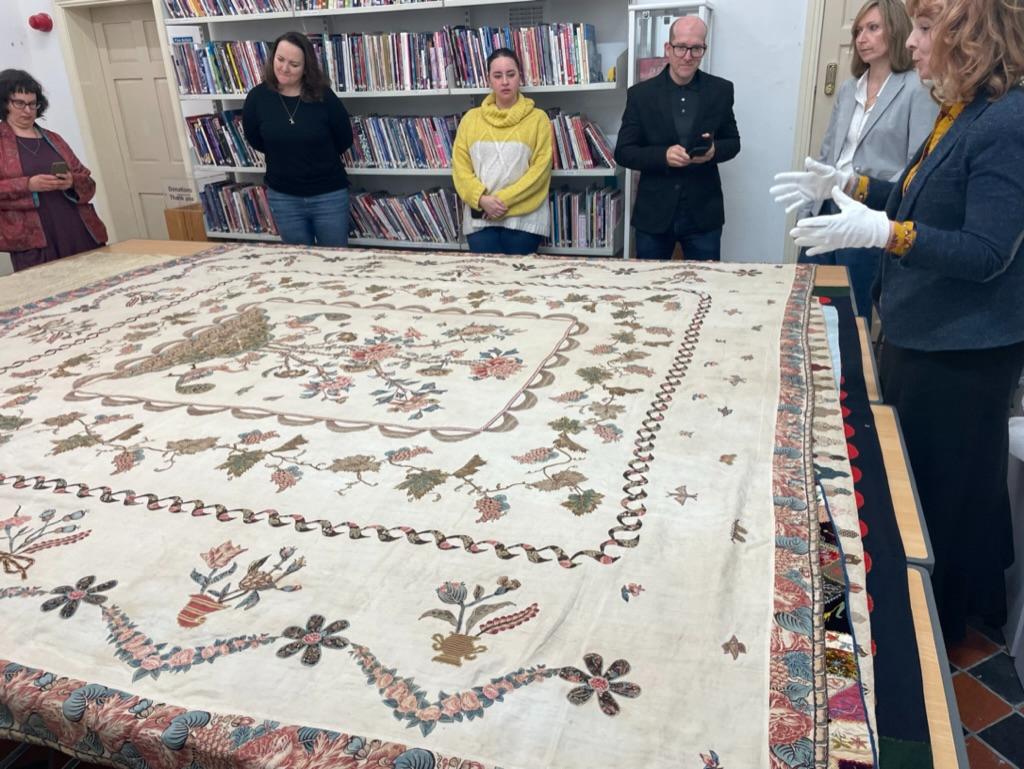
Heather Audin introduces a piece from The Quilt Collection
Over two sessions in May and June, one at The Guild HQ in York and the second in the classical surroundings of the Royal College of Surgeons at Lincolns Inn Fields in central London, a group of invited participants, surgeons, historians and textile makers, explored how our hands, and the skills they hold, shape our sense of self and hold the power to mend objects, people, societies and relationships. These two sessions, titled ?The Work of Mending?, were designed as part of a wider project by leading historians of the emotions and of medicine, Professor Joanne Begiato and Dr Mike Brown. Their new project is called ?Hands: An Emotional and Material History of Embodiment? and it explores the history of the hand and its role in shaping identity, exploring the past to help us to better understand the role of the body as a way of performing identity today.
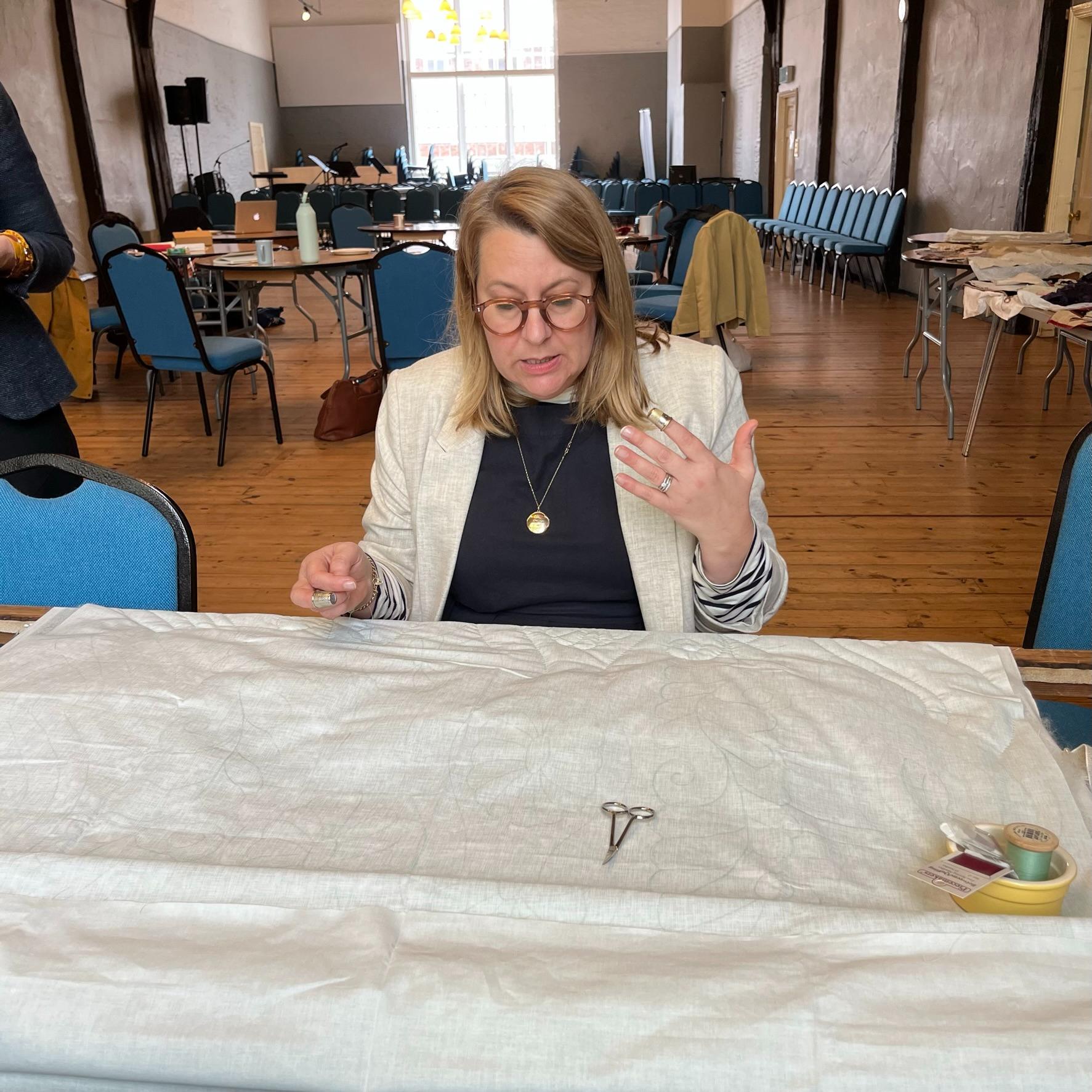
Deb McGuire demonstrates the rocking stitch
Hands have always been central to our understanding of who we are, stretching from the Victorian preoccupations with the hand as a way to read character; for example, Victorian artists made casts of the hands of the great and good, and eugenicists classified criminality through the markings of the hand. The long history of hands and their power to speak for us is clear. In the modern world we are conflicted. For many, machines have replaced hand work, yet the ubiquitous mobile phone, never far from our hands offers comfort, our whole lives cradled in our palm. Alongside this we place more importance than ever on the hand?s ability to mend. TV programmes such as The Repair Shop demonstrate the emotional power that the skills of the hand can evoke, and since the pandemic lock downs, the wellbeing benefits of participation in hand-based crafts such as sewing is increasingly well explored. Surgeons and quilters both consider the skills of their hands as central to their identity. Bringing both together to debate the role of their hands was a rich interaction.

Orthopaedic Surgeon Samantha Gallivan and Textile Artist Ruth Singer learning traditional hand quilting skills
The first session at The Quilters? Guild involved a unique presentation from Guild Curator Heather Audin (see picture: Heather Audin introduces a piece from The Quilt Collection) on the theme of skill and virtuosity, encouraging surgeons to explore some of the most exquisitely stitched objects in The Quilt Collection. The group then discussed what role their hands had in generating professional pride in their various roles, from acclaimed textile artists Sarah Hibbert and Ruth Singer to orthopaedic and cosmetic surgeons. We explored how bound up our sense of self was in the mastery of the skills of our hands, using a practical session where I had the privilege of teaching participants how to make a ?rocking stitch? in a traditional quilt frame using two metal thimbles to rock a balanced needle for perfectly spaced quilting stitches (see picture: Deb McGuire demonstrates the rocking stitch). Taking skilled users of the hand and introducing a new skill provoked much discussion about how we learn and how our hands help and hinder us (see picture: Orthopaedic Surgeon Samantha Gallivan and Textile Artist Ruth Singer learning traditional hand quilting skills). We explored how hands wield those learned skills to mend things, including bodies, social bonds and the environment (through reuse and recycling).

The surgeon's needle is only touched by other sterile tools
The second session, two weeks later at the RCS took place in their teaching school. This time we explored the role of mending through the prism of surgery, each donning a double layer of gloves and wielding forceps and needle-holding tools to guide the pre-threaded curved needle and surgical thread through a synthetic wound to create medical closures (see picture: the needle is only touched by other sterile tools). As we stitched in this unique experience, we explored the tension of skin, how empathy can be embodied in a stitch, how hands care and how we use our hands emotionally. When a stitch is also lifesaving its application takes on a different role to the sewing of self-expression, yet form and function remain interlinked. We discussed art vs science, form v?s function, explored the role of apprentice and skilled teacher and discussed how the world values different hand skills from the professional to the skilled amateur across disciplines and through time. We talked about how the worlds of sewing and surgery had interacted in the history of medicine and talked about how stitch is taught today. We then enjoyed a visit to a wet lab where surgical graduates were undertaking a class on suturing ( see picture: A wet lab, students learning surgical techniques at the Royal College of Surgeons, London). A unique sewing experience!

A wet lab, students learning surgical techniques at the Royal College of Surgeons, London
The history of the quilt and of quilt makers is most powerful when we use it to make connections across disciplines. Our Collection has an important cultural role outside of traditional quilting audiences as a portal to bring to life the skills and values that these quilts reflect. This project opened up new ways to think about the objects we hold and helped other disciplines to think about their own skills and values in a different way. On behalf of Prof Begiato and Dr Brown we thank Heather Audin, and the surgeons of The RCS, for embracing this unique collaboration with such enthusiasm and helping to facilitate this fascinating meeting. We also thank the other participants for taking part. This academic project is now bidding for new funding to expand this work, with the possibility of future collaborations between the sewing and medical communities to include students, older people and those whose use of their hands is challenged or changed by age, illness or other events. Next time you glance down at your own hands when you sew, take a moment to reflect upon the skills and experience that they personify in your own life. We hope to be able to capture more of these musings in the next stage of this project next year.
Deb McGuire is a PhD candidate at Oxford Brookes University writing her thesis on the British Quilt in Space & Time. Her work explores the role of the quilt as an emotional object and is supervised by Prof Joanne Begiato, Professor of History and Associate Dean of Research and Knowledge Exchange, and Dr Sally Holloway, Historian of the Emotions and Vice Chancellor?s Research Fellow in History & History of Art.

Struggling with machine quilting? Learn how to fix 5 common problems, including skipped stitches, puckering, tension issues, thread breakage and bulky quilts.
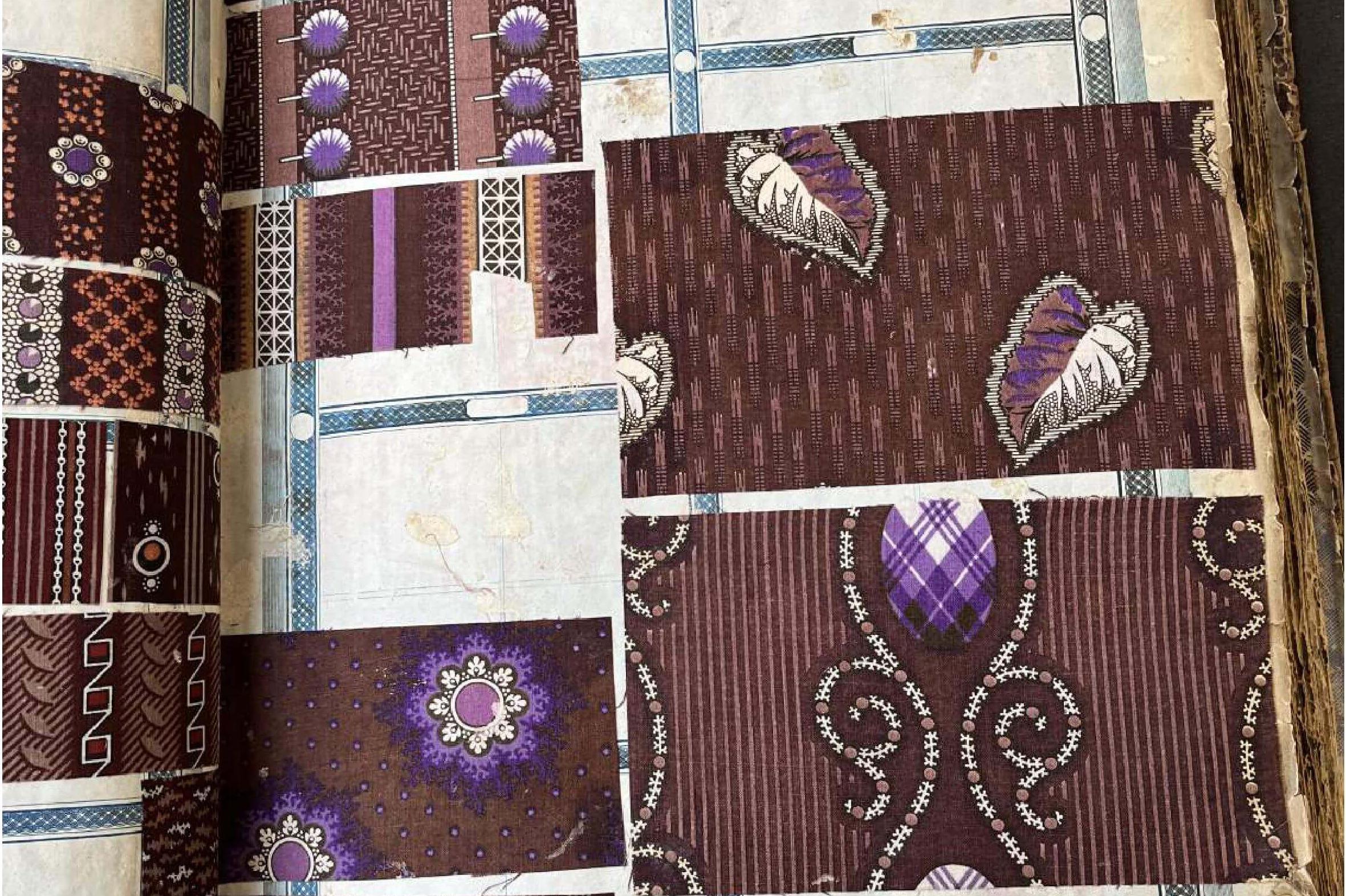
The British Quilt Study Group (BQSG) is a special interest group for Guild members interested in the history of British patchwork and quilting. They recently visited the Manchester Metropolitan University Special Collections Museum, where they examined pattern books and 'recipe' books for dyes dating back to the 1800s. These books are essential for dating historic quilts, which often lack signatures or dates. Understanding fabric printing history helps them establish the age of anonymous quilts.
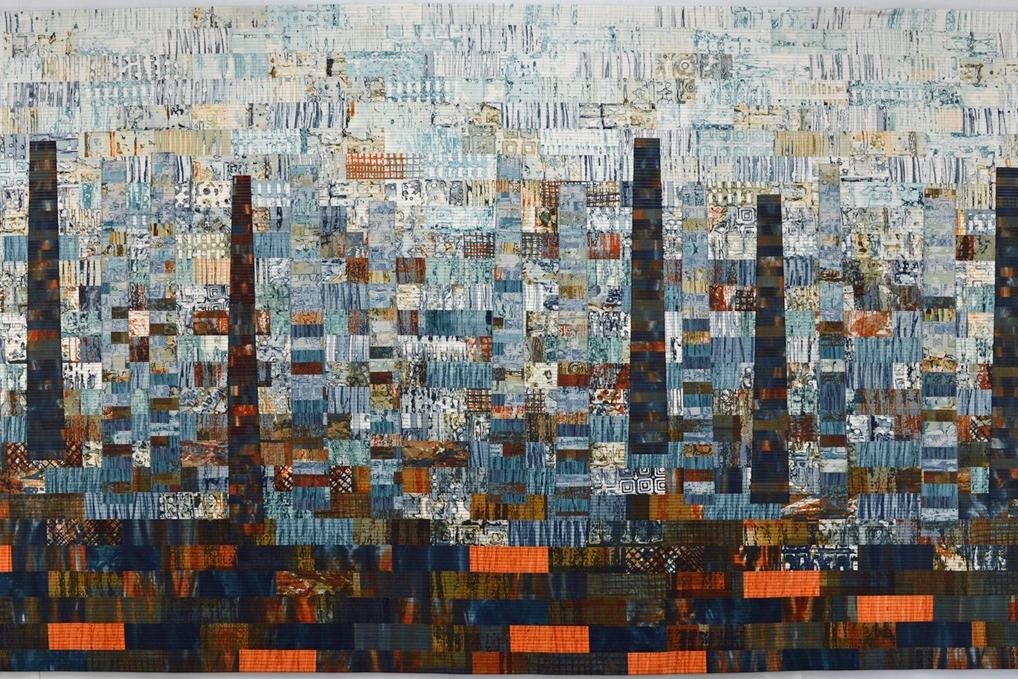
We talk to Leah Higgins about her quilting journey, favourite techniques, inspirations and proudest moment. You can read a full interview with Leah in the winter edition of 'The Quilter', our membership magazine.
