Unfortunately, we don't support Internet Explorer anymore as it has been replaced by Microsoft Edge.
Please try downloading Microsoft Edge or an alternative modern browser for the best experience.
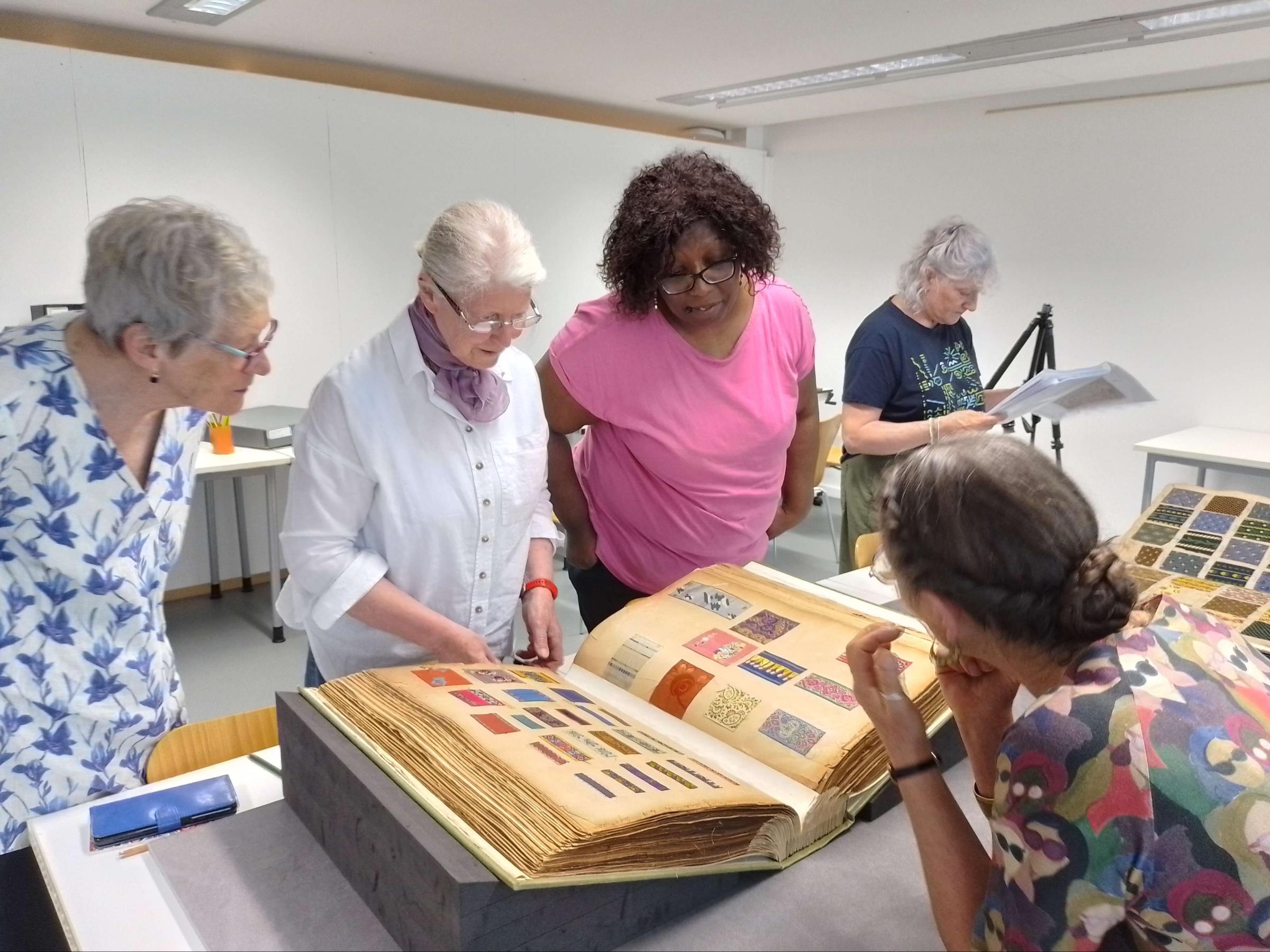
The British Quilt Study Group (BQSG) is the Special Interest Group for Guild members who are interested in the history and development of British patchwork and quilting. This year we have begun again (after the Covid hiatus) to arrange study visits for members and the first of these took place on 21 May at the Manchester Metropolitan University Special Collections Museum.
The Museum holds a great store of the pattern books and ‘recipe’ books (for dyes) assembled by the cotton manufacturers in and around Manchester, from the early 1800’s onwards. This was an unstructured visit, allowing members to look through a range of these books at their own pace.
These pattern books are a key tool in helping us to date quilts. As Guild members know, historic quilts are very rarely signed or dated. They often come to us with no provenance (the story behind the quilt, such as who owned or made it), for example from a charity shop or an auction. Understanding the history of fabric printing helps us to date these anonymous quilts.
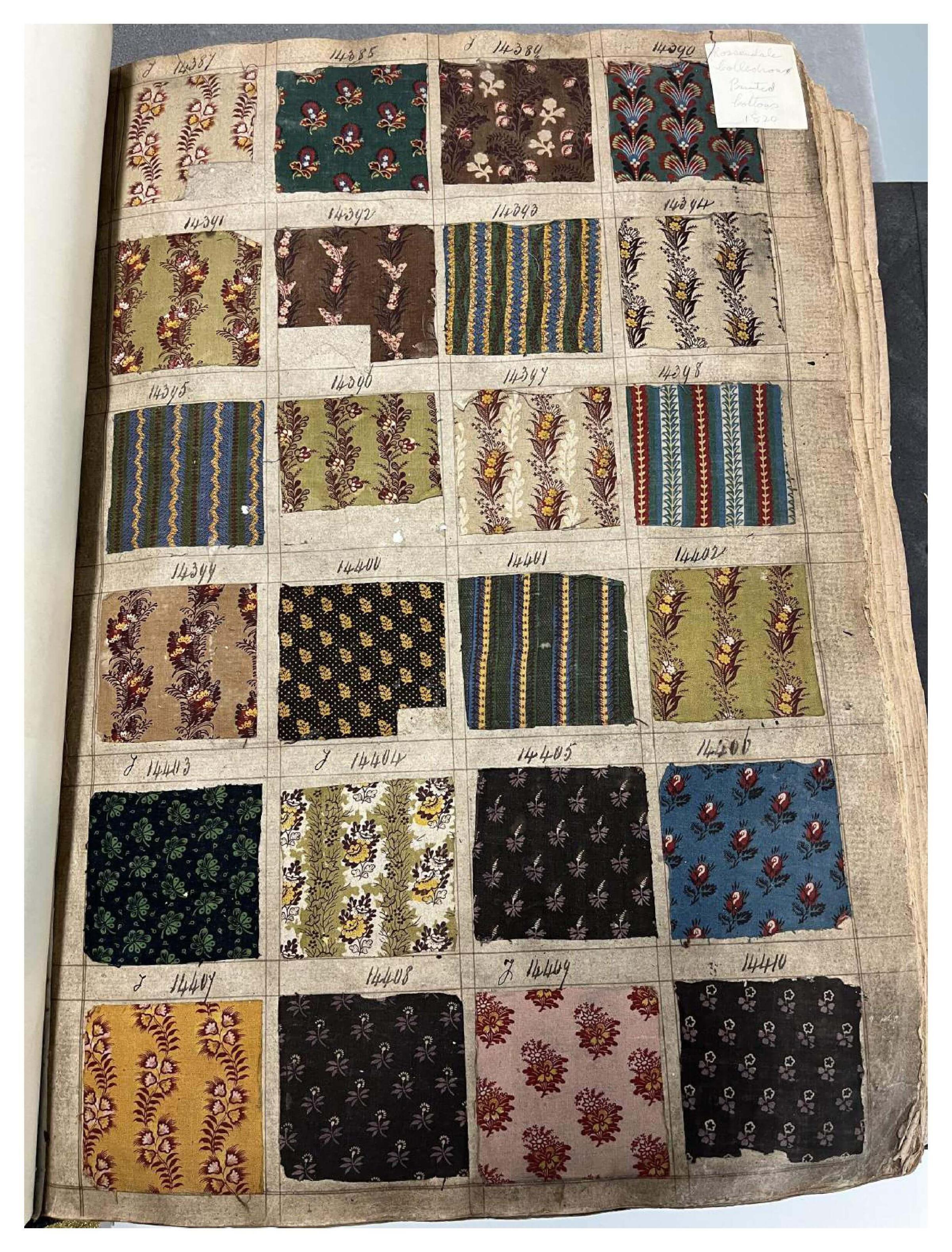
These three images show pages from pattern books from three dates.
These cottons were printed in Rossendale in the 1820’s. The dyes are all made with natural ingredients and are in soft colours. Brown, blue and yellow predominate, with green made by overprinting yellow with blue. The strong, bold yellow at the bottom left on this page is very distinctive for this period.
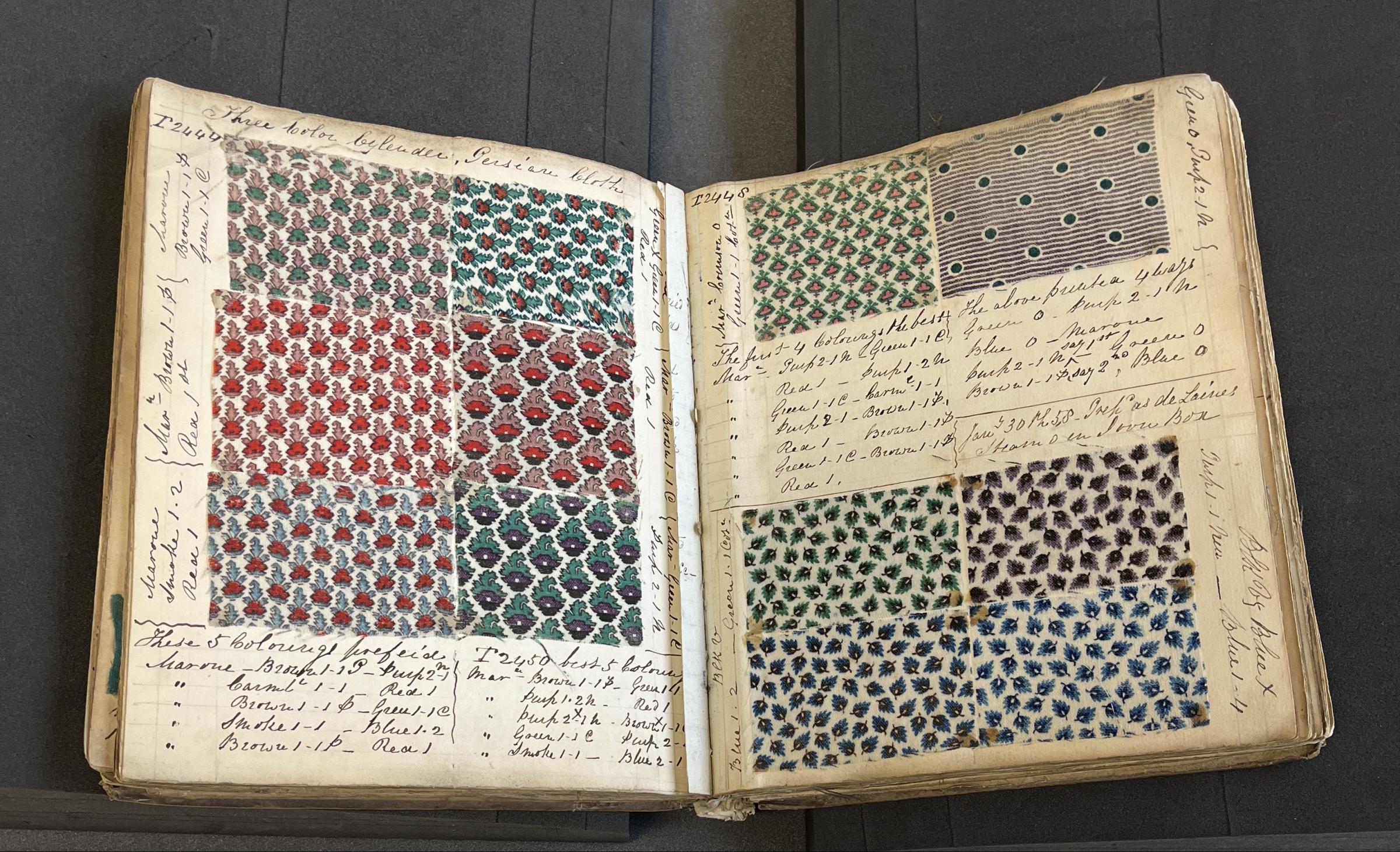
This ‘recipe book’ from the 1850’s shows the same pattern dyed in different colourways with notes about the colours and processes used.
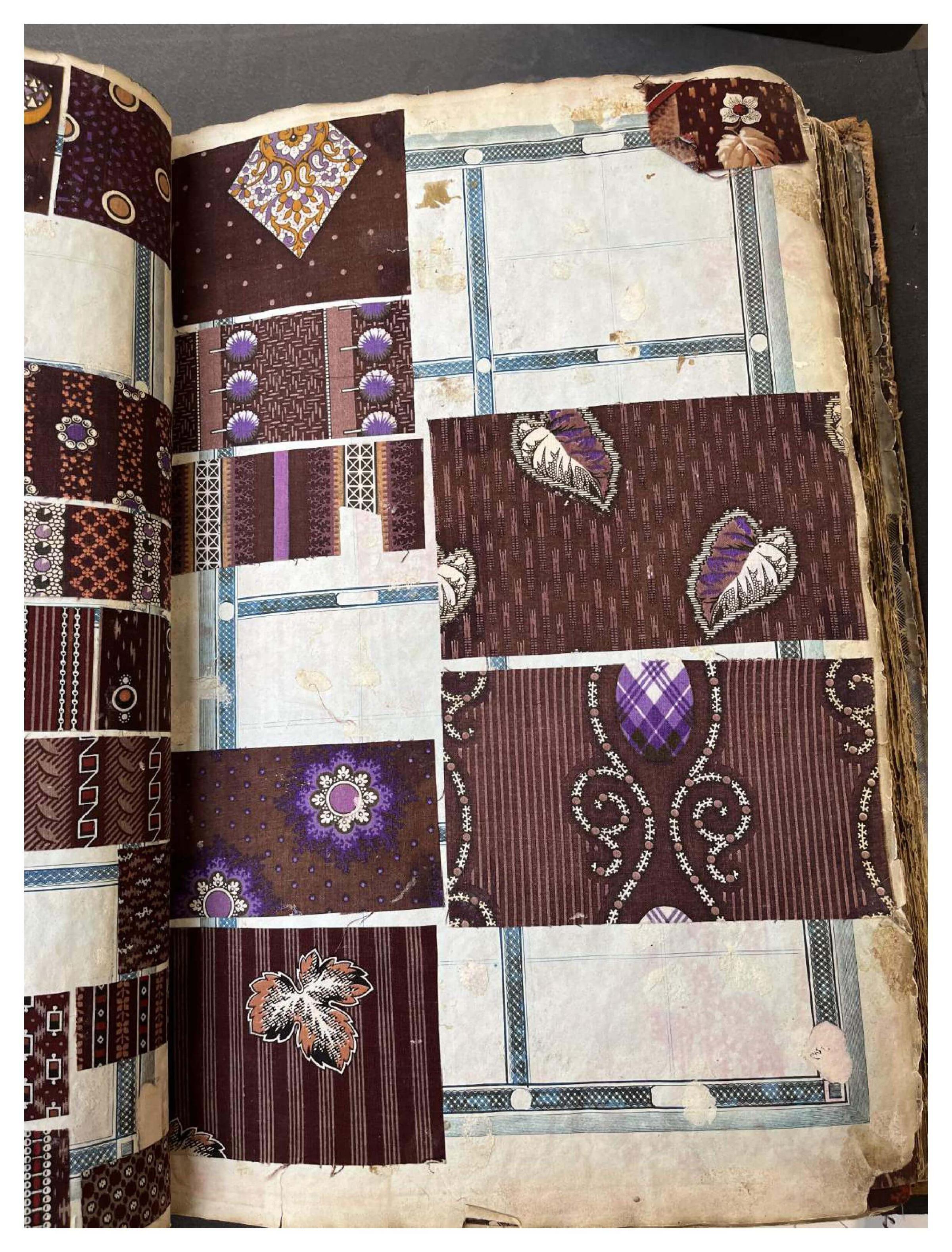
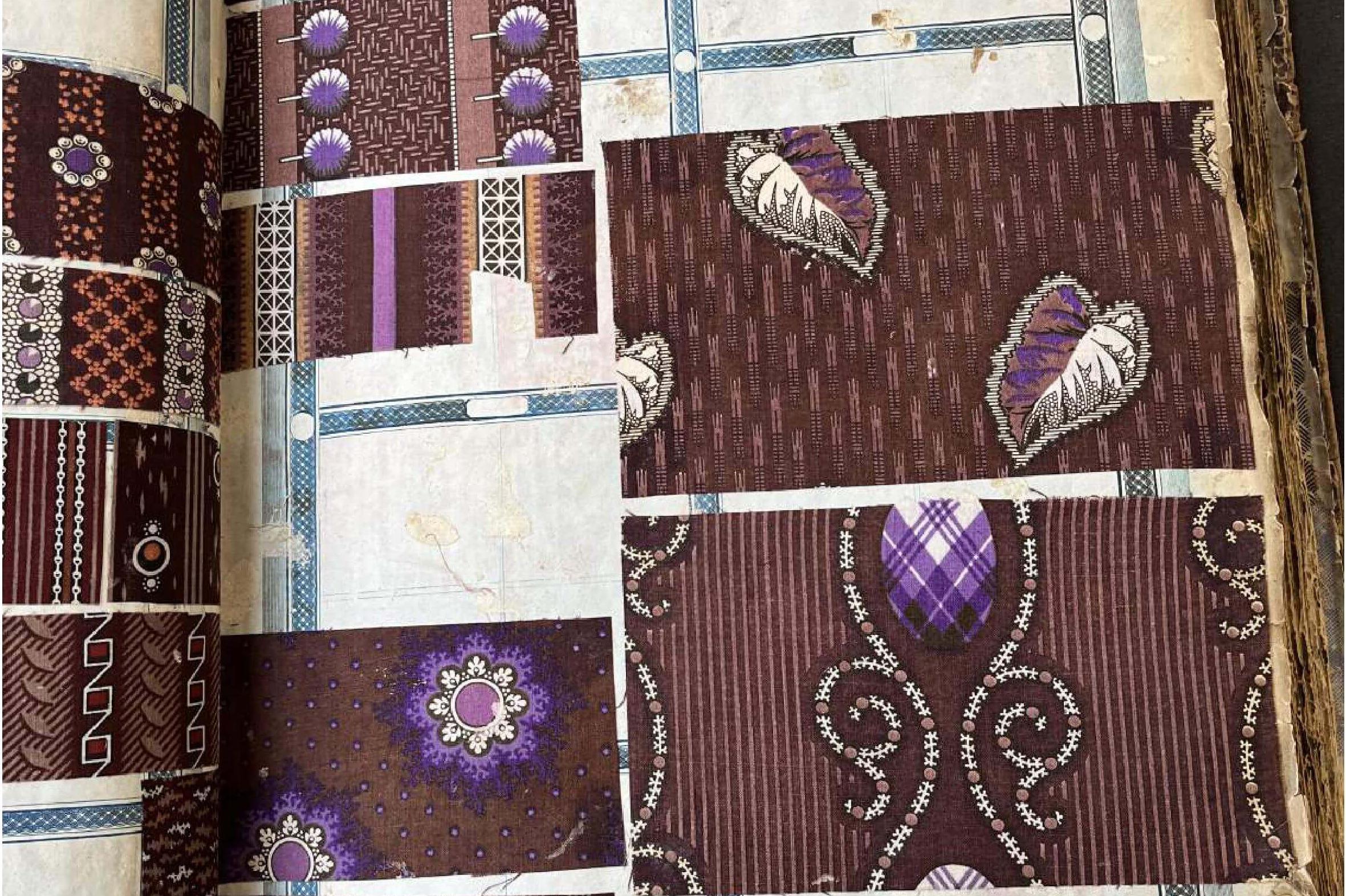
This page is from a book dating from the late 1850s and shows a newly discovered synthetic purple dye being used as a highlight on fabric dyed with a natural dye. The purple looks really vivid against the natural colours.
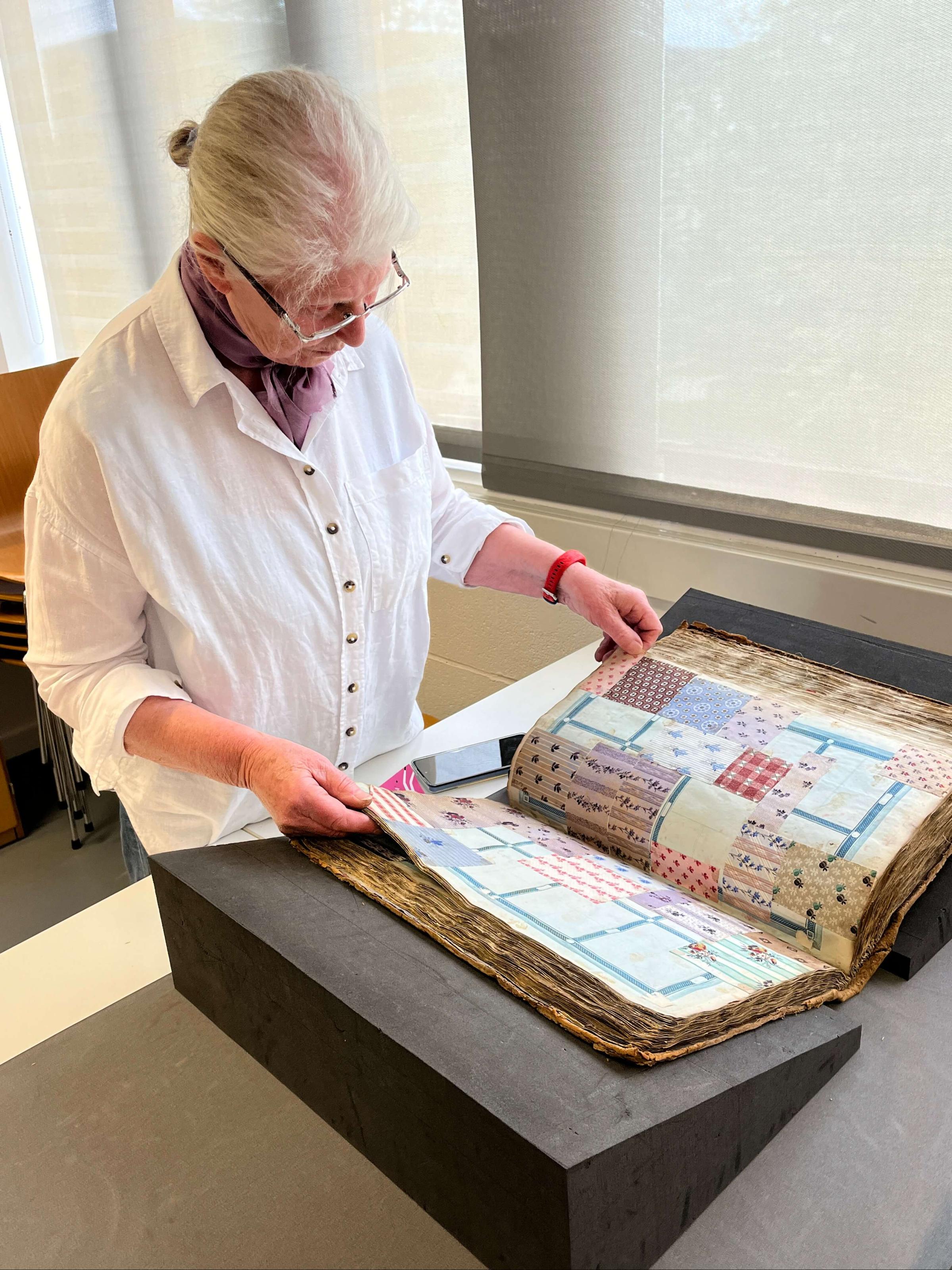
Thank you to Isabel Dibden Wright for organizing this visit and to Manchester Metropolitan University Special Collections Museum for hosting the visit and allowing us to reproduce these images of the fabrics in their collection.
Guest blog authored by Liz Whitehouse and Carolyn Gibbs

Struggling with machine quilting? Learn how to fix 5 common problems, including skipped stitches, puckering, tension issues, thread breakage and bulky quilts.
The British Quilt Study Group (BQSG) is a special interest group for Guild members interested in the history of British patchwork and quilting. They recently visited the Manchester Metropolitan University Special Collections Museum, where they examined pattern books and 'recipe' books for dyes dating back to the 1800s. These books are essential for dating historic quilts, which often lack signatures or dates. Understanding fabric printing history helps them establish the age of anonymous quilts.
We talk to Leah Higgins about her quilting journey, favourite techniques, inspirations and proudest moment. You can read a full interview with Leah in the winter edition of 'The Quilter', our membership magazine.
