Unfortunately, we don't support Internet Explorer anymore as it has been replaced by Microsoft Edge.
Please try downloading Microsoft Edge or an alternative modern browser for the best experience.
The Collection piece we have chosen to share with you to represent the second decade of The Guild is the Jubilee Quilt. This marvel of silks and velvets was donated to The Guild in 1992. It was not made by the donor?s family, but was given to the owner?s grandfather, William Machell, in lieu of rent. The quilt was made in celebration of the 50th anniversary of Queen Victoria?s accession to the throne in 1887.
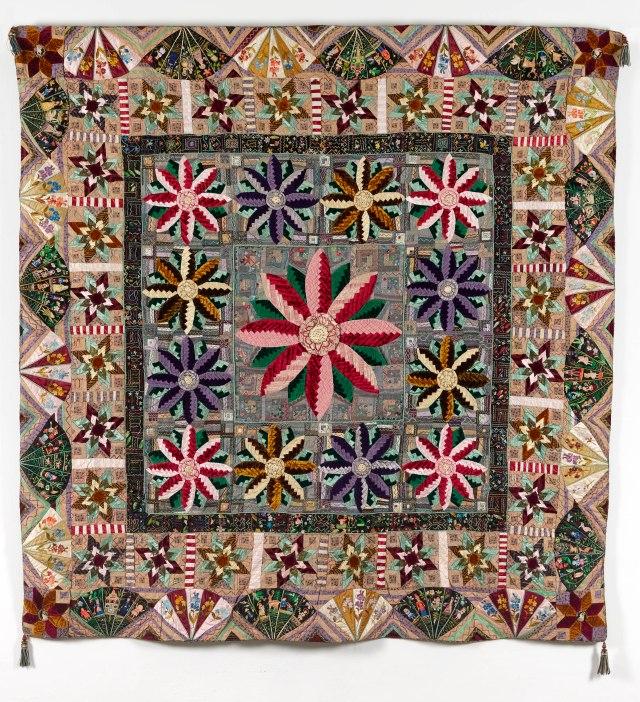
The Jubilee Quilt, c.1887. The Quilter?s Guild Collection.
The quilt came from the small mining town of Crook, 10 miles from Durham. Census evidence has shown the piece to have been made in the house of the tailor & draper, Mr Thomas Mills. The use of strip patchwork in the pattern motifs suggest that the fabrics may have been off-cuts from dressmaking or small quantities taken from a roll of material. Both the construction and ornamentation show the work of a clever, competent and inventive needlewoman or needlewomen, most likely Ann Mills and her mother, Lydia Taylor.
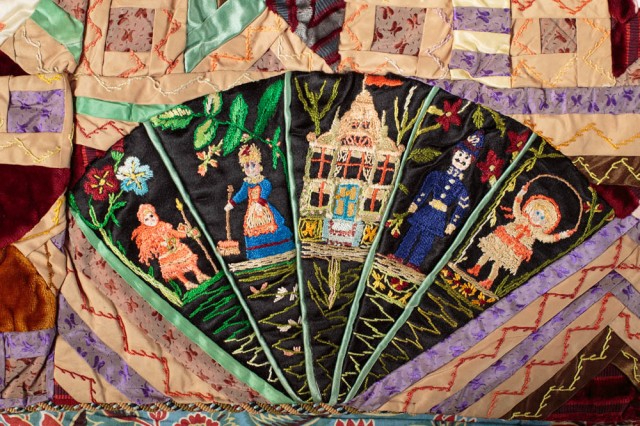
The extensive embellishment and embroidery exhibit an encyclopaedia of stitches and the detail on the fan shapes show intricate flower designs as well as details of the period ? including policemen and soldiers, children playing, oriental buildings and people of all creeds and walks of life. Transfer marks are visible in some places suggesting that the maker(s) may have used commercial patterns as inspiration for their embroidery.
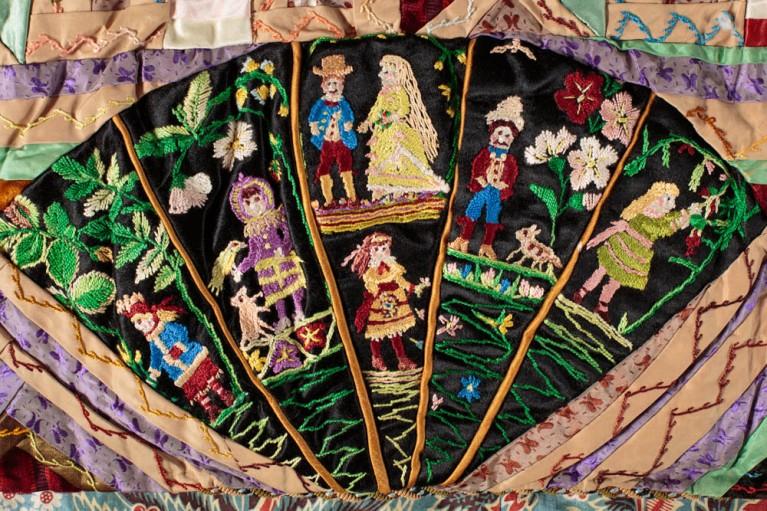
The quilt has a frame layout with a large flower centre surrounded by four complex borders. It is entirely hand stitched and embroidered. Although similar strip pieced flowers have been seen in cotton patchwork of the period, no other such intricate silk and velvet quilts have been found. It is possible, although not substantiated, that the quilt was made for display at a Jubilee exhibition or other venue and that this ?added value? may have persuaded Machell to accept it as a rental payment. The very survival of this quilt gives a unique and wonderful record of a royal Jubilee as well as an insight into social history of the late 1800s.
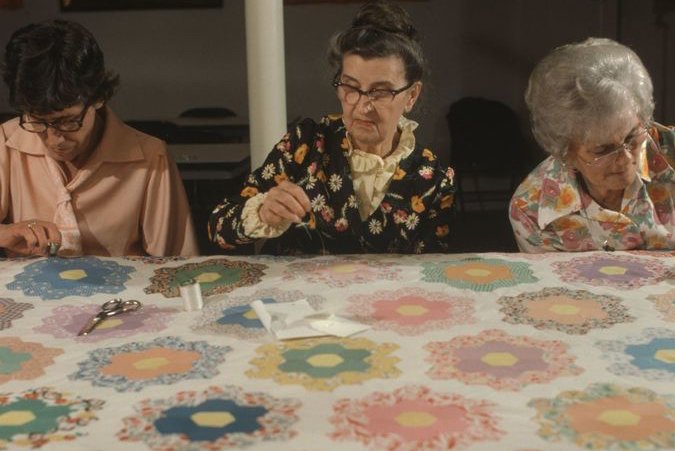
If you are having an issue with your stitching, a problem with your patchwork or want to chat with a like minded person, you can drop in to our Zoom Room any time
Discover how leaving a gift in your Will to The Quilters’ Guild can help preserve Britain's quilting heritage and support future generations of quilters.

Join The Loft, The Quilters' Guild's online events platform, featuring international quilting speakers, inspiring talks and creative learning opportunities for members and non-members alike.
