Unfortunately, we don't support Internet Explorer anymore as it has been replaced by Microsoft Edge.
Please try downloading Microsoft Edge or an alternative modern browser for the best experience.
You?ve been quilting since 2009. What inspired you to begin your quilting journey?
We moved into a new flat in 2007 with draughty, single-glazed windows. The flat struggled to hold the heat, so I wanted to make blankets for winter. I had previously crocheted small pieces, but when I realised how long it would take to make two large blankets, I quickly searched for something else.
I took to Google and found Jenny from Missouri Star Quilting?s YouTube channel. They had only been around for about a year, and I instantly fell in love with quilting. It was exactly what I was looking for. Using her tips, I made my first baby-sized blanket using a strip of wood as a ruler, which was a disaster, and then after some guidance from a local fabric store, I managed to make a second baby quilt. I was hooked, so I quickly found a sampler quilt pattern on a blog and made my first full-sized quilt.

Tom Bathgate, aka The Colourblind Quilter
You?re known on IG as @thecolourblindquilter, so we?d love to know, how do you approach colour in your quilting when dealing with patterns or when you design a piece? What advice do you have for other colourblind quilters?
When I first started quilting, I was so excited that I paid little attention to colours, but I could never quite figure out why I couldn?t recreate some of the beautiful quilts I saw online. I realised it was because I needed to learn about using colour.
For a long time, I let colour scare me. I wanted to overcome my anxiety, so I learned basic colour theory. I read and watched everything I could find. My ?ah ha? moment came when a graphic designer I worked with told me that colour is personal and subjective. Some people will love what you do, and others will hate it, but it?s about your joy in creating it. You can always practise and get better, but do it for yourself and don't worry about what others think. I gave myself permission to have fun, playing with things and learning that it was fine when something didn?t work; it was a learning experience.
When I work on a pattern or design a quilt, I start with the background and then pick my primary colour. Once I decide that, I find everything else becomes easier. I stick with 1 or 2 primary colours and then add 3 to 4 accent colours, depending on what the pattern calls for.
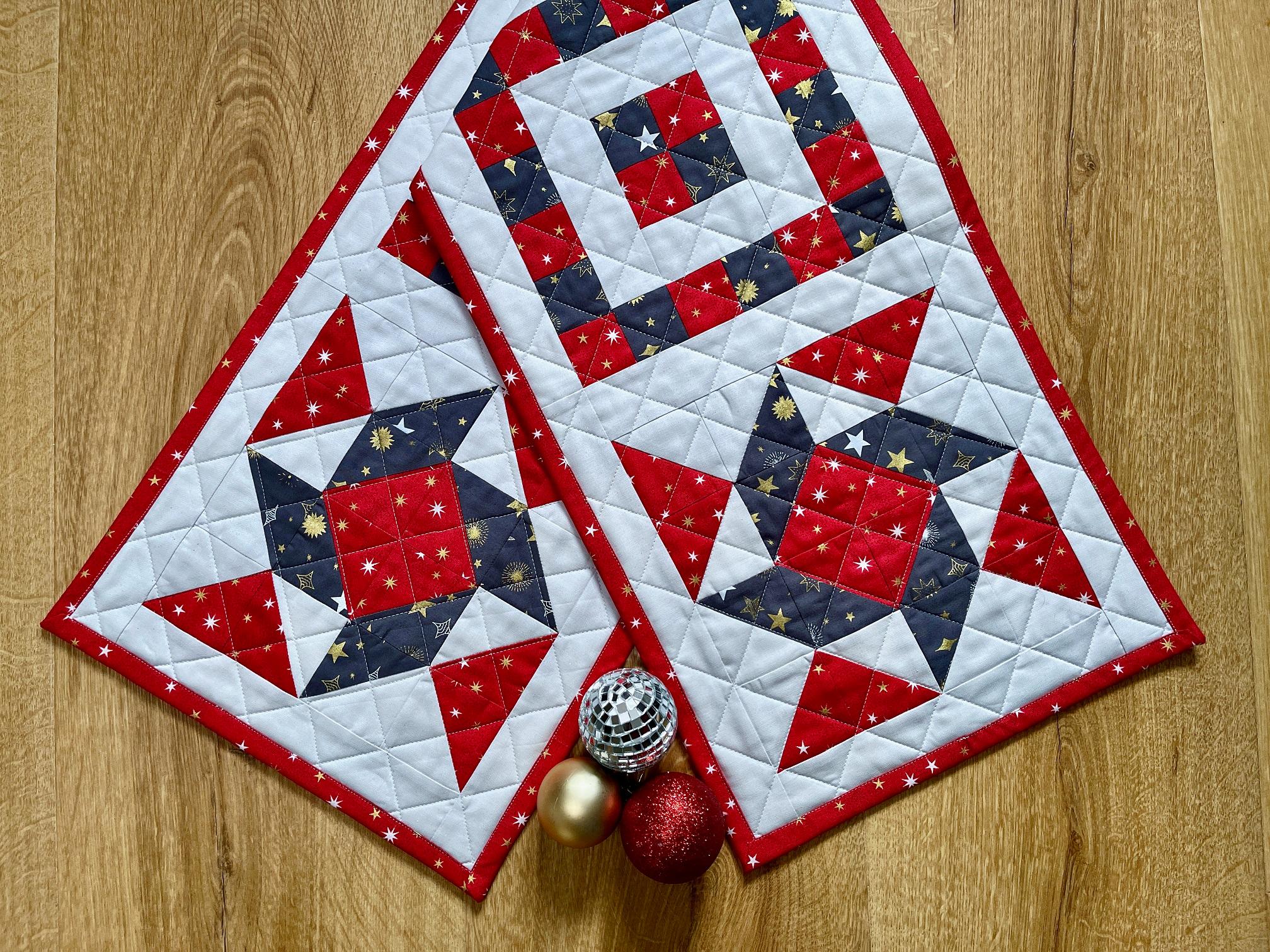
A Christmas Runner, design by The Colourblind Quilter
I find tones and shades the most complicated, so I like using colours that have good contrast. However, I am practising working with shades and tones to further my skills.
The best tip for other colourblind quilters is to label everything, especially your offcuts. I also keep project sheets for each quilt with a swatch of each fabric and the colour clearly marked for the future.
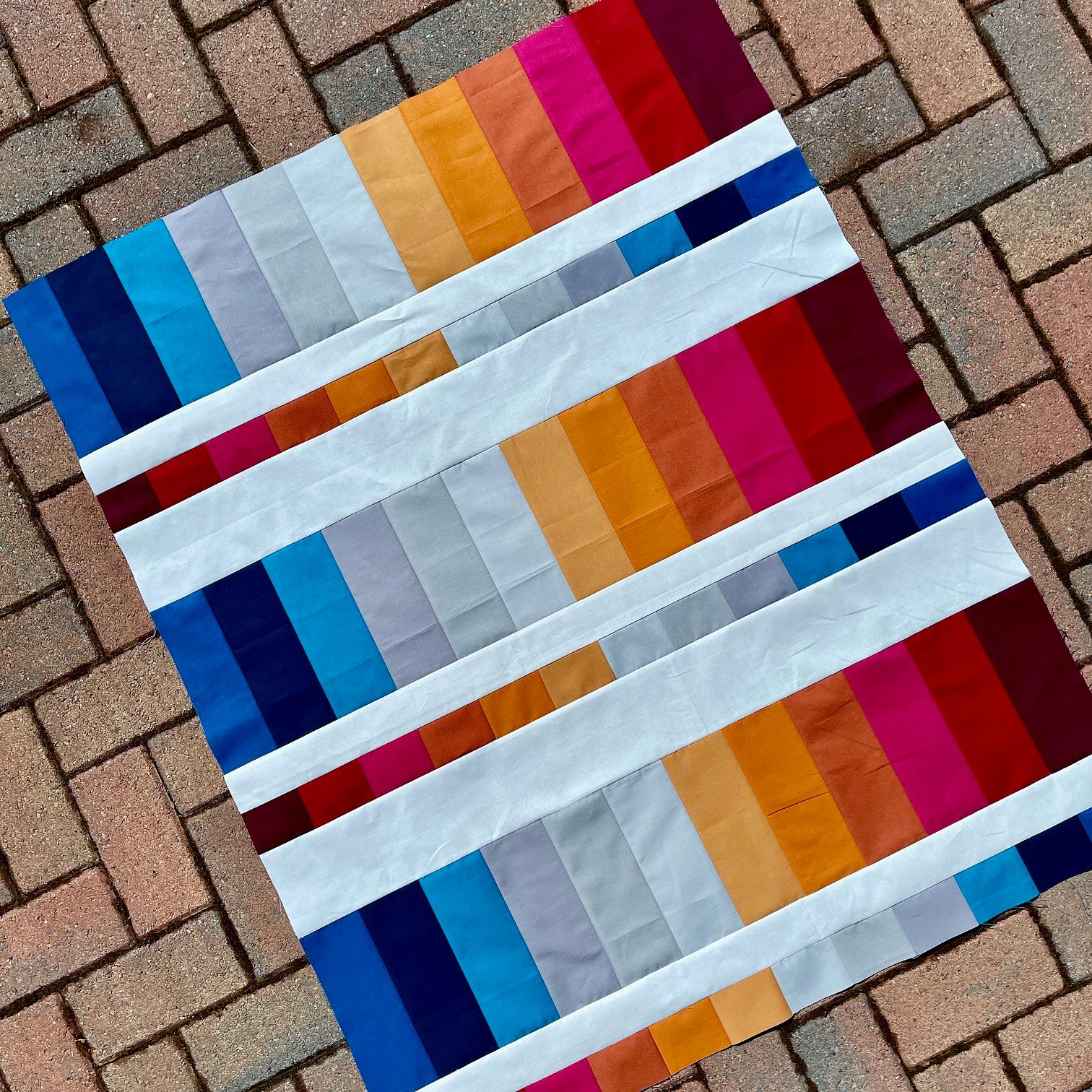
I also recommend having good lighting. So many times, I have worked with fabric in my regular room light and thought it was a particular colour. However, when I use the fabric for a video project, it looks completely different in the filming lights. The quilt below is a good example; the blues on the left are the wrong way around, as I didn?t have bright lights on and got mixed up.

Tom with his West Highland Terrier
Sewing is known for its ability to reduce anxiety, encourage mindfulness and lower stress. How would you say that your quilting life has supported your mental health?
I have worked from home for over 14 years, and I can structure my days to fit around whatever else I want/need to do. When I am particularly stressed with a piece of work, if I can, I try to leave it and go and do 15 minutes of sewing to switch off the logical side of my brain and let the creativity take over. When I return to work, I feel calmer, more relaxed and able to think of solutions that help me with my problem.
I also love nothing more than putting on some good music, getting a project out and singing along whilst I work. It?s amazing for stress relief and does wonders for my mental health. I find it keeps me relaxed and feeling good.
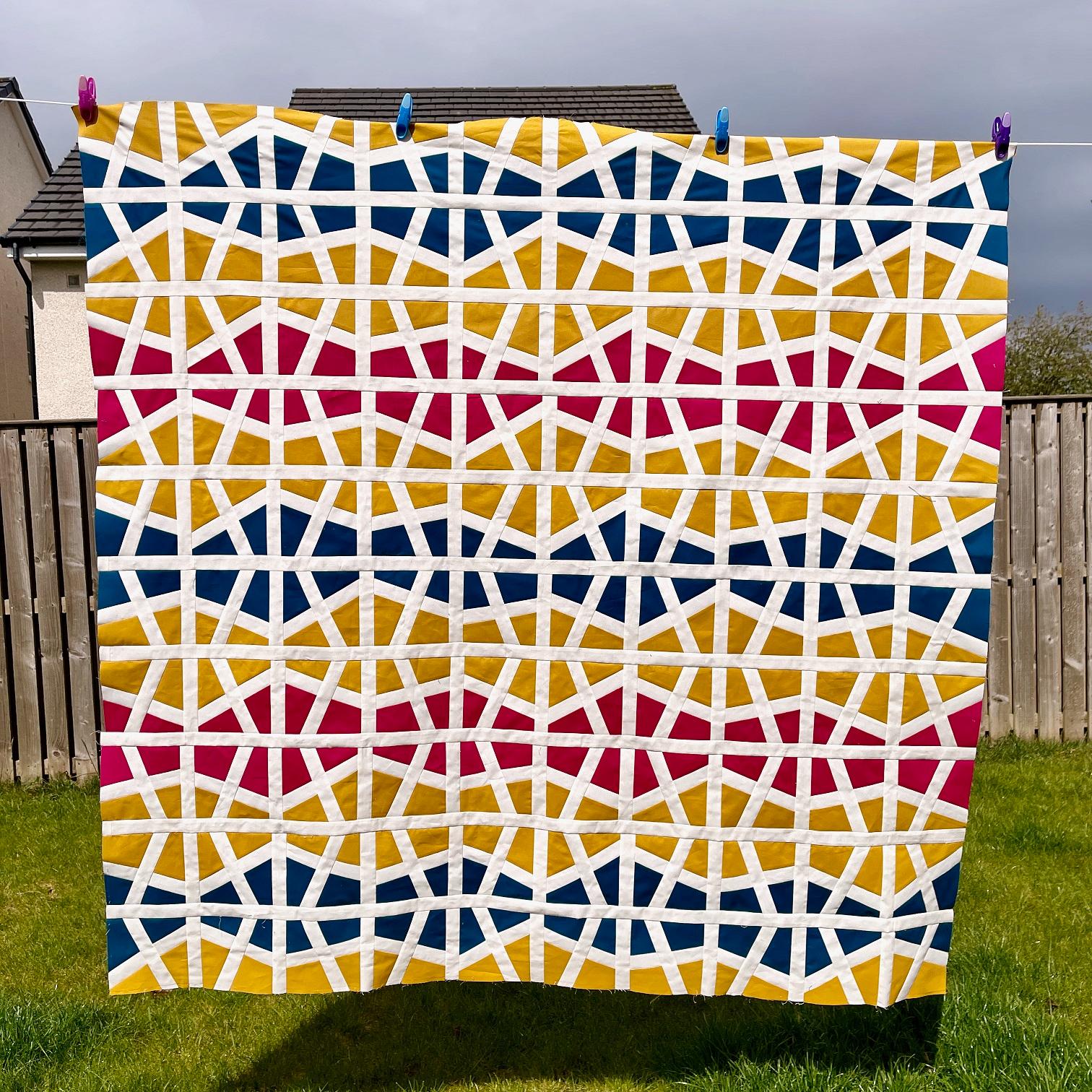
Chromatic Crackle Quilt, pattern by Ahhh Quilting.
Which of your quilts are you most proud of, and why?
I have two quilts that I am proud of because of the number of colours contained in them. In 2021, I took part in twenty-one quilt pattern tests to build my skills and learn from other pattern designers to help with my pattern writing.
My first test was the Minimal Medallion Quilt, which required twelve colours plus the background. This was a huge stretch for my colour skills, not to mention several construction methods I have never used before. It took me a whole week to pick the colours for this and I was very unsure about it, having to seek help from a friend who was a graphic designer. It was a stressful construction process, and I fretted over the project right to the last stitch of binding. Luckily I was happy with the result; it looks great and taught me a lot.
The second quilt was the Rainbow Fields quilt. Again this was a twelve colour pattern, and I wanted to try using shades. I wanted the quilt to be bright and colourful on one side but with a cooler side. I managed to pick all but one of the colours myself. I struggled with the red, but I managed everything else myself. It wasn?t the most complicated quilt to construct, but that allowed me to focus on colour and placement. This quilt has received many compliments, bolstering my confidence in using colour in projects.
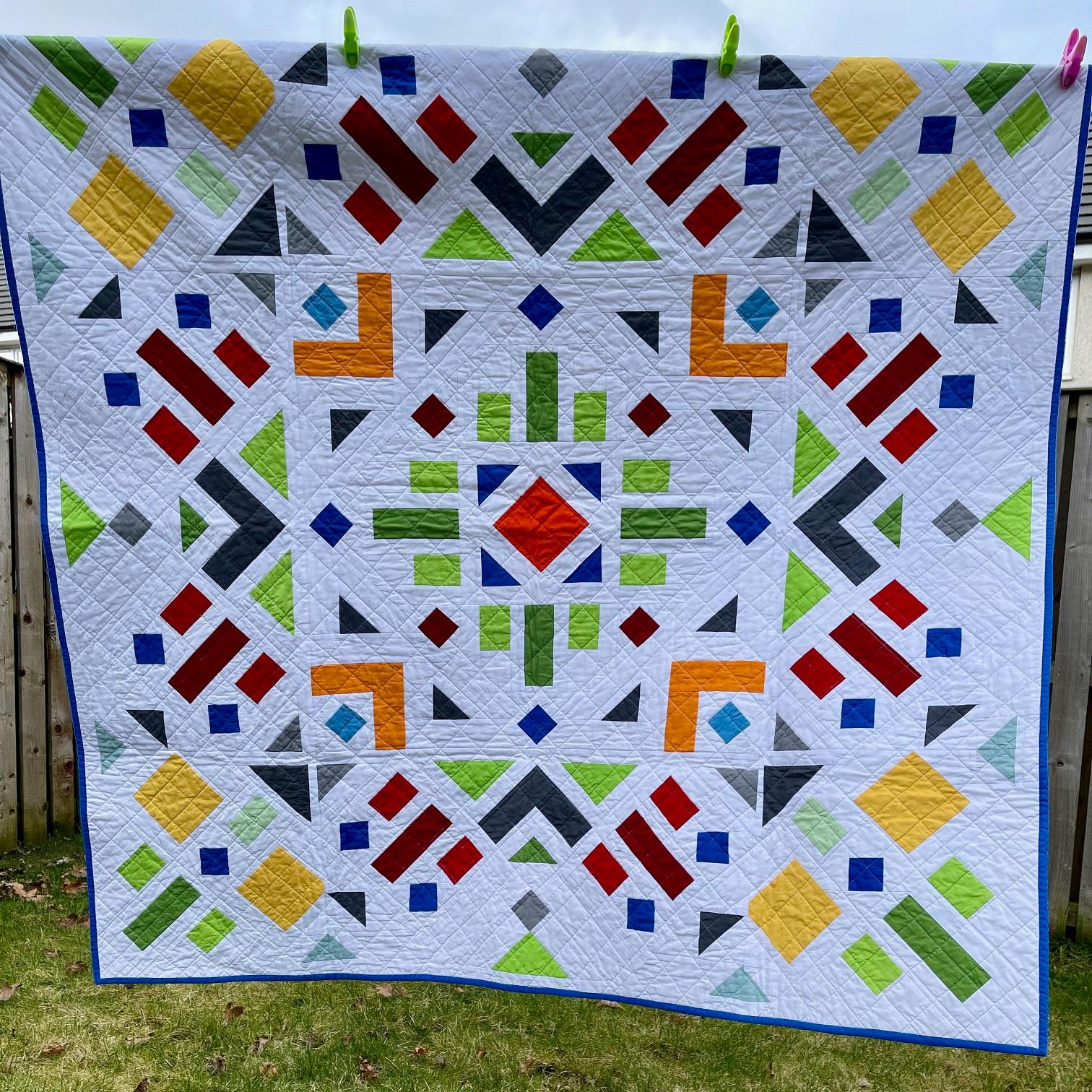
Minimal Medallion Quilt
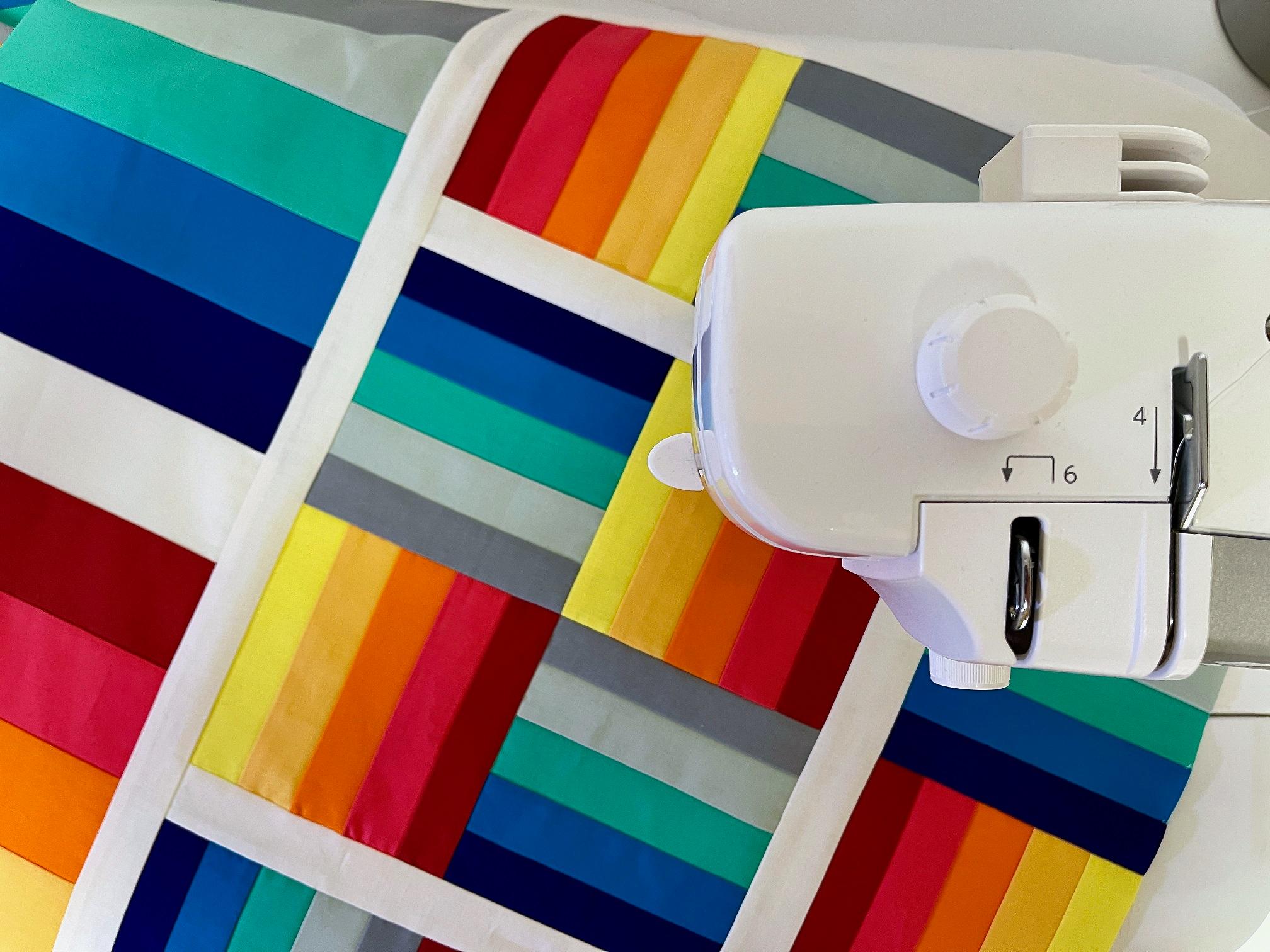
Rainbow Fields Quilt
What do you love about the quilting community?
I love how supportive everyone is and how willing they are to share with others. I?ve often asked quilters for advice and input on projects, and everyone has always helped me. The shared passion is amazing, and I love seeing what everyone makes and hearing their stories. I think we never stop learning, so having access to this wealth of knowledge, ideas, and creativity is very special.
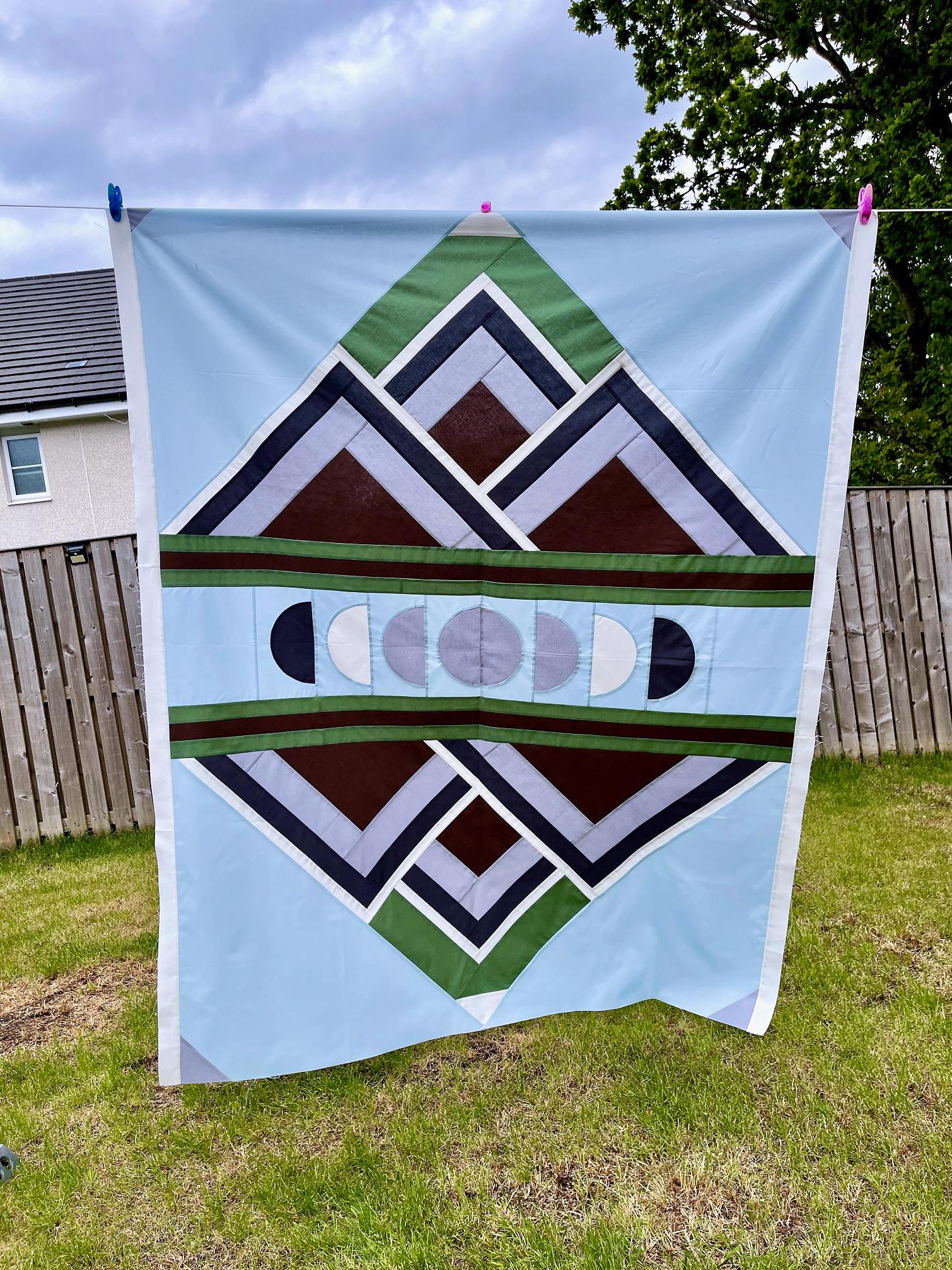
Summer Solstice Quilt pattern by Alderwood Studio
You recently completed a month-long sewing challenge. What is your advice for someone who loves being creative but struggles to find time to sew regularly?
The biggest thing I learned from my month-long challenge was being prepared. We all have those days when we might struggle for time or are too tired to sew. After a stressful day at work, I was too tired to think about being creative, but I still wanted to do something quilting-related.
On those days, I want to pick up a box to sew, or things that need to be pressed. I?m not up for doing 2 hours of cutting or spending ages planning colours and layouts. I want easy activities. Being prepared means having a box with things ready to go, which reduces the path of resistance to the activity. I have a higher chance of actually doing some sewing.
Spending that little bit of time getting ready to work makes all the difference. I spend an hour once a week preparing things I can pick up and spend 5/10 minutes on throughout my week. I can be creative and still sew without feeling overwhelmed because I don?t know where to start, which helps me squeeze a bit of sewing in whenever I can.
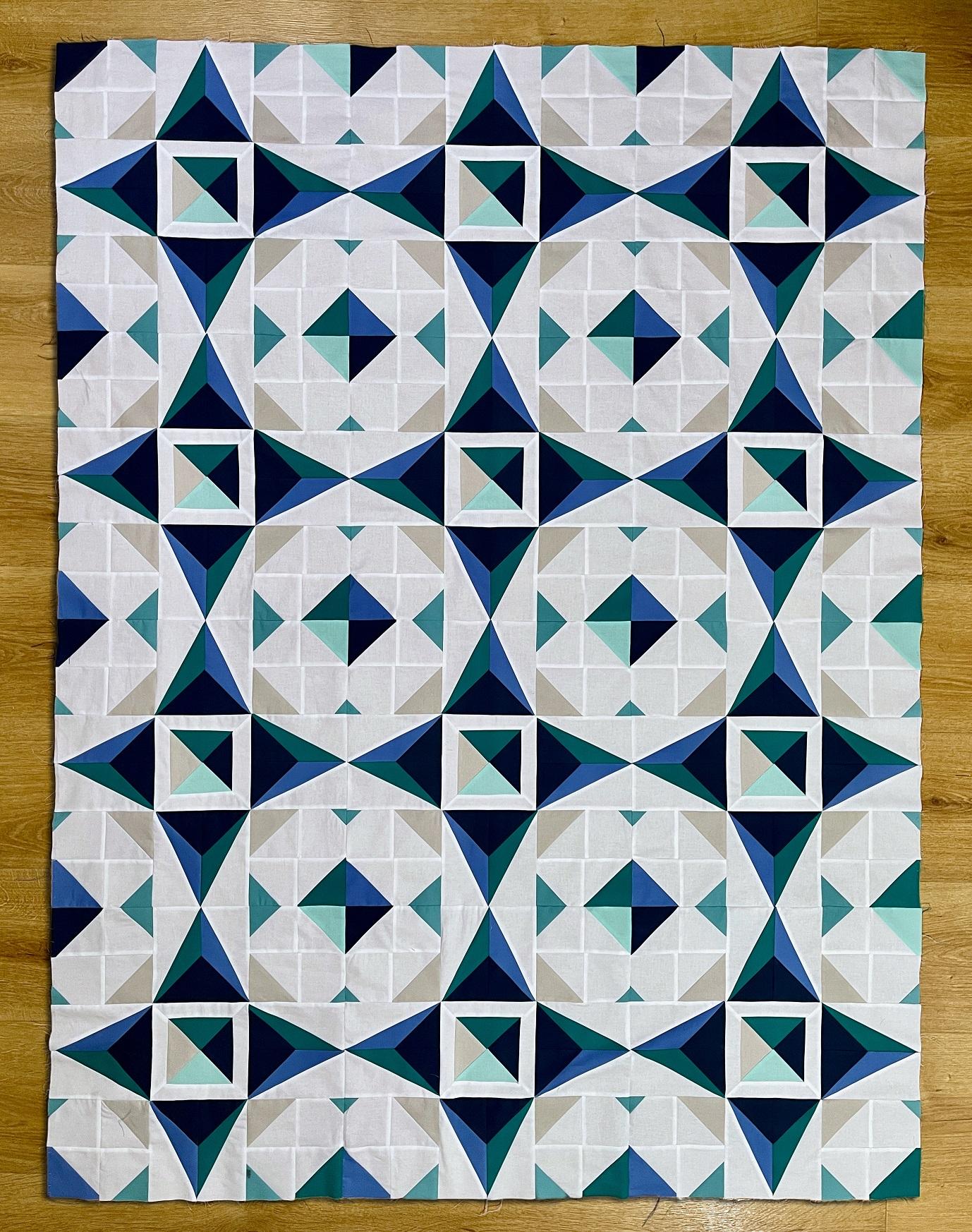
Crystalline Quilt, design by Alderwood Studio
To find out more about Tom, you can follow him on Instagram @TheColourblindQuilter.

Struggling with machine quilting? Learn how to fix 5 common problems, including skipped stitches, puckering, tension issues, thread breakage and bulky quilts.
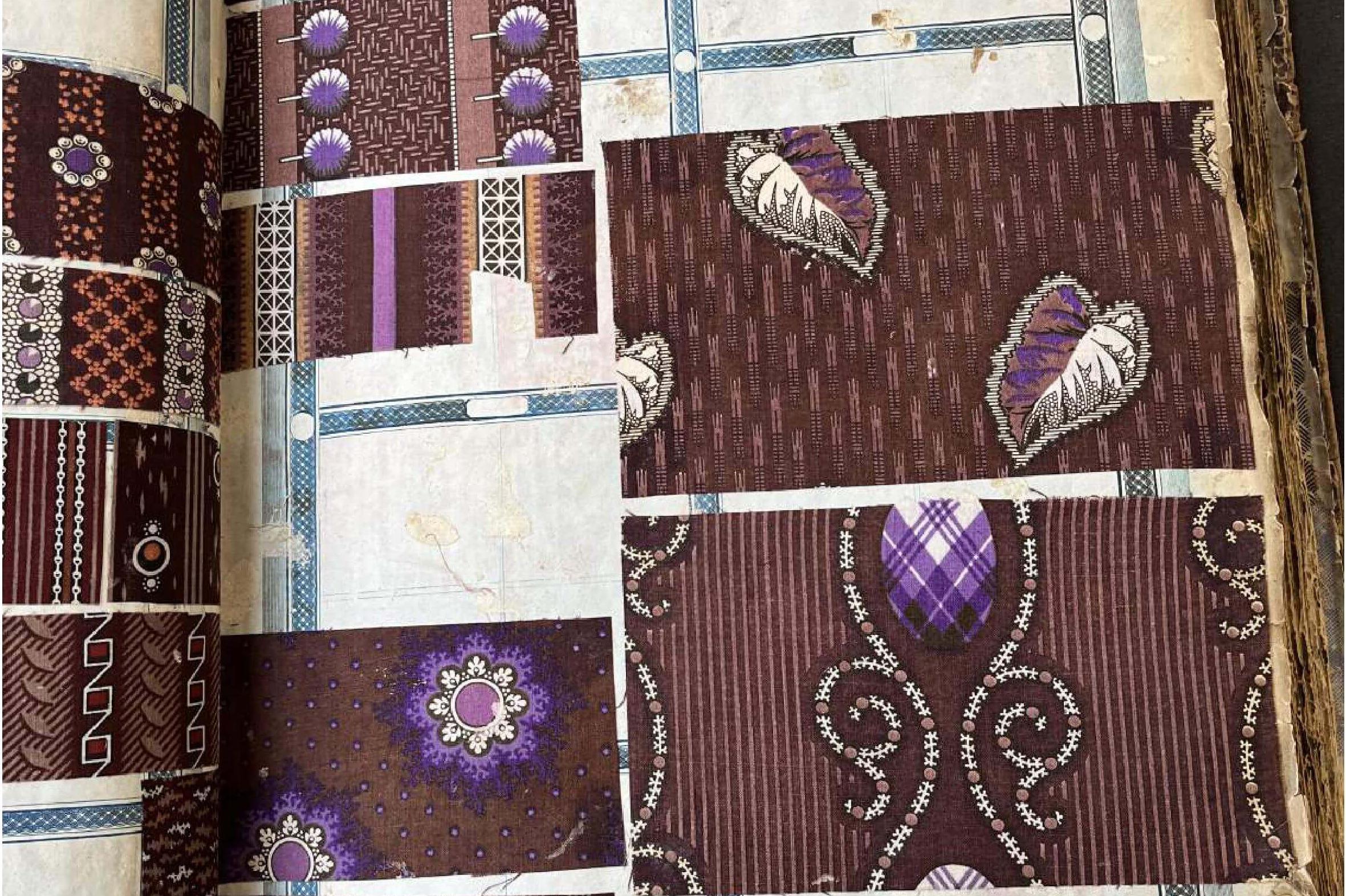
The British Quilt Study Group (BQSG) is a special interest group for Guild members interested in the history of British patchwork and quilting. They recently visited the Manchester Metropolitan University Special Collections Museum, where they examined pattern books and 'recipe' books for dyes dating back to the 1800s. These books are essential for dating historic quilts, which often lack signatures or dates. Understanding fabric printing history helps them establish the age of anonymous quilts.
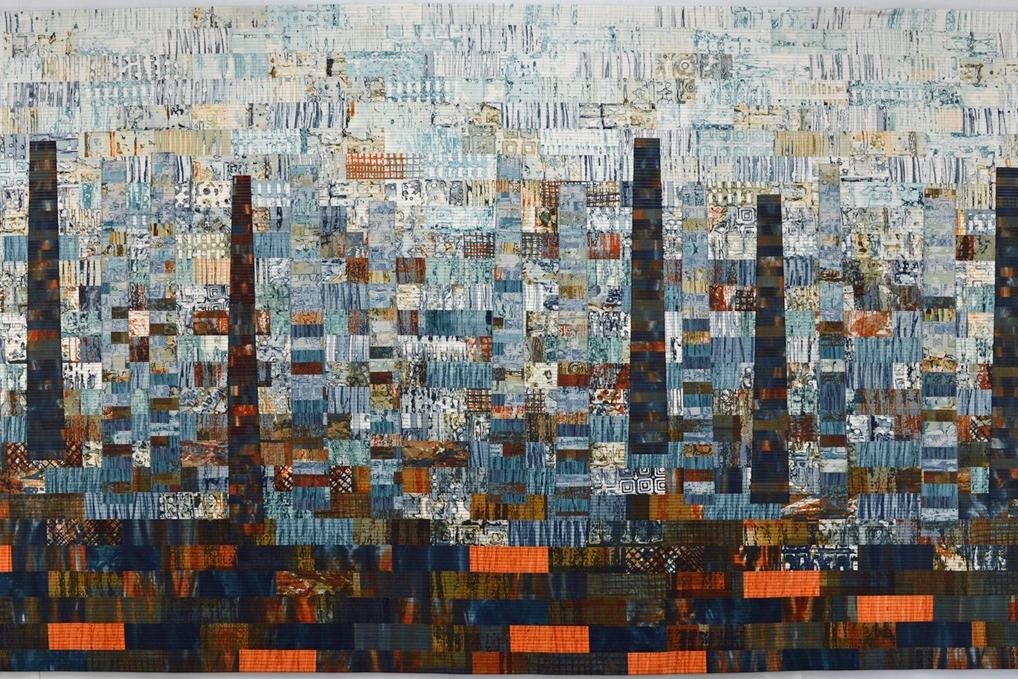
We talk to Leah Higgins about her quilting journey, favourite techniques, inspirations and proudest moment. You can read a full interview with Leah in the winter edition of 'The Quilter', our membership magazine.
