Unfortunately, we don't support Internet Explorer anymore as it has been replaced by Microsoft Edge.
Please try downloading Microsoft Edge or an alternative modern browser for the best experience.
Ranya Abdulateef describes how her journey as an asylum seeker has shaped her art and her work.
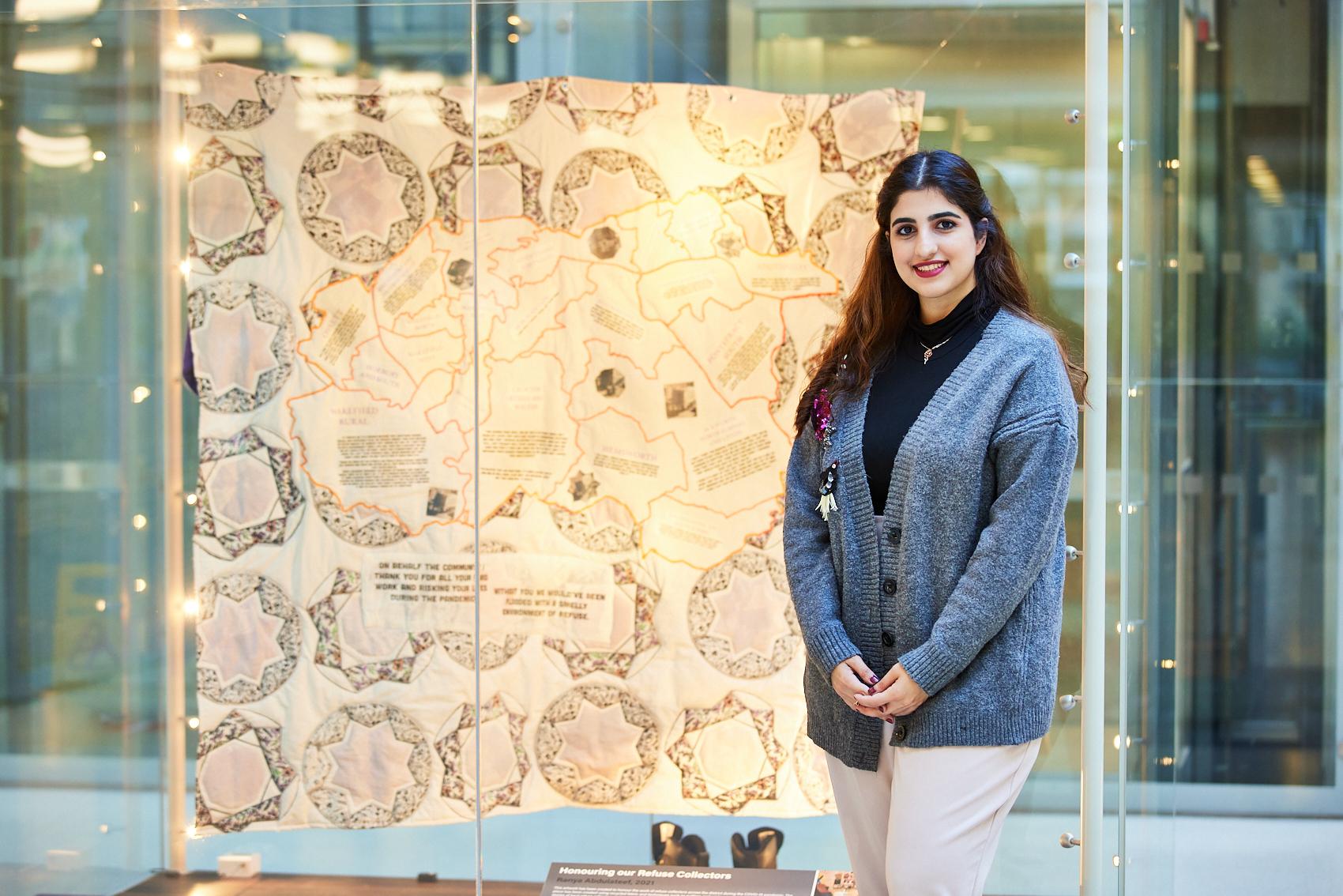
Ranya standing before 'Refuse Collectors', her work celebrating the unsung labour of bin men and women throughout the COVID-19 lockdown.
Give a little background on your journey both personally and artistically. How did you get to this point?
I?m a Wakefield-based artist who works mainly with textiles and printmaking. Born in Iraq and raised in the United Arab Emirates, I studied fashion and textile design at Wakefield College. I am now based at The Art House (TAH) as part of their Studio of Sanctuary programme. My practice combines creative mediums through a process of layering a range of techniques. I really enjoy sharing my creative experience with others by delivering workshops at TAH, and volunteering with the Wakefield City of Sanctuary and other artistic ventures in the region. In addition, I'm part of an early-career group of artists, The Merrie Collective, which is based in Wakefield as well.
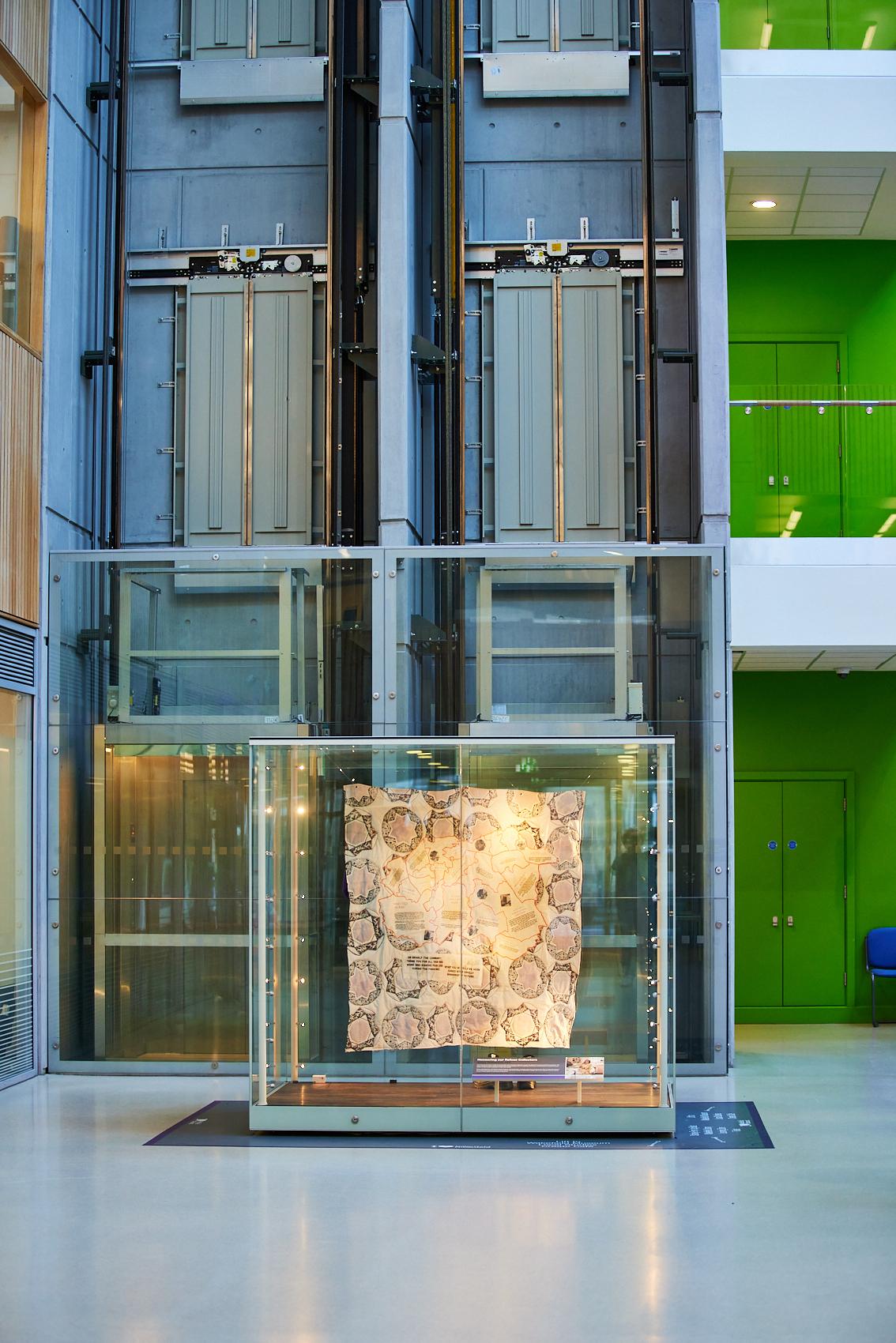
'Refuse Collectors' on public display in Wakefield.
To achieve all this, I owe much to The Art House, specifically to the CEO Sydney Thornbury who, after my parents, was my biggest supporter. Sydney gave me the opportunity to be part of The Art House family, when I had been struggling to finish my BA due to circumstances beyond my control. The Art House supported me to develop my portfolio, and that?s how I became part of their creative workshops. This led me to become one of the leaders in their workshops, and now I?m working with the front-of-house team, welcoming people on their visit, and in the café. With the skills I've developed, I?m now leading different workshops around the region. I also work and volunteer with several organisations including Wakefield City Of Sanctuary and Leeds Refugee Forum.
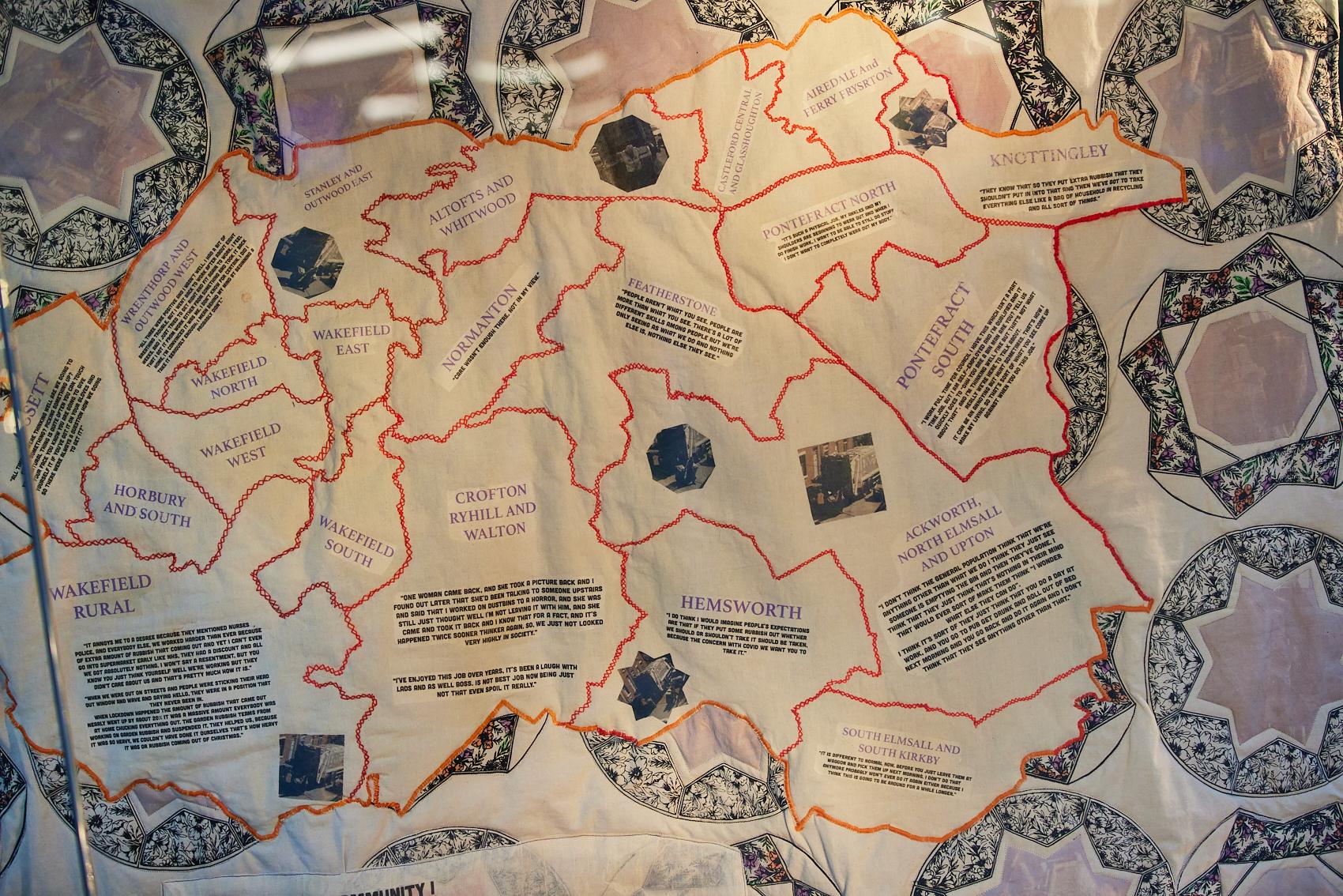
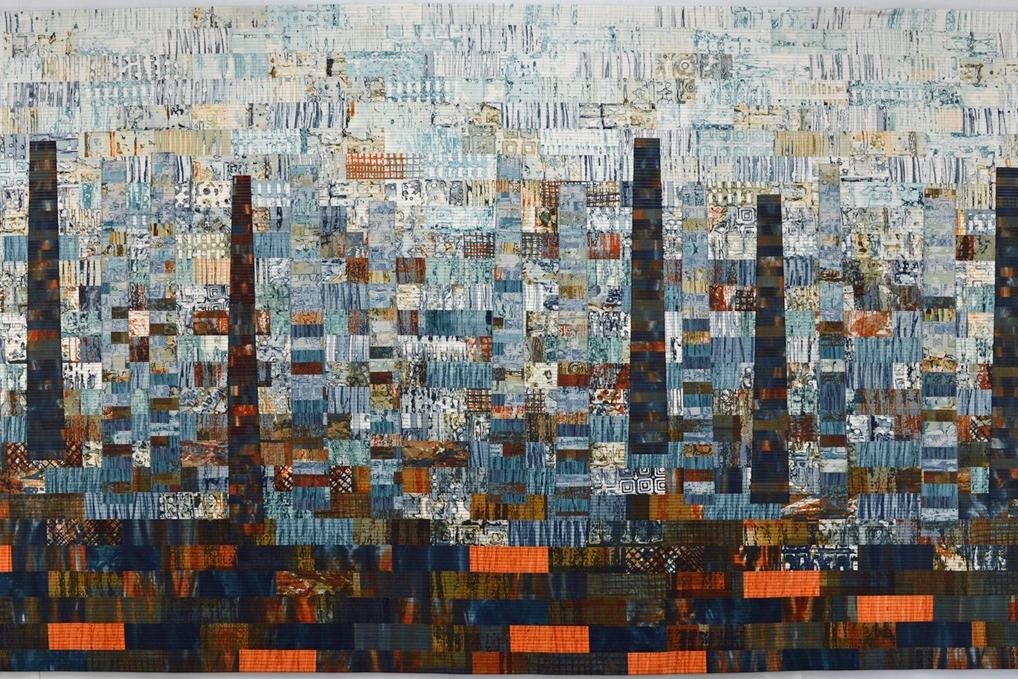
Detail of 'Refuse Collectors', showing the areas of Wakefield Metropolitan District Council on a printed and embellished textile map.
You work alongside refugee communities providing workshops in West Yorkshire, tell us about these and what is a usual scenario?
As I've been through the experience of being a refugee myself, I do fully understand what they feel. To leave your home, family, friends and your whole life and come to a different life, culture and atmosphere is not easy. I might not be able to help much with their situation, but I can help by building their language skills, distracting their overthinking, reflecting on creativity with them, and helping to build confidence. I can support them to join workshops and to meet new people so they can begin again to be part of a community, and to feel they?re welcomed. These are my aims and that?s what I'm working on with my groups, especially by leading the women in wellbeing sessions at Leeds Refugee Forum.
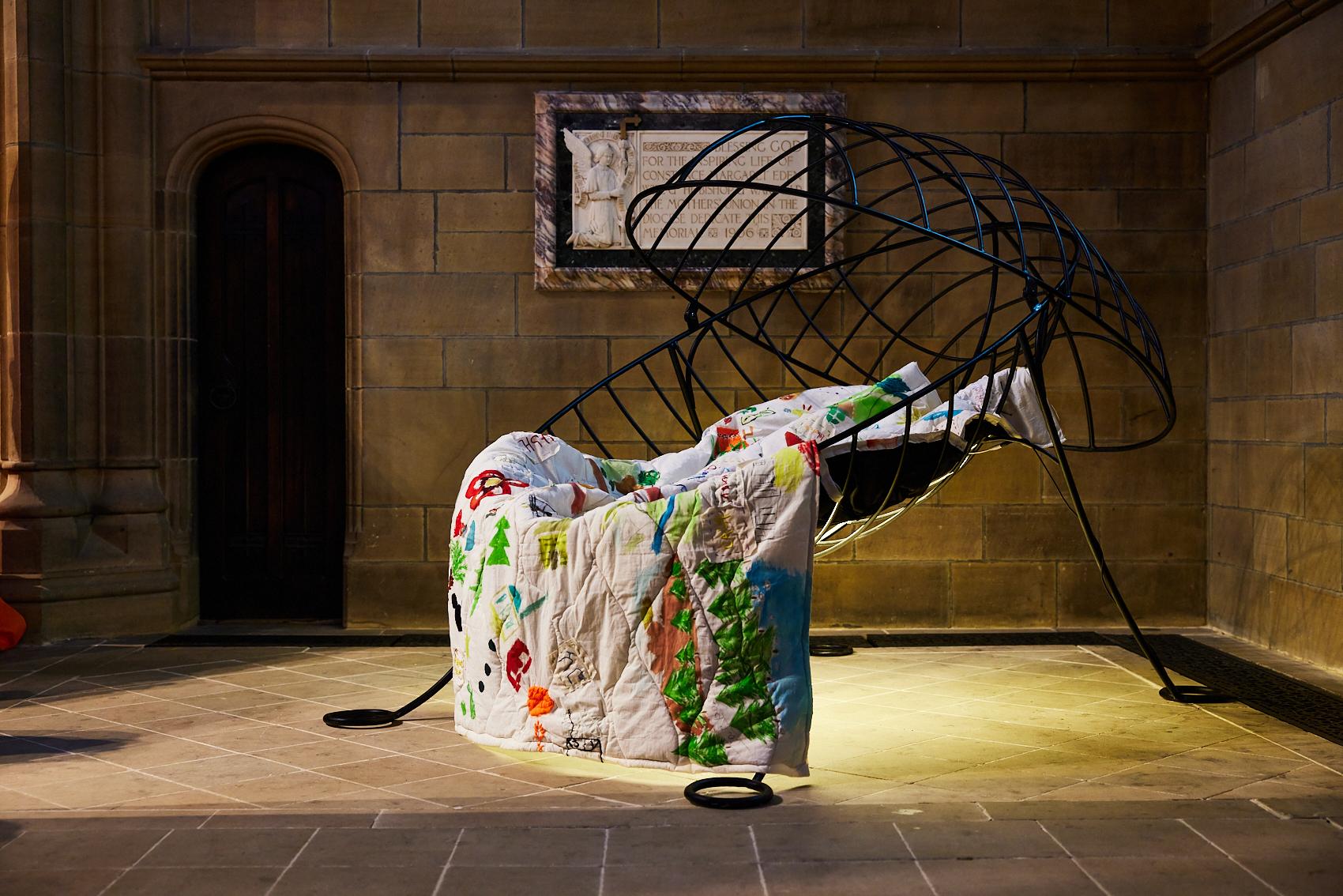
The 'Dream Runner' sculpture, with Ranya's blanket which includes participant's memories of home.
You produced a quilted blanket as part of the artwork alongside your workshop participants. It's an incredibly moving piece of work, tell us how that was made and who contributed to the final piece.
Dream Runner started with the internationally renowned artist and sculptor Perminder Kaur who wanted to work with local community groups to explore themes around ?Home?. The Art House is a Studio of Sanctuary, which brings asylum seekers and refugees together with local residents by delivering different creative workshops, such as Talk and Draw. Perminder wanted to explore and expand the project that she was developing with The Art House. I was working to support the Studio of Sanctuary community programme, along with fellow artist Ifa Abebe, and we were introduced to Perminder by Damon Jackson-Waldock, the Programme Director at The Art House.
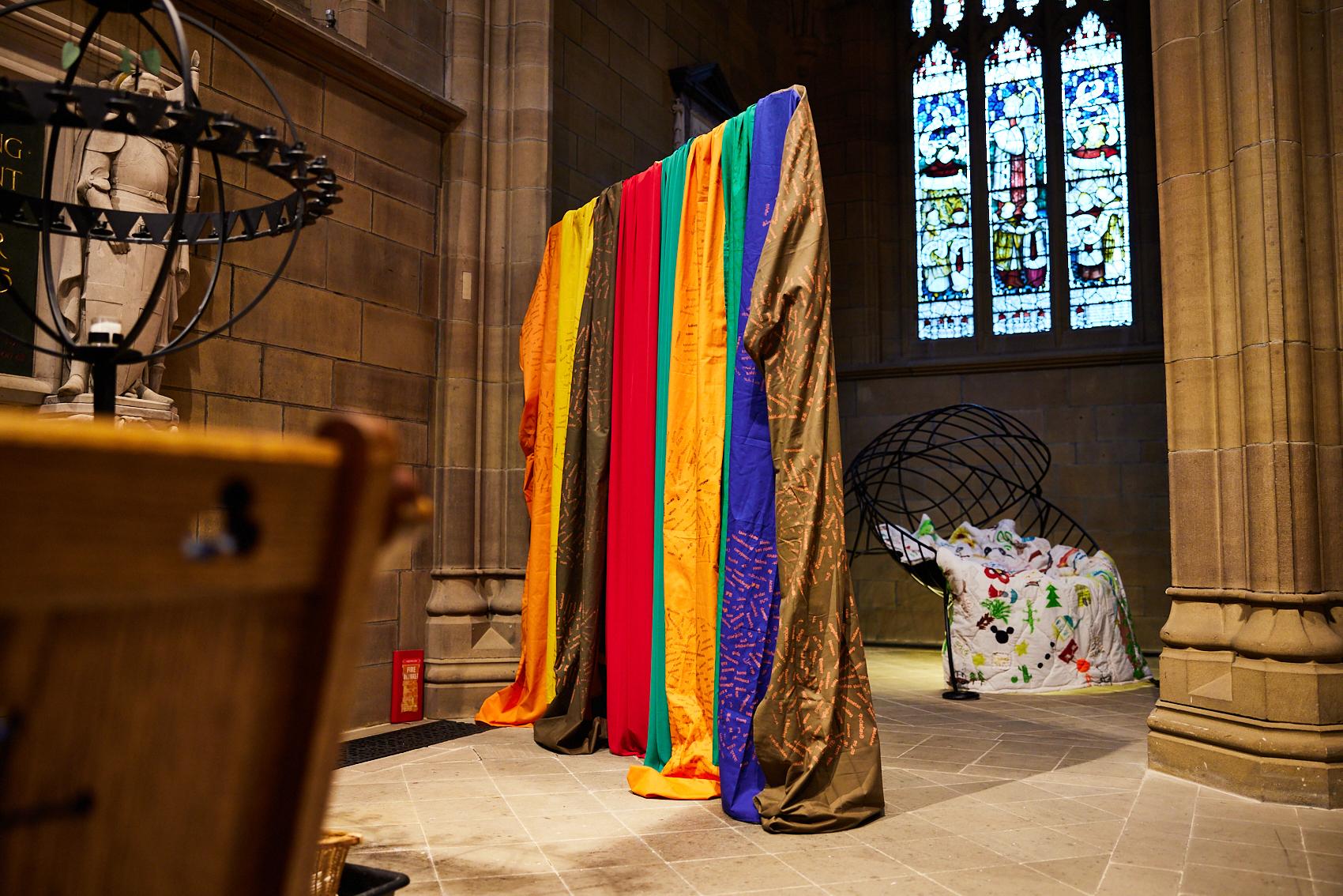
The 'Dream Runner' sculpture in Wakefield Cathedral, 2022. The completedisplay incorporated the collaborative work of three artists considering questions around the privileges of safety and sanctuary.
We help facilitate workshops with members of Wakefield's asylum-seeking community. One result of those workshops was the creation of the sculpture Dream Runner, a 2.5 metre-long sleeping pod on legs that suggests a place of protection, inviting the viewer to consider questions around the privileges of safety and sanctuary. The blanket that I created for inside the sculptures includes text from many different languages, and imagery of the participants? memories of home, all quilted into a blanket.
It was a new experience for me to collaborate in this way, and to work with an established artist like Parminder. It was a wonderful experience to be working with different background artists, with different skills and different ways of working. I learnt so many things and I hope this will result in many future collaborations.
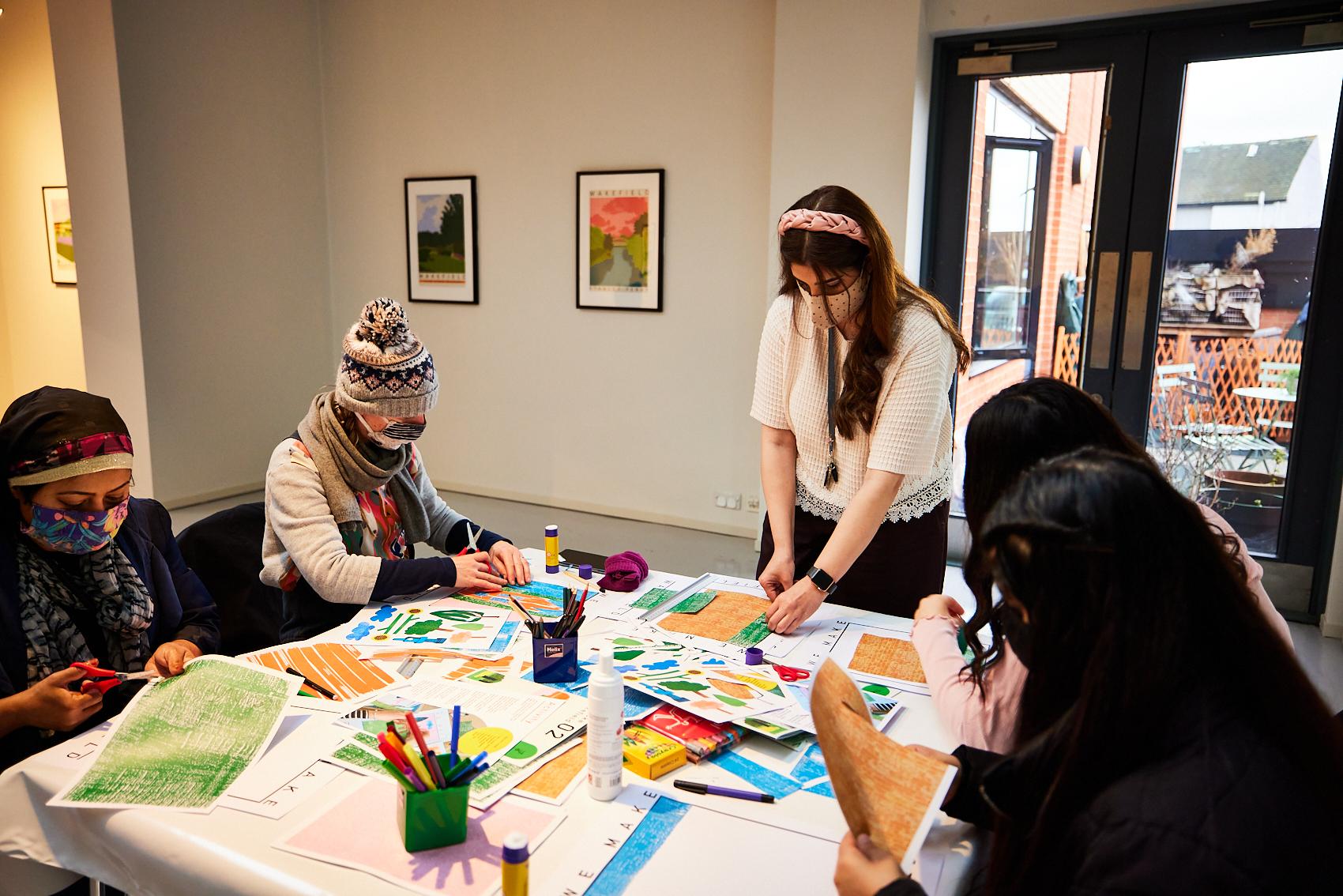
Ranya conducting a workshop, helping newcomers to engage with the local community.
Textiles have a way of evoking memories and emotions, they remind us of travel or home, of specific points in our personal history. Making someone a quilt is a physical representation of care - a hug that can be sent physically across miles. What do textiles mean to you, why do you feel yourself drawn to work within that medium?
For me, my work is my therapy. When I?m over-thinking or stressed I like to throw myself into creating something fine and detailed. That's how I started working creatively. With all the circumstances and situations I have been through, creativity has helped me to develop my skills. Nature is my biggest inspiration as it?s where I find peace, and where I like to explore. My practice merges my background, my own heritage and the modern Western heritage. My work is finely detail, including Islamic motifs which anyone who has been to mosque or a Middle Eastern country would be familiar with. Whenever I look at my work, it takes me back to my cultural and my early memories, and I'm inspired to do more. Hand embroidery takes me back to childhood, memories of my grandmothers, and when I see handmade sheet that takes me back too. I miss that life, but I keep my memories alive through my creative practice. This is why I started my embroidery brand, Melograni Art.
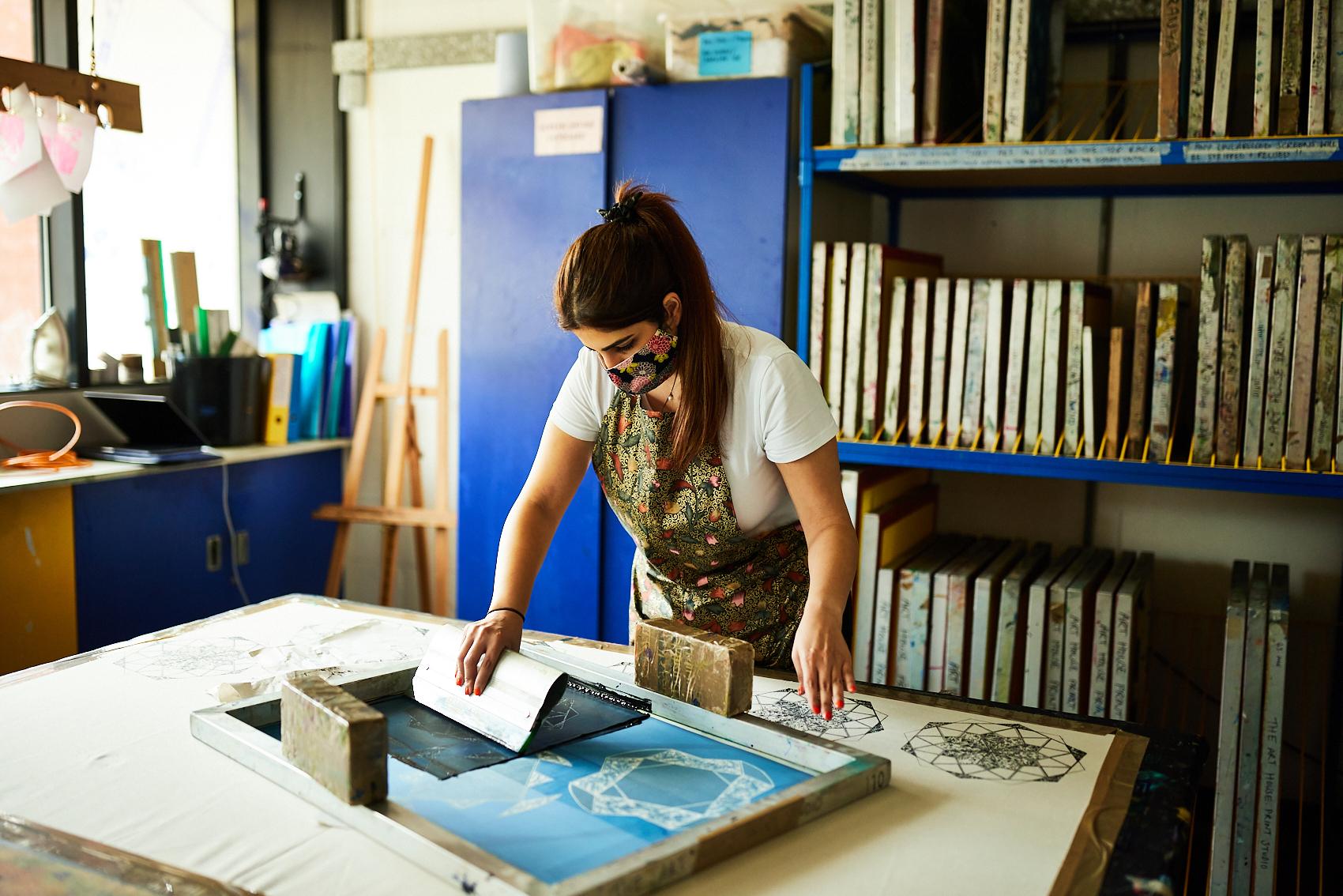
Ranya screenprinting textiles for use in her artwork.
Tell us about your travel plans and your work - what's next?
I?m currently planning a trip to Turkey where I will be studying more Islamic art, and I shall visit some historic places to find further inspiration. After this, I will start planning for my next exhibition, which will focus on Islamic geometric art. I am very excited as I'll be working on a larger scale with more three-dimensional forms, which will of course include my delicate, detailed hand embroidery, printing, and quilting.
© Ranya Abdulateef 2023. Images copyright The Art House
This article first appeared in The Quilter - Journal no. 174, Spring 2023, the membership publication of The Quilters' Guild of the British Isles.

Struggling with machine quilting? Learn how to fix 5 common problems, including skipped stitches, puckering, tension issues, thread breakage and bulky quilts.
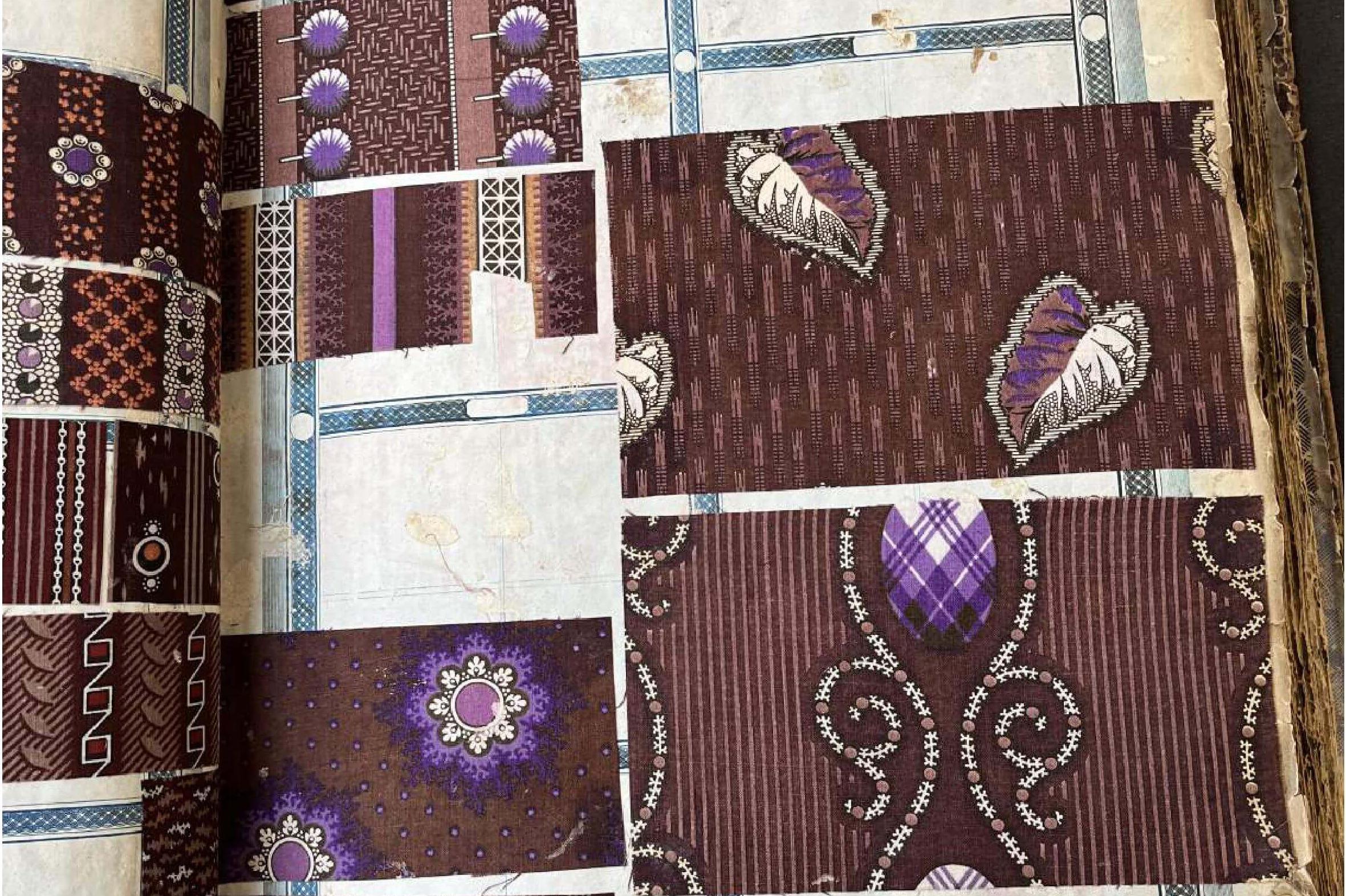
The British Quilt Study Group (BQSG) is a special interest group for Guild members interested in the history of British patchwork and quilting. They recently visited the Manchester Metropolitan University Special Collections Museum, where they examined pattern books and 'recipe' books for dyes dating back to the 1800s. These books are essential for dating historic quilts, which often lack signatures or dates. Understanding fabric printing history helps them establish the age of anonymous quilts.
We talk to Leah Higgins about her quilting journey, favourite techniques, inspirations and proudest moment. You can read a full interview with Leah in the winter edition of 'The Quilter', our membership magazine.
