Unfortunately, we don't support Internet Explorer anymore as it has been replaced by Microsoft Edge.
Please try downloading Microsoft Edge or an alternative modern browser for the best experience.
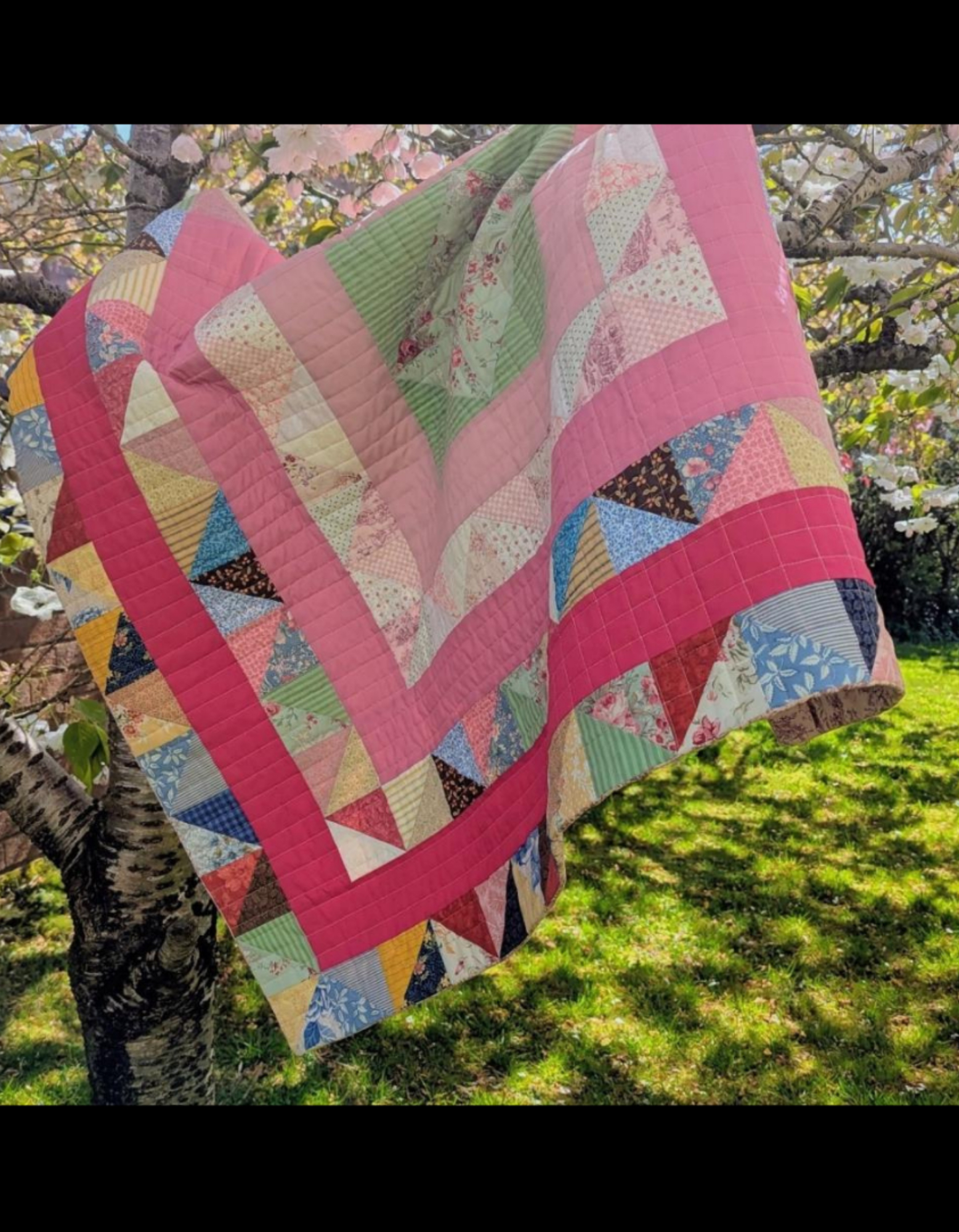
We’re delighted to share this guest blog from one of our members, Catherine Hunter, who has taken inspiration from a historic piece in The Quilters’ Guild Collection and reimagined it in her own distinctive way. Drawing on the story of the Mitchell quilts of 1899, this is a thoughtful exploration of how heritage designs can spark something entirely new, connecting past and present through fabric, colour, and making.
Back in January 2025, during the virtual retreat, I had thoroughly enjoyed the talk by Heather Audin, the Curator of the Quilters’ Guild Collection. ‘Around Britain Regional Historic Quilts’ was fascinating as we travelled through Suffolk to the North Country, all the way to the Borders, Orkney and back to Wales and Ireland. For me, it was a voyage of discovery.
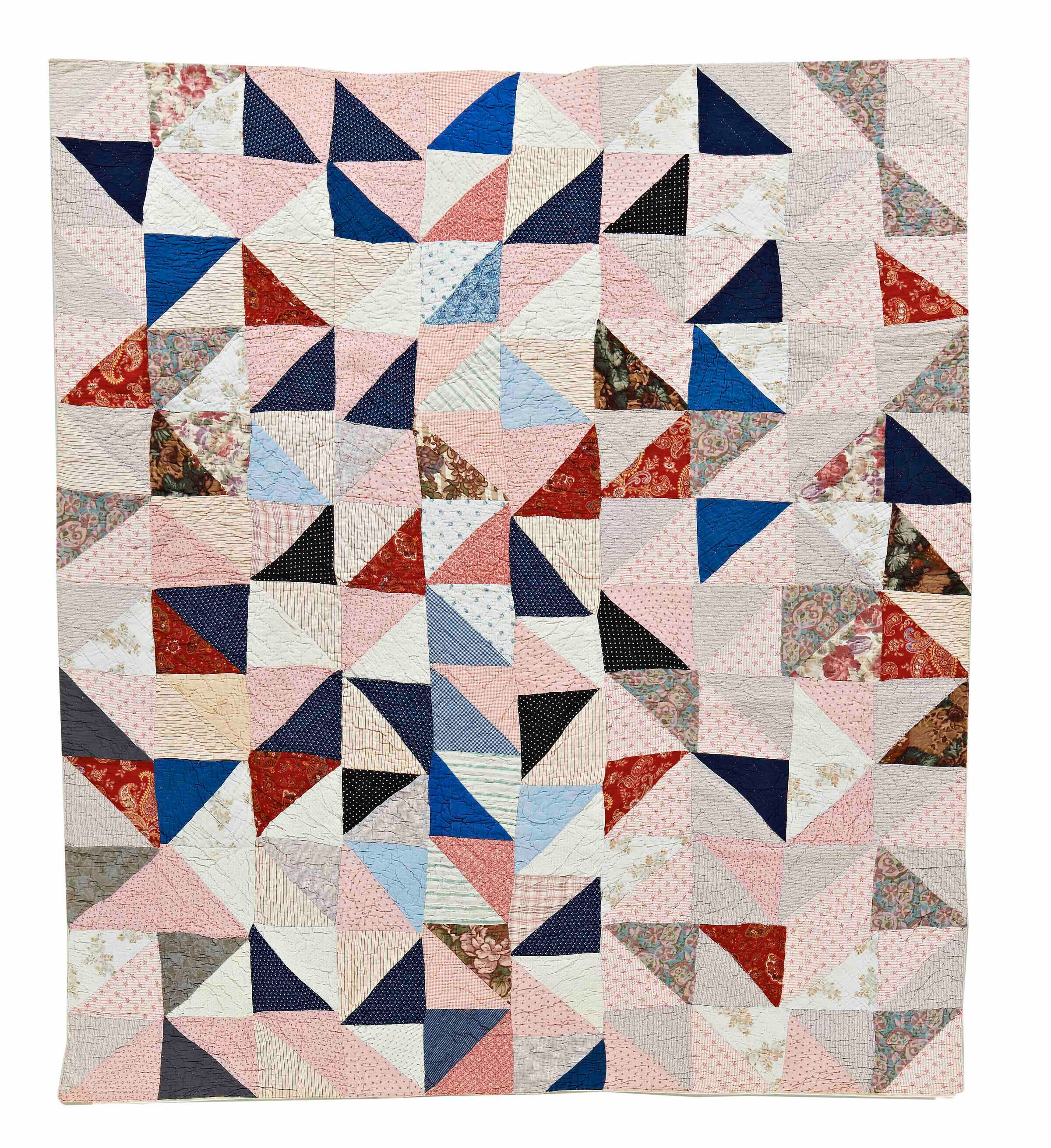
Heather presented two traditional quilts from Cumbria. The first was a striking cream and Turkey red sawtooth quilt with its typical zig zag quilting, made in Whitehaven at the turn of the XIX century. The other, made by Bertha Mitchell, a seamstress in Keswick in 1899, was more pastel colours with contrasting dark blue and brown, made with scraps of fabrics from dresses.
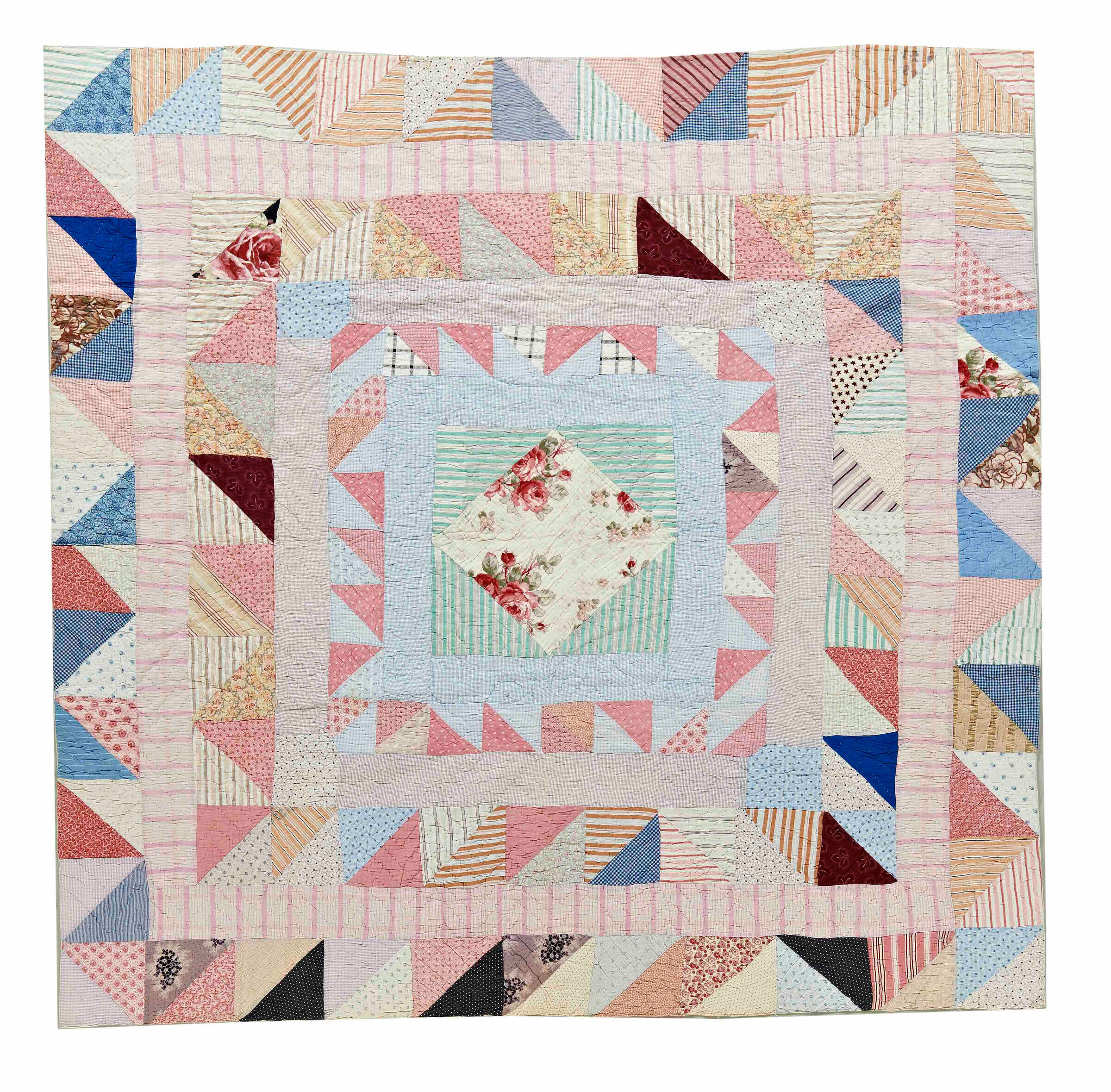
I realised later that the Shop in conjunction with Deborah Mc Guire had produced a booklet about the Triangular Quilt, with pattern and historical notes. Her website The Plainstitch Workroom is simply captivating.
Looking online for more information, I discovered that some of the Cumbrian quilts were made in small towns and villages within 12 miles radius from where I live, along the Solway – Whitehaven, Cockermouth, Lamplugh.
I was totally hooked! Hence, inspired by Bertha’s frame quilt, I decided to make my very own Cumbrian quilt. However, I didn’t want just to replicate it but to create something more personal.
I knew I wanted something more vibrant, more modern, using bright and bold colours whilst incorporating flowery dainty fabrics. I decided to use only fabrics collected over 35 years and resist the temptation to buy more.
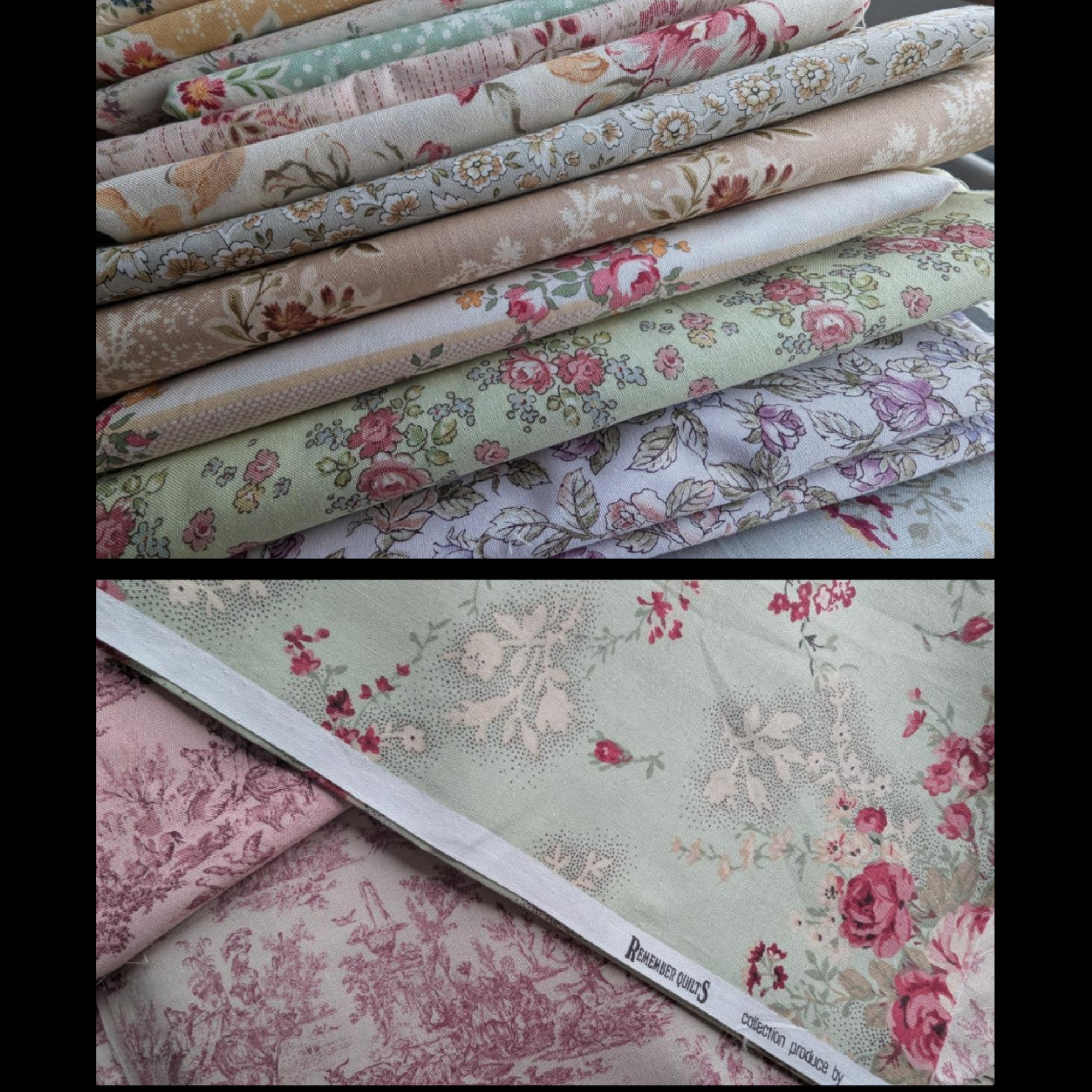
Like Bertha, I used lots of low volume prints -stripes, check, dainty foliage fabrics in a vast array of colours. In my stash, I have large quantities of Japanese floral cotton fabrics – mainly the 2002 Sweat Flower collection from Yuwa Live Life Collection by Daido Maruta and Remember Quilt by Junko Miyazaki. I remember buying a few yards of Toile de Jouy from Marcus Brother Textiles, ideal for backing. I was very spoiled for choice in Abu Dhabi as the souk was inundated with patchwork fabrics costing less than a few dollars a metre. No fat quarters there!
I must confess that I bought some more fabrics. Not in a shop, not online, but in a local village hall, in Eaglesfield. A lady quilter had passed away, and her family had organised a charity sale – books, threads, cottons, sewing machine, rulers, tools and gadgets, buttons, ribbons, even UFO and thousands of tiny EPP. All proceeds from the sales went to support the regional Hospice at Home. I hope this fellow quilter would be happy to know I re-used some of her cherished fabrics.
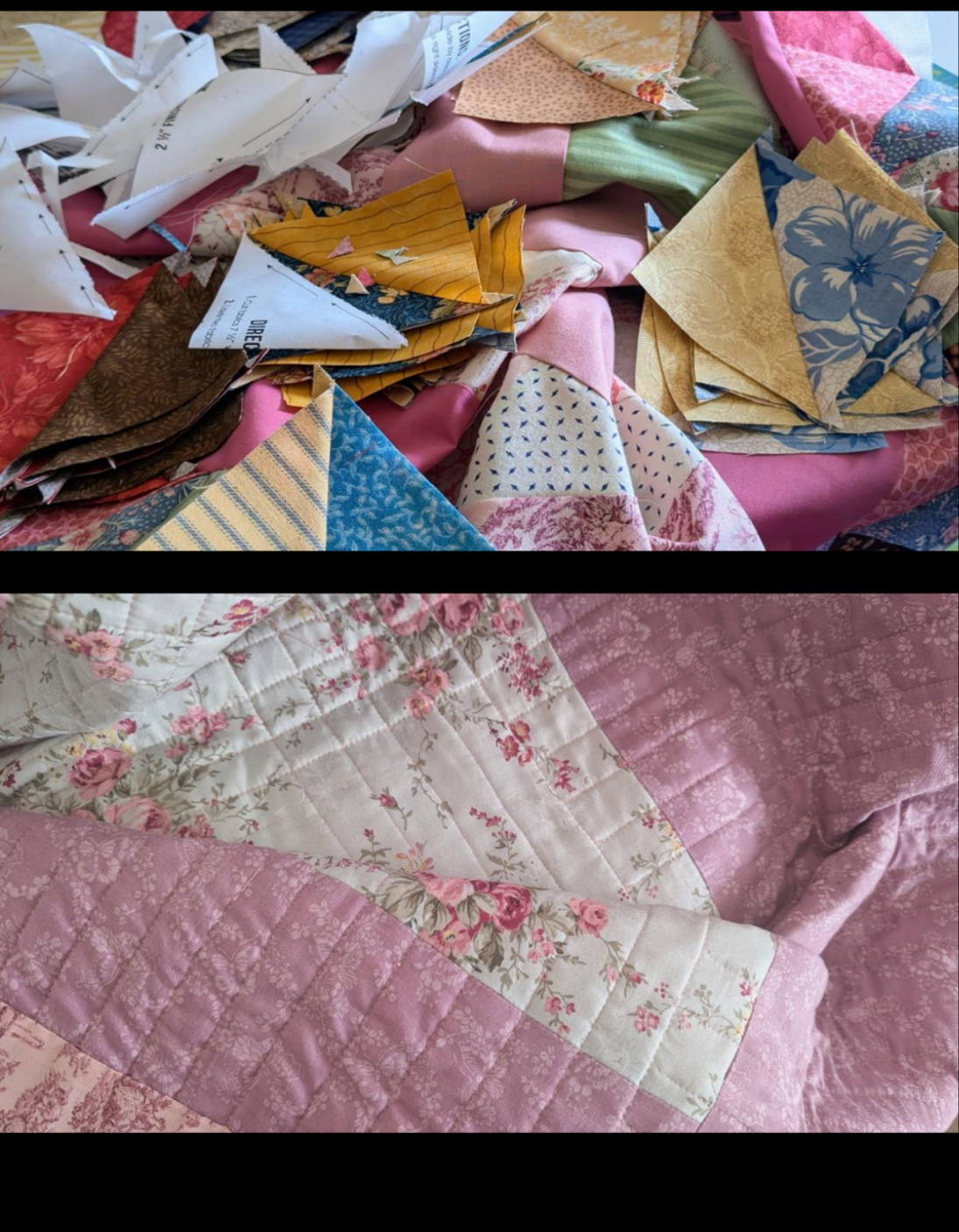
When I first drafted the pattern and tackled the project, I spent some time thinking about the fastest method to make HST as I had to make around 150 of them. I was not going to use the traditional method and its maths formula as I get easily confused between metrics and Imperial! At the time, I didn’t have a performant printer at home, so I hesitated to buy and download a master. I bought and tried a roll of 2 ½ finished half square triangle which was a game changer. Easy to manipulate, easy to sew, perfectly accurate. Moreover, the paper can be removed effortlessly. Worth every penny!
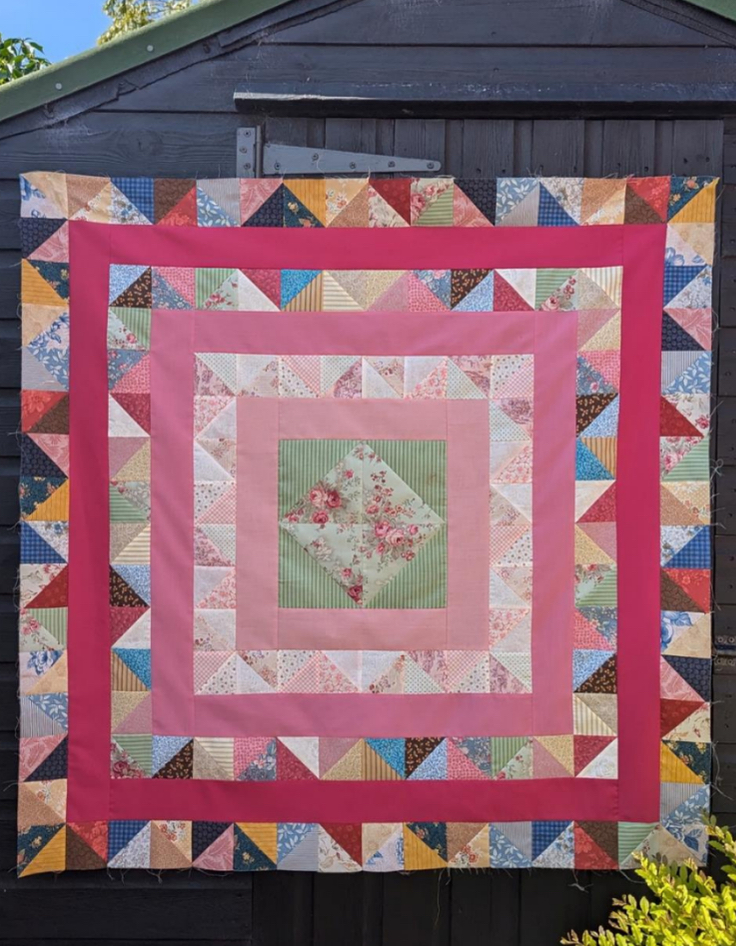
I could have used the traditional Cumbrian zigzag pattern, of course. However, as a modern and improv quilter, I have recently been experimenting with lines; skinny, wavy, shattered, radiating etc…
Using Aurifil thread in a salmon/dusty pink colour, I used straight lines, horizontal and vertical, for a channel effect, but also, in part, a straight crosshatch. I rather like the effect as it adds another modern look to the whole quilt.
I pieced the back using two romantic, flowery fabrics, and I faced it with a Toile de Jouy. Very French!
If you would like further information on The Mitchell Quilts, feel inspired to create your own version, using our pattern—developed in collaboration with Deborah McGuire, or would like to see more of our collection, please click on the links below.

Struggling with machine quilting? Learn how to fix 5 common problems, including skipped stitches, puckering, tension issues, thread breakage and bulky quilts.

Alex Kingswell shares her experience organising and setting up her solo exhibitions.
Discover how Chris English is bringing people together through Quilt Huddersfield—teaching sustainable quilting and building a creative, inclusive community.



