Unfortunately, we don't support Internet Explorer anymore as it has been replaced by Microsoft Edge.
Please try downloading Microsoft Edge or an alternative modern browser for the best experience.
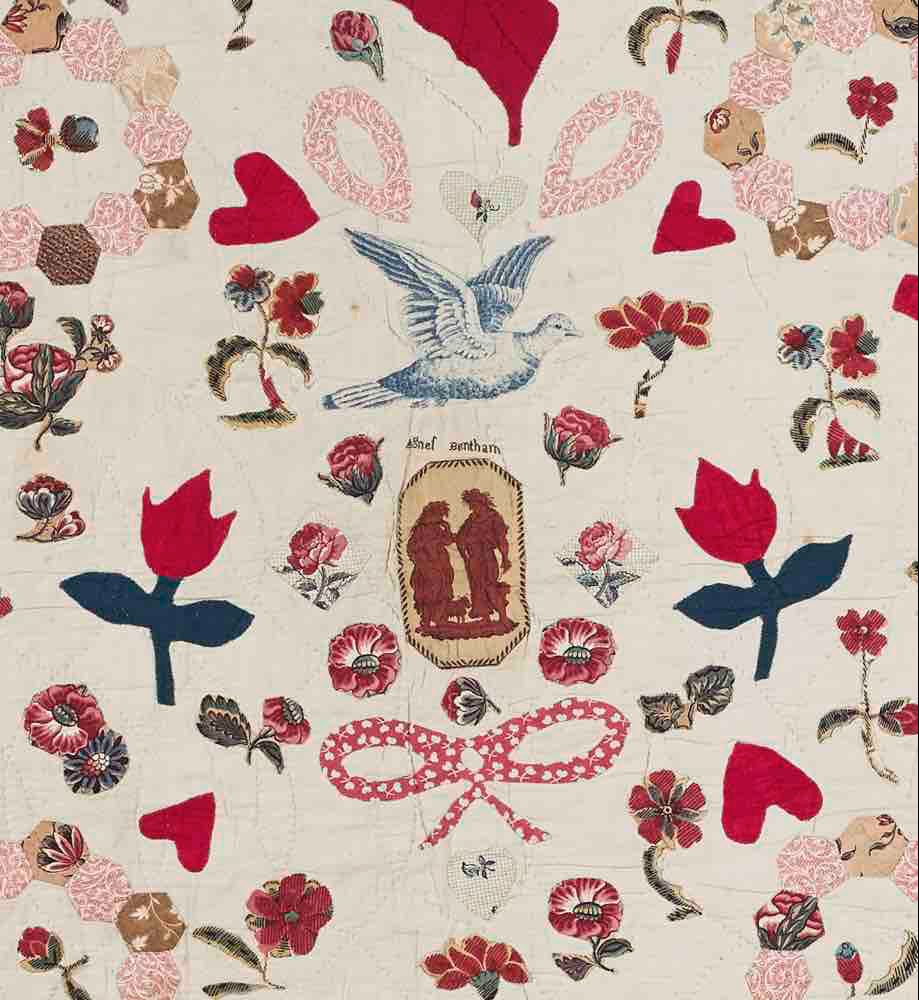
Agnes Bentham, born around 1840 in Westmorland, created this coverlet for her younger sister, a wedding gift that would have carried both practical use and deep emotional significance.
Her life, traced through census records, offers a glimpse into the world behind the stitches. Living first with her widowed father alongside railway labourers, later working as a cook in a well-to-do household, and eventually returning home as a shopkeeper and seamstress, Agnes’s story reflects the varied and often uncertain paths available to women at the time.
This quilt, then, is more than decorative. It is a reflection of skill carefully built and quietly applied. An object shaped by lived experience.
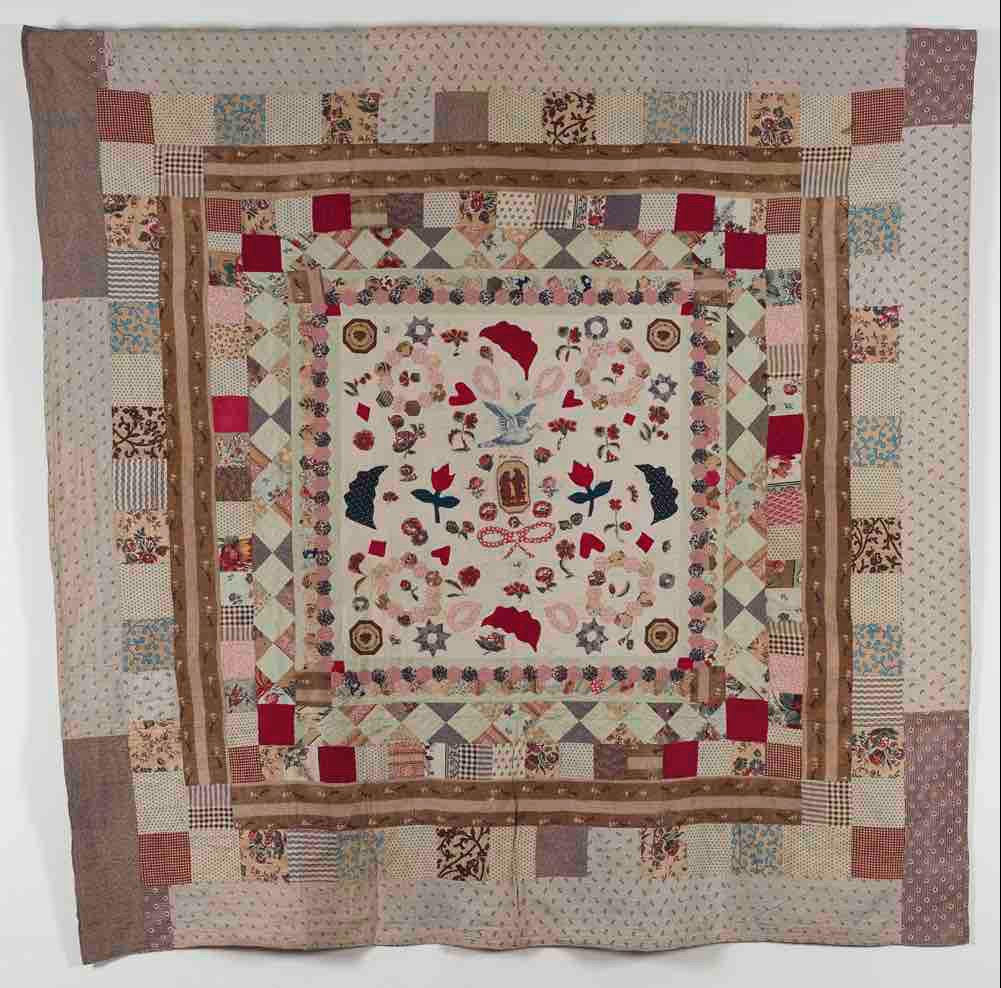
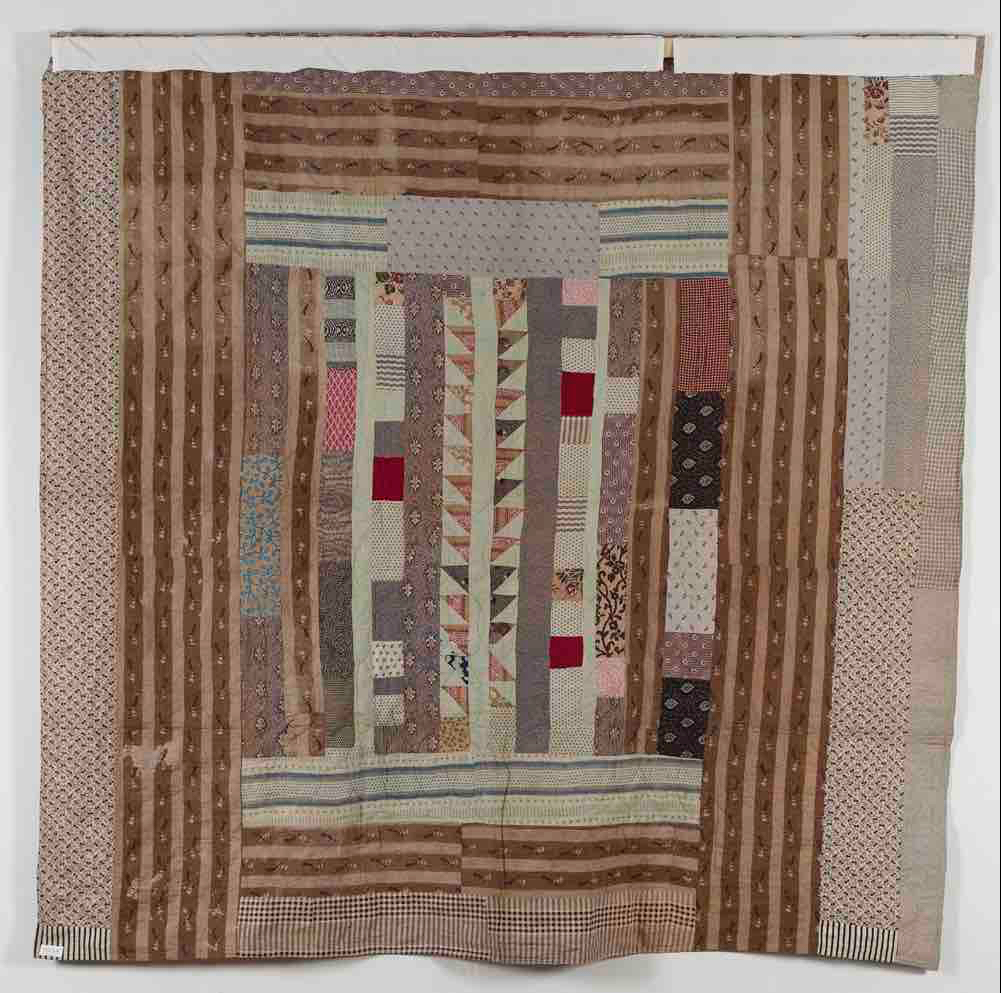
One of the most intriguing aspects of this coverlet is its double-sided design.
The front presents a richly pieced design, while the reverse, visible in the image below, offers a simpler, strippy composition, centred around a row of triangles. Many of the fabrics used on the reverse are echoed on the front, creating a subtle connection between the two sides.
The materials themselves tell their own story. A mix of small-scale dress prints and larger furnishing fabrics, they reflect what would have been available and valued at the time. Some areas, particularly the striped sections, show signs of fading and deterioration, an effect commonly seen in brown and purple fabrics, where the chemical mordants used in dyeing gradually weaken the cloth.
It is a reminder that textiles, like the lives connected to them, change over time.
Quilts and coverlets have long been associated with life’s milestones: births, marriages, and significant transitions.
This piece is known within the family as a wedding quilt, though it also serves as a gentle reminder not to make assumptions based solely on design. Motifs such as hearts, often associated with marriage, were widely used in decorative textiles and do not always signify a specific occasion.
What matters more is the intention behind the making.
In this case, a sister creating something lasting for another at the start of a new chapter. A gesture that speaks across time, even as the details of their lives fade into the background.
The Agnes Bentham coverlet is, at its heart, a deeply human object.
It carries traces of family, of work, of changing circumstances. It reflects both the practical realities of nineteenth-century life and the enduring desire to create something meaningful for those we care about.
Today, it stands not only as an example of historic patchwork, but as a reminder that quilts have always been about more than their materials.
They are stories - stitched, shared, and passed on.
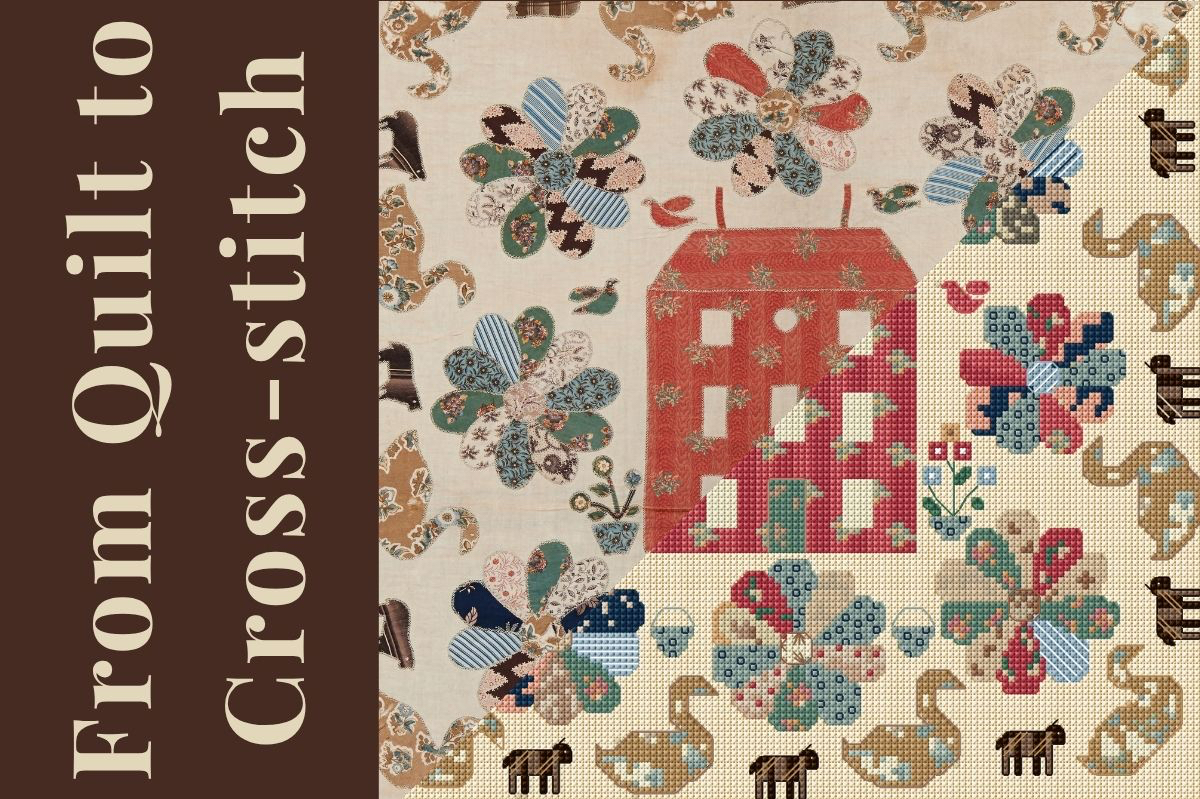
Discover how treasures from The Quilt Collection are being reimagined as cross-stitch and tapestry patterns, bringing historic textiles to today's stitchers.
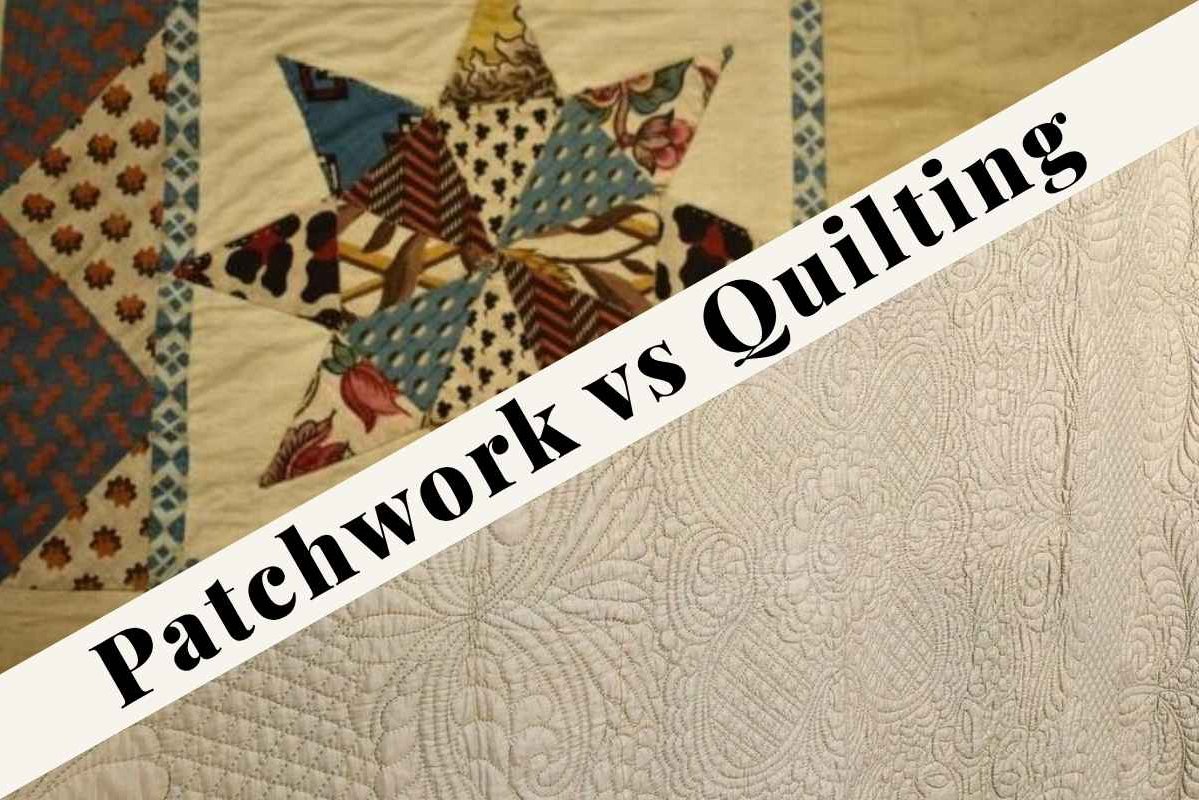
What's the difference between patchwork and quilting? Discover how patchwork, quilting and appliqué differ, with examples from The Quilters' Guild Collection.
Find quilting teachers and speakers offering online and in-person talks and workshops. Discover opportunities to learn, improve your skills and share your passion.
