Unfortunately, we don't support Internet Explorer anymore as it has been replaced by Microsoft Edge.
Please try downloading Microsoft Edge or an alternative modern browser for the best experience.
Sara Sullivan of Romsey Quilters talks to us about their experience of creating an accessible quilt exhibition.
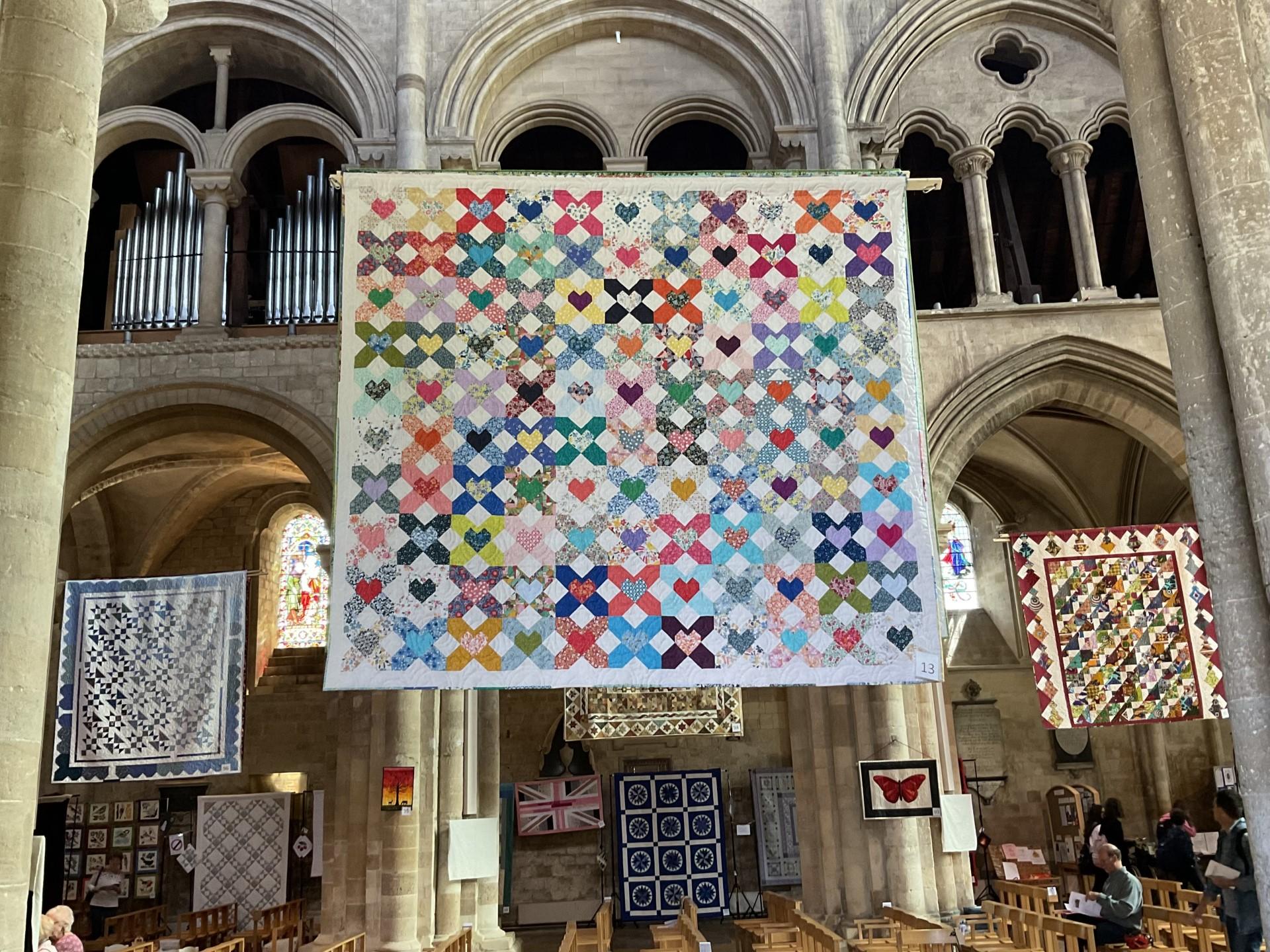
High hanging quilts which are a signature of the Romsey Quilters exhibition.
“Please don't touch the quilts” is an instruction visitors to quilt shows are all too familiar with. The thought of having a quilt handled by hundreds of people is the nightmare of most makers. However, many of us will also have experienced the desire to run our hands across a quilt, to look at the back, work out how that piecing is done or what that embellishment feels like. For other people, touch is an essential way of making sense of an item or their world, or a story that is being told.
When Romsey Quilters were planning our 40th Anniversary Exhibition, as part of Romsey Festival, I was very aware that we needed to consider not just physical access for those who use mobility aids, but access for all disabilities, physical or otherwise. However the more I read up on it, the more I realised that we had some immovable constraints which meant it wasn’t going to be easy.

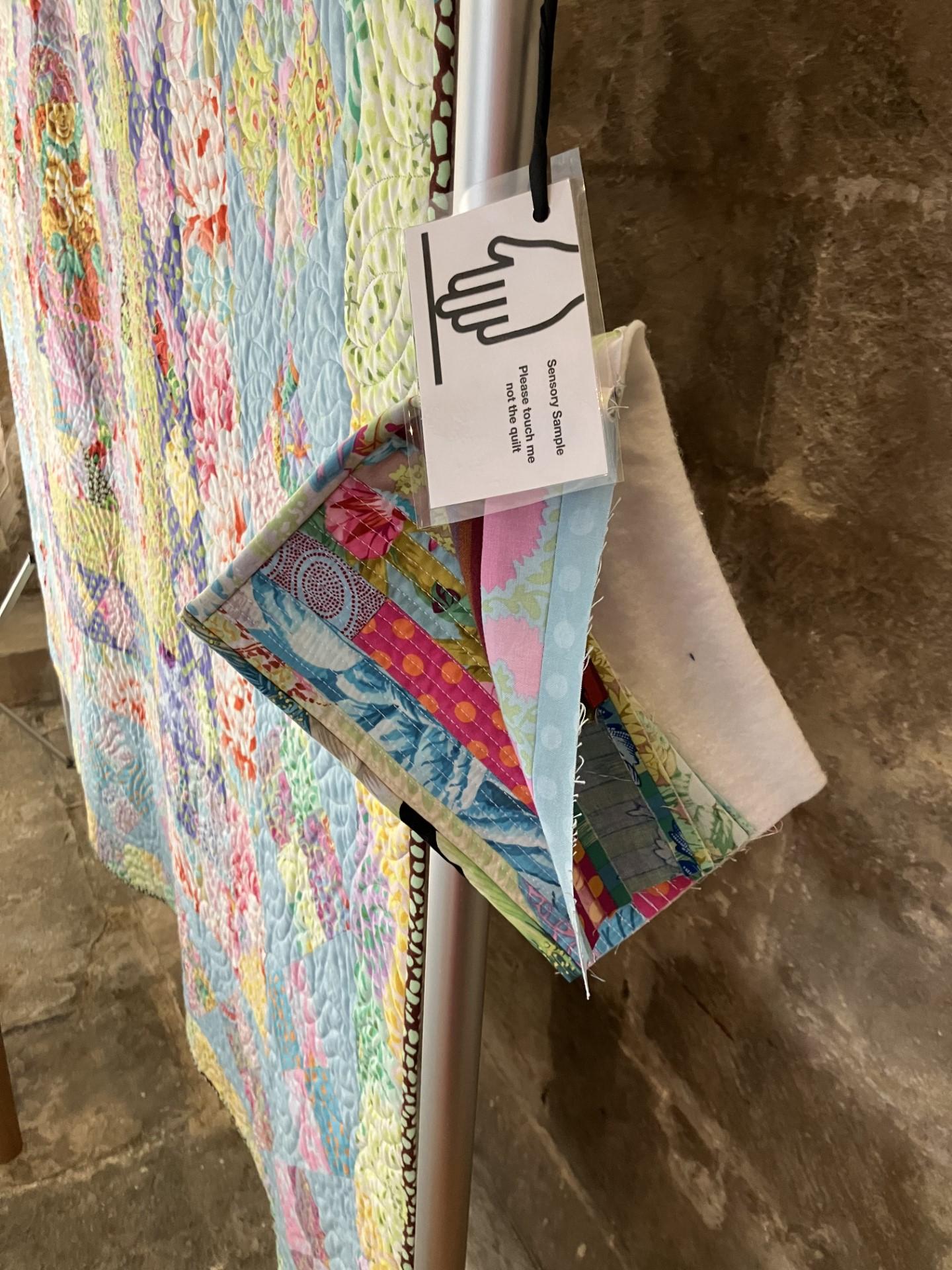
An example of the sensory samples created for the exhibition.
We were privileged to be able to use the magnificent setting of Romsey Abbey for 16 days, and wheelchair accessibility was good. However the fabulous display of large quilts hanging high in the abbey arches, which is such a feature of our exhibition, was never going to comply with the recommended height for an accessible exhibit. Also the Abbey is a publicly open building so we would not be able to create quiet times or exclusive viewings for those who needed more space. However all the resources for helping make exhibitions accessible stressed that you should try, even if you can’t achieve everything.
We asked members to produce a sample block of their quilt which visitors could touch. These had a split ring sewn to the back and were threaded onto long ribbons next to the quilt with a label saying “please touch me not the quilt”. It wasn’t compulsory to make, but about a third of our 125 quilts had one. These sensory samples were extremely popular with visitors. Some members produced their sample in unfinished layers enabling visitors to literally see inside the quilt.
An example of the sensory samples created for the exhibition.
We took advice from a local charity for those with sight loss, and created a large print version of our exhibition brochure. This was a steep learning curve as you can’t simply enlarge your usual brochure. All pictures and underlining had to be removed and paragraph spacing reorganised. We also had a version printed in braille and created large print feedback forms.
We reviewed accessibility for our members too. In exchange for displaying a quilt, members are asked to do two shifts as a steward. It became clear that some were reticent about entering quilts because they could not stand for long periods. We ensured that “sit down” roles were available, selling brochures, raffle tickets or doing a live demonstration, so all could participate. If you were still unable to assist, it was no bar to you exhibiting.
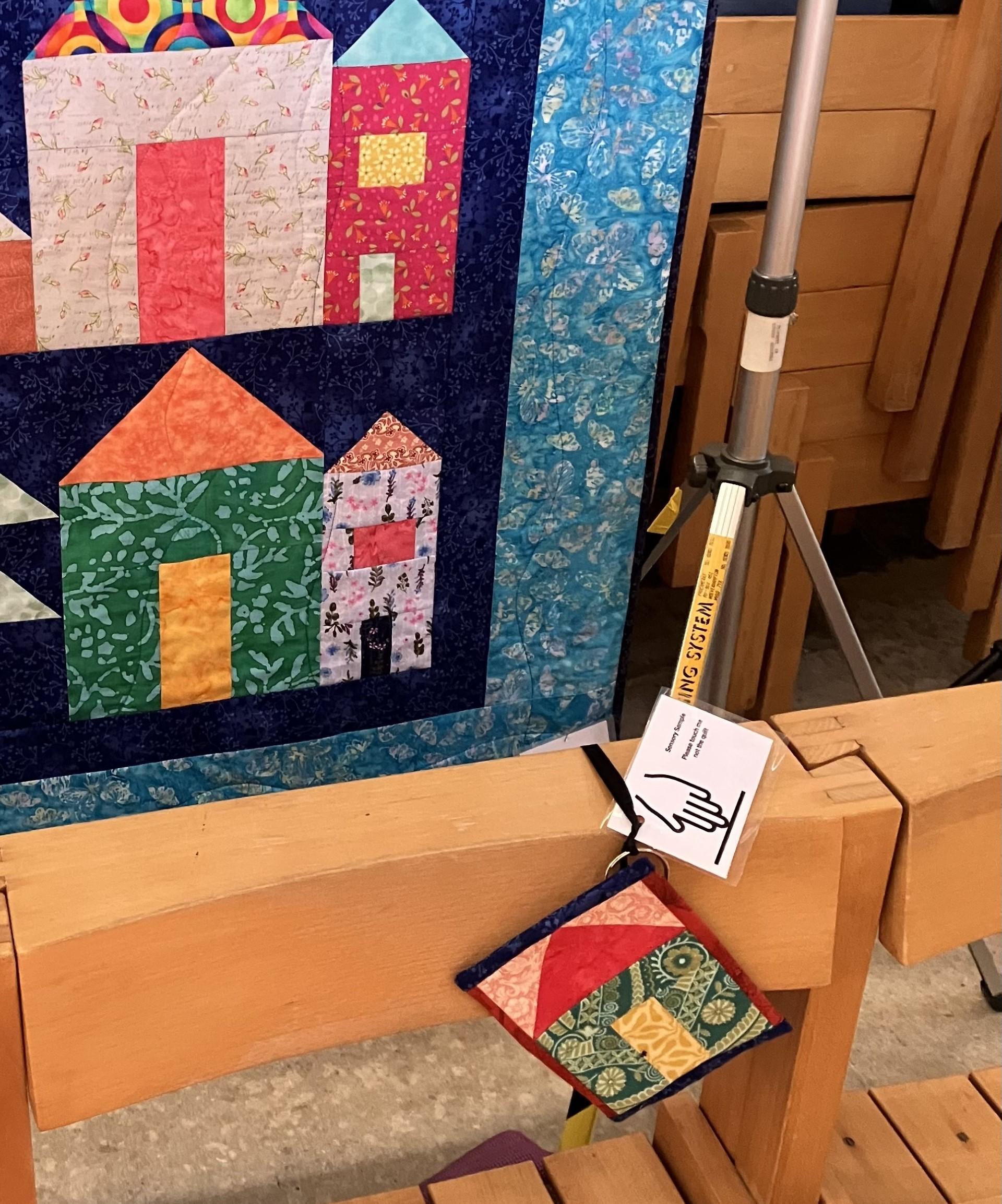
An example of the sensory samples created for the exhibition.
One member had been so unwell that she was unable to finish her quilts and so decided to withdraw them. We persuaded her to enter them, one as a top and one sandwiched ready to quilt. Other members created the hanging sleeves and visitors enjoyed seeing these quilts in stages. This was so popular we may create a separate exhibit showing quilt stages for next time.
To encourage younger visitors we partnered with a local primary school and helped pupils make cushions which we displayed. A member created a dozen blocks with appliquéd dogs on them, each holding a different colour fabric balloon. These were distributed around the Abbey and young visitors encouraged to follow the trail to find each of the different balloons.

An example of the sensory samples created for the exhibition, note the Makaton symbol for "touch".
We reinforced our usual signage with Makaton symbols for “touch” or “don’t touch”, and we invited young people from a local group for those with learning difficulties to visit the Exhibition in the afternoons, which were generally quieter. We also invited a young carers group to visit, and they enjoyed the variety of techniques so much we have agreed to help them create their own quilt for their meeting space.
We wanted to create an audio tour for visitors but time was against us, so instead we offered weekly descriptive tours of a selection of quilts for those wanting that experience. We took photographs of each of those high hanging quilts (which looked so magnificent) and had them blown up to A4 size, laminated and threaded together with their sample blocks, to make a booklet visitors could look through to appreciate them more closely.
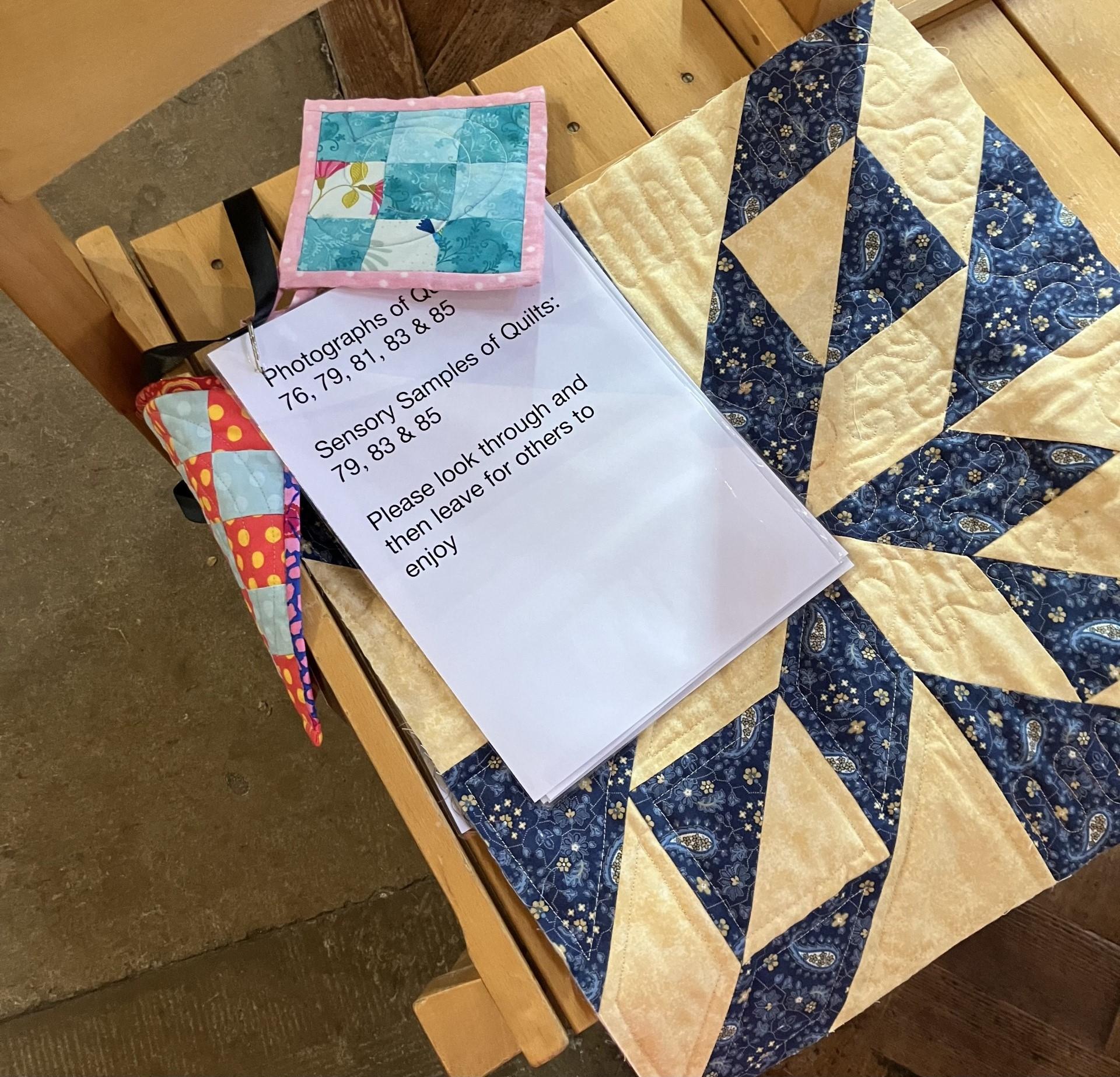
Photographs, descriptions and samples of the high hanging quilts.
We had over 10,000 visits to the Abbey and there was an overwhelmingly positive response to all our efforts, especially the touch samples. We know that there is more we can do and we will be making improvements for our next exhibition in 2026. If any quilt group would like to talk to us about our experience we would be very happy to share it.
Sara Sullivan
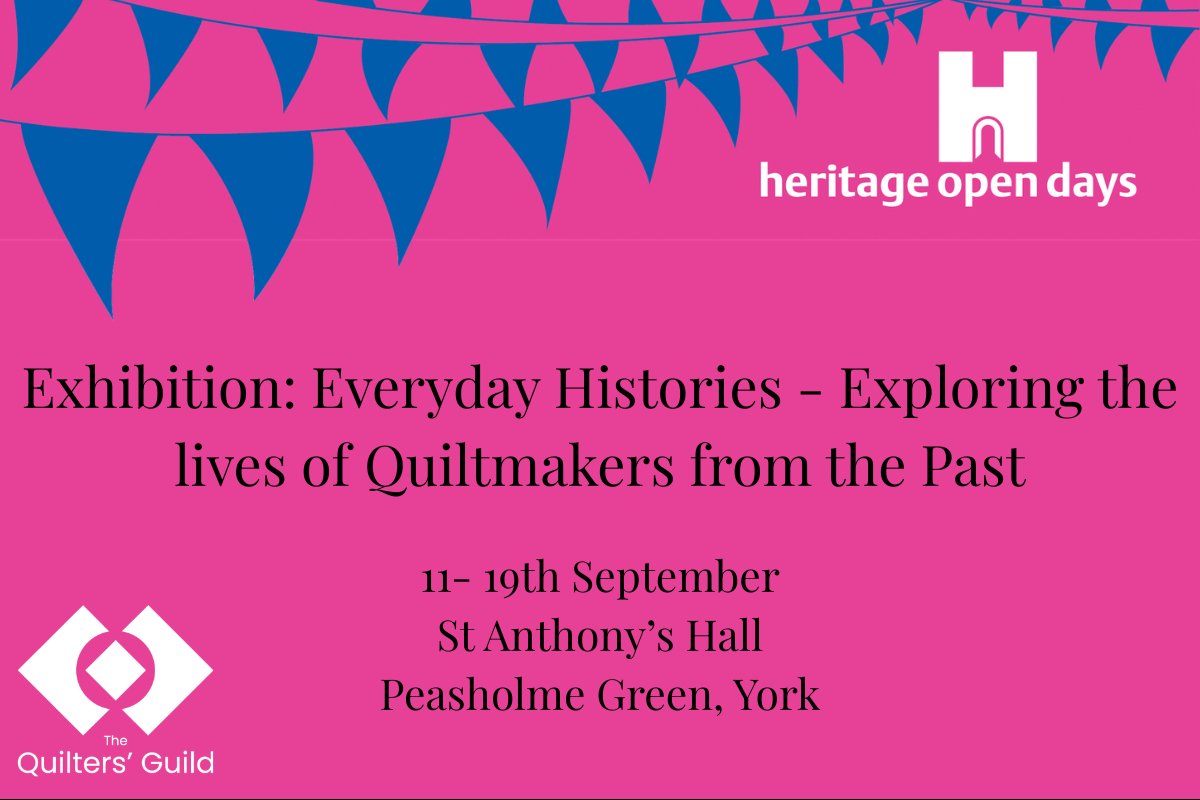
Visit The Quilters' Guild in York for a free Heritage Open Days exhibition exploring the everyday lives of quiltmakers through historic quilts from the Collection. 11–19 September 2026.
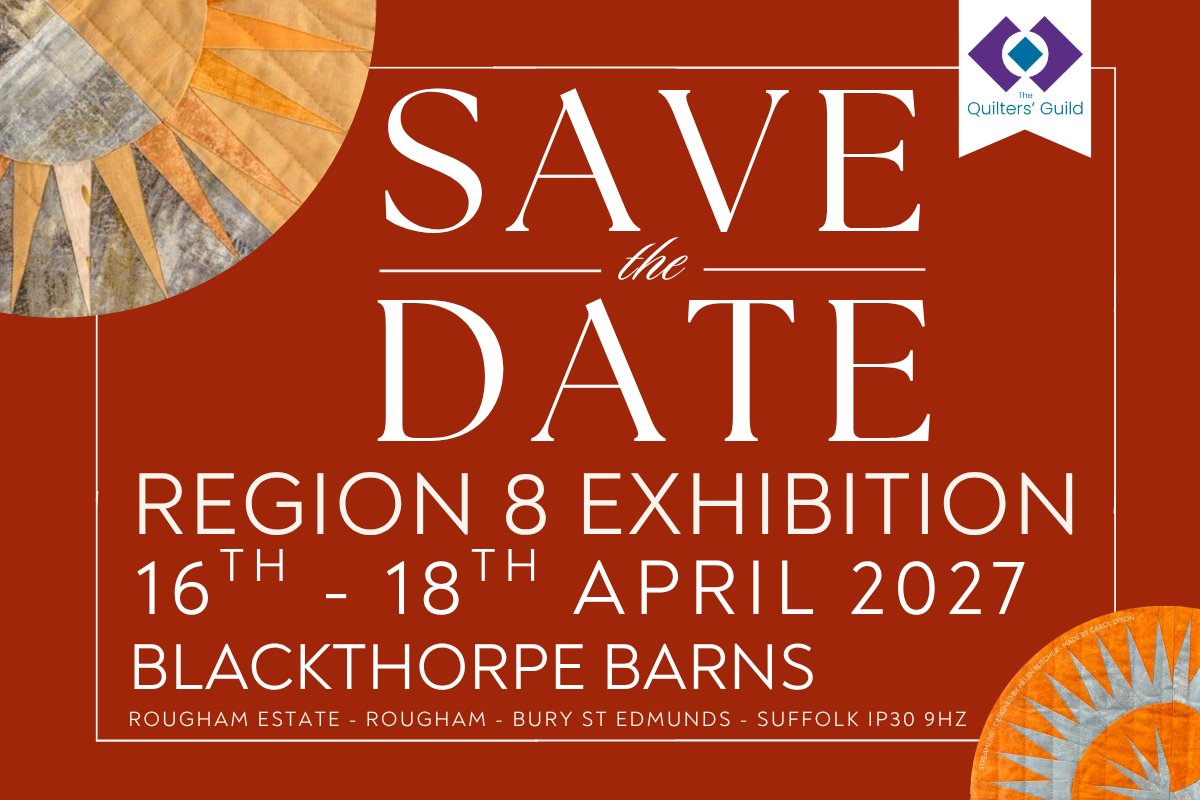
SAVE THE DATE - Region 8 Exhibition
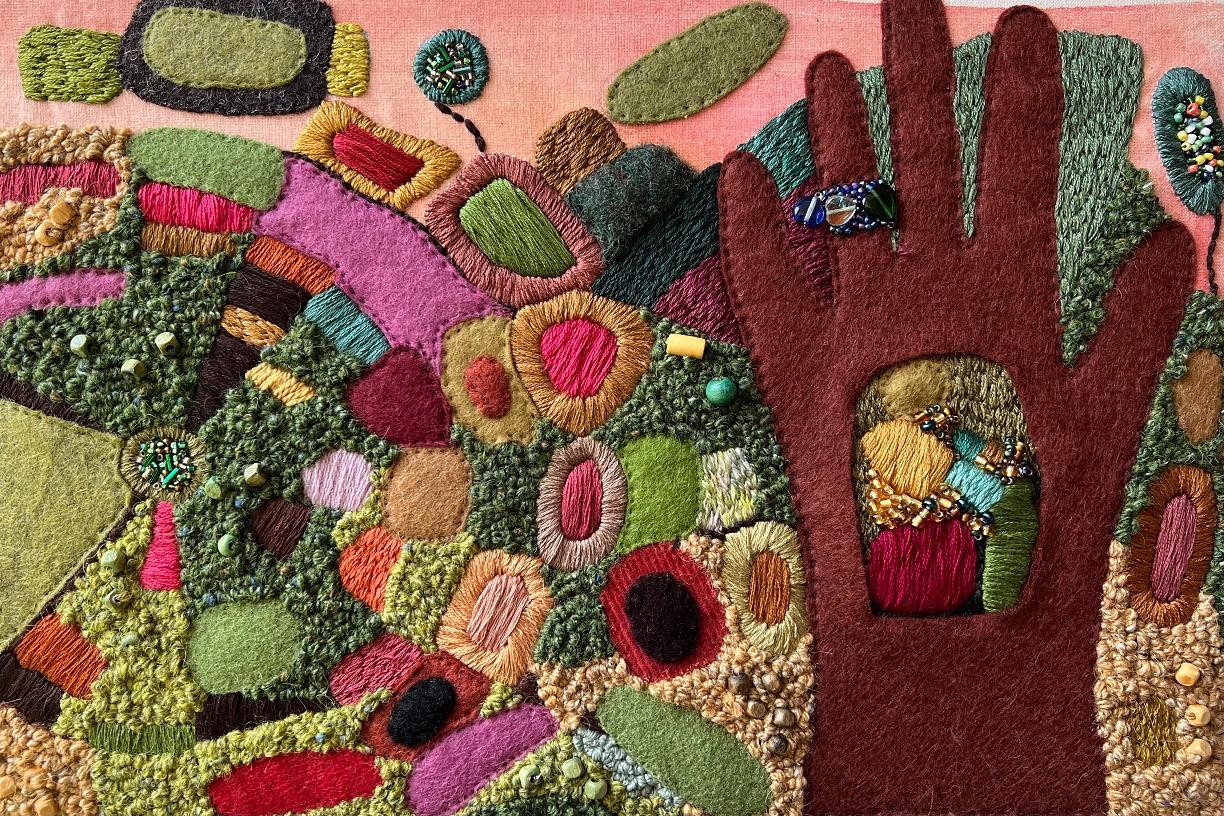
UK fine art textile artist Sabine Kaner's work is redolent with themes of identity and belonging. Her exhibition Hand Stitched Stories will appear at the Knitting & Stitching Shows at Alexandra Palace 5-8 October, and Harrogate 16-19 November.
