Unfortunately, we don't support Internet Explorer anymore as it has been replaced by Microsoft Edge.
Please try downloading Microsoft Edge or an alternative modern browser for the best experience.
Sabine Kaner is a UK fine art textile artist. Her exhibition Hand Stitched Stories at The Knitting & Stitching Show 2023 at Alexandra Palace, London from 5 – 8 October 2023 and Harrogate Convention Centre, Harrogate from 16 – 19 November 2023.
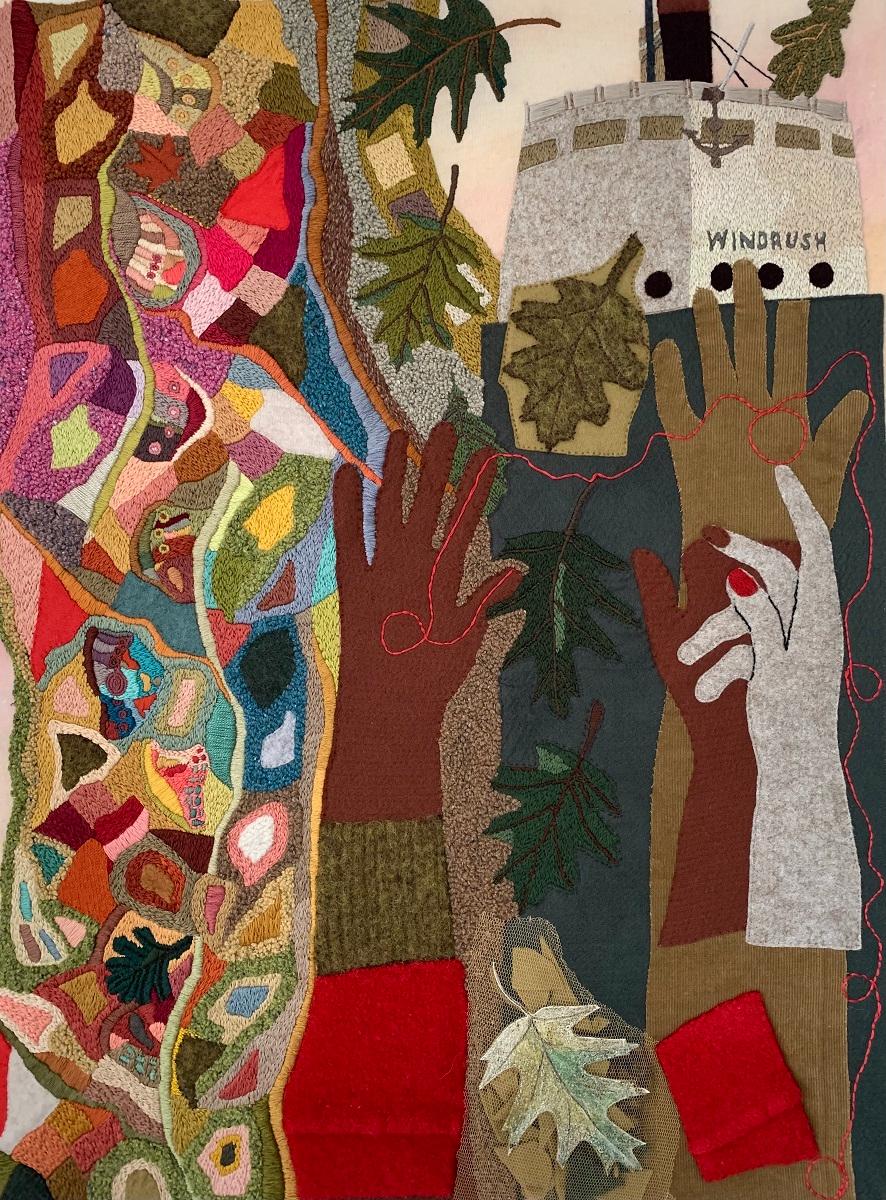
'When the boat comes in', by Sabine Kaner
Sabine, in your own words, as a fine art textile practitioner you bring a unique perspective on the experience of second-generation migrants in the UK. How do you weave both your own personal experiences and the experiences of others into your exhibition, Hand Stitched Stories, and how important is it that art preserves your cultural heritage?
My experiences as a second generation migrant incorporates not just one culture but three. My father was from Jamaica, arriving in the UK on the HMS Windrush in June 22, 1948. My mother was a European migrant, and I was brought up in London. My work has elements of all these cultures woven in. My stories tell of my personal lived experiences, and comment on the wider issues facing migrant communities in the past, and some of the issues they still face today. I have tried to document some of my journey to readdress the absence of minority voices within the art world and textiles. British culture is rich and diverse and is made up of many peoples around the world. In order to fully understand British culture, all our diverse stories need to be heard.
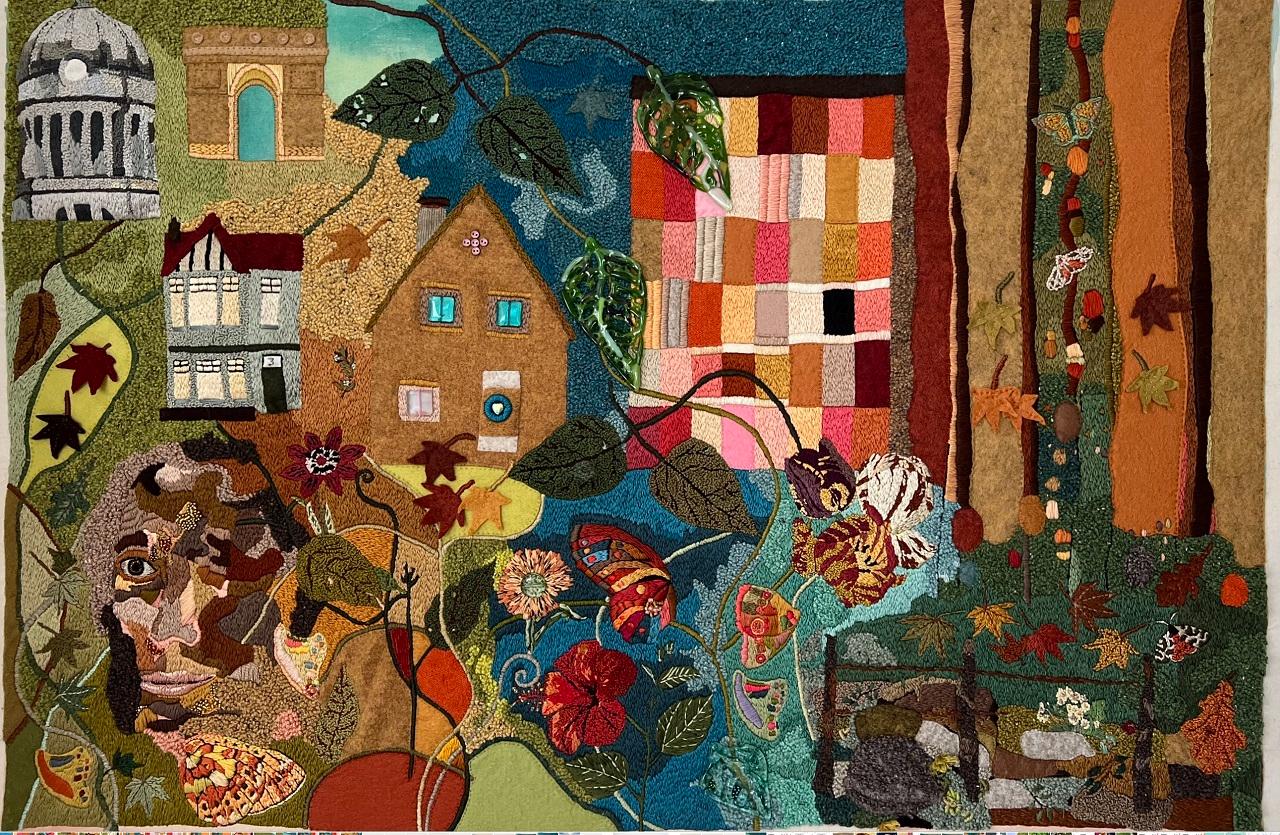
'Memories', by Sabine Kaner.
We must talk about the use of colour in your pieces - the tones are so rich, intricately placed and powerfully communicate the mood and narrative. Can you explain how certain colours enhance or mute the tactile qualities of the exhibition, and how this interplay adds depth to each piece?
Colour is the language of my work. I use colour to describe images and to symbolically represent different stories. Colour is a powerful metaphor. Each piece of work is unique, and uses colour alongside imagery to narrate the story and capture the mood. Colour often brings forward certain elements of the composition. Other colours create distance and depth.
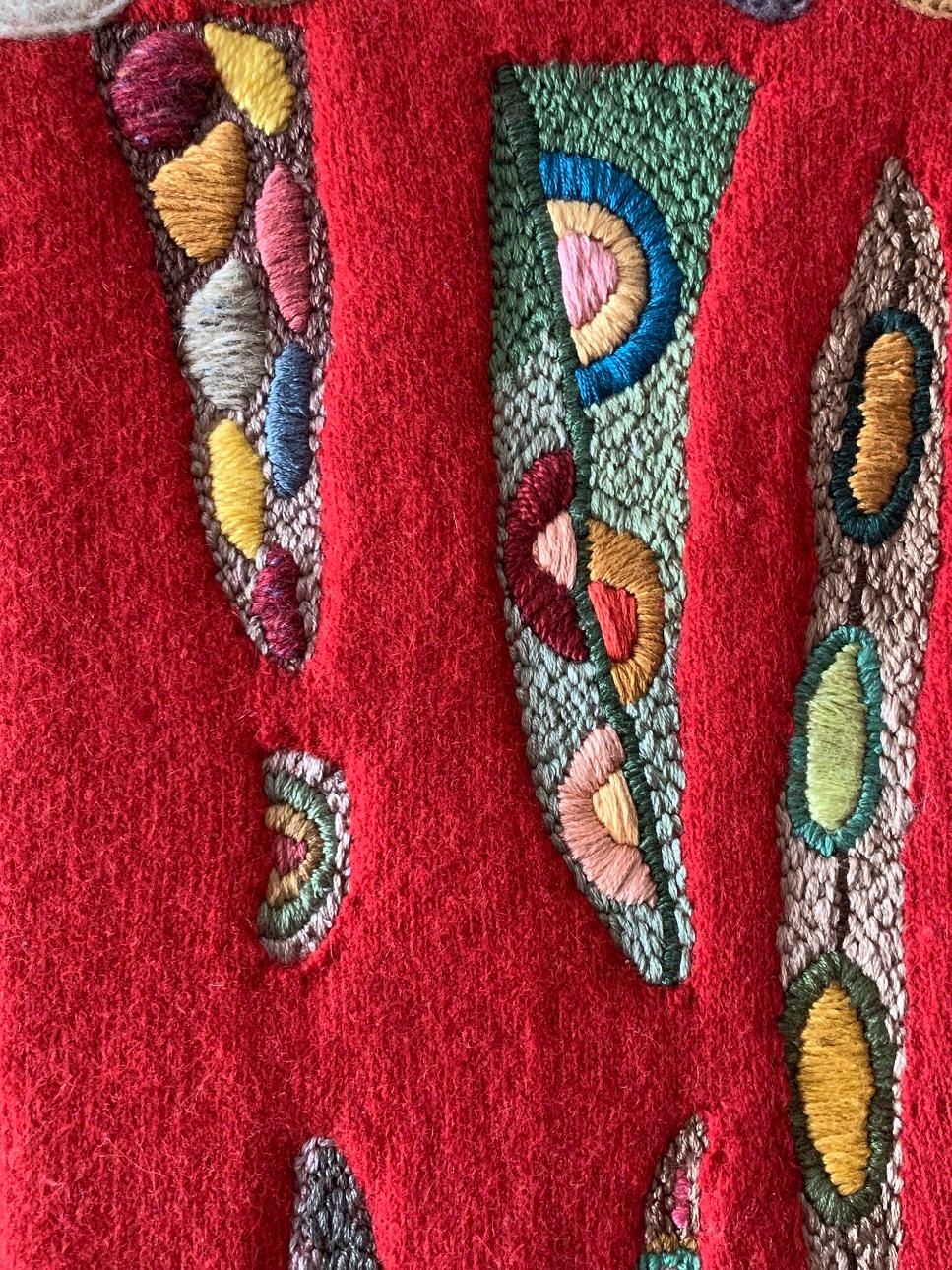
'Decorating the cuts', detail, by Sabine Kaner.
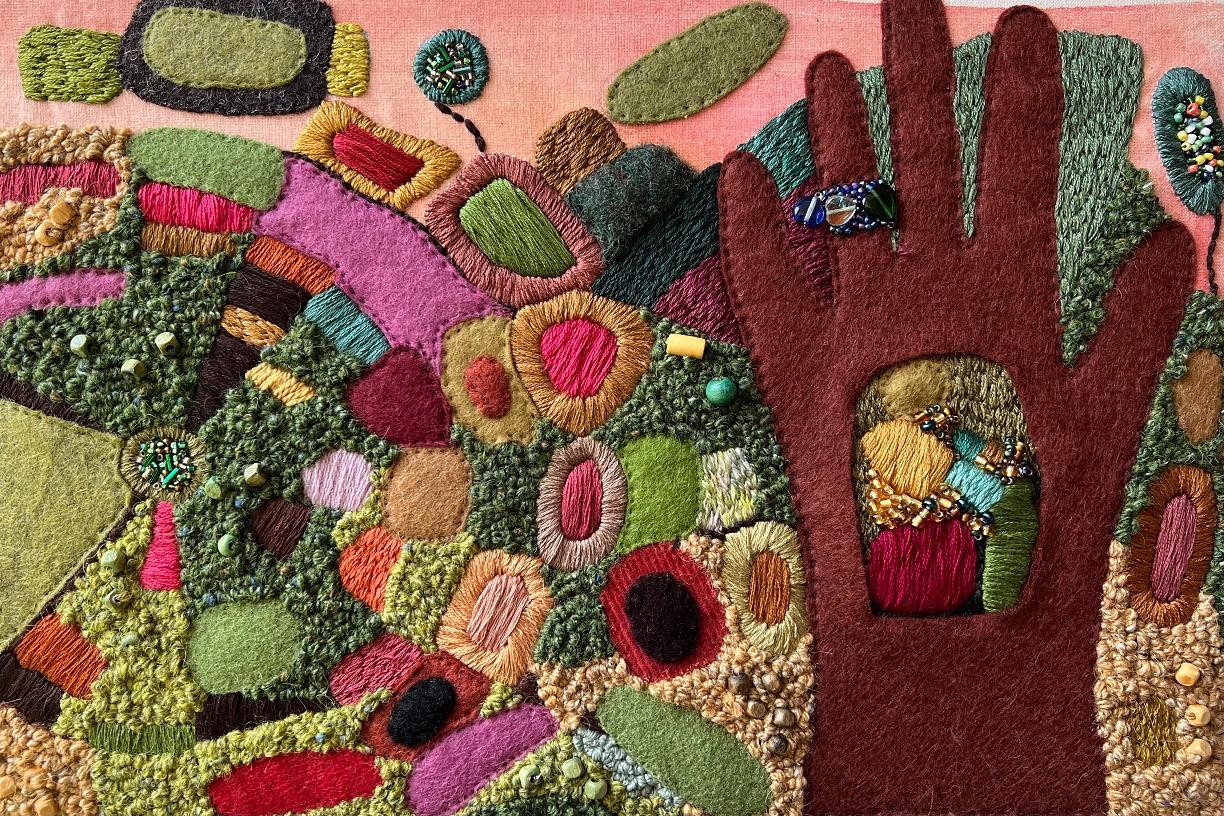
Sleeves and hands are frequent throughout your work, and you have said in the past that they represent expression and help you to symbolically release feelings about different aspects from your own life journey. How does the medium of textiles support this process for you?
Touch through our hands and fingers is one of the deepest ways of sensing and understanding the world. Hands also represent the traces we leave behind. They denote creativity, resistance and empowerment. The work that contains hands is used to represent different groups of people, showing that we are many people, not just one. I use repurposed materials wherever possible, and some of these fabrics are closely connected to memory, and people in my life. I have used sleeves of preloved clothes to express connections and illuminate past stories.
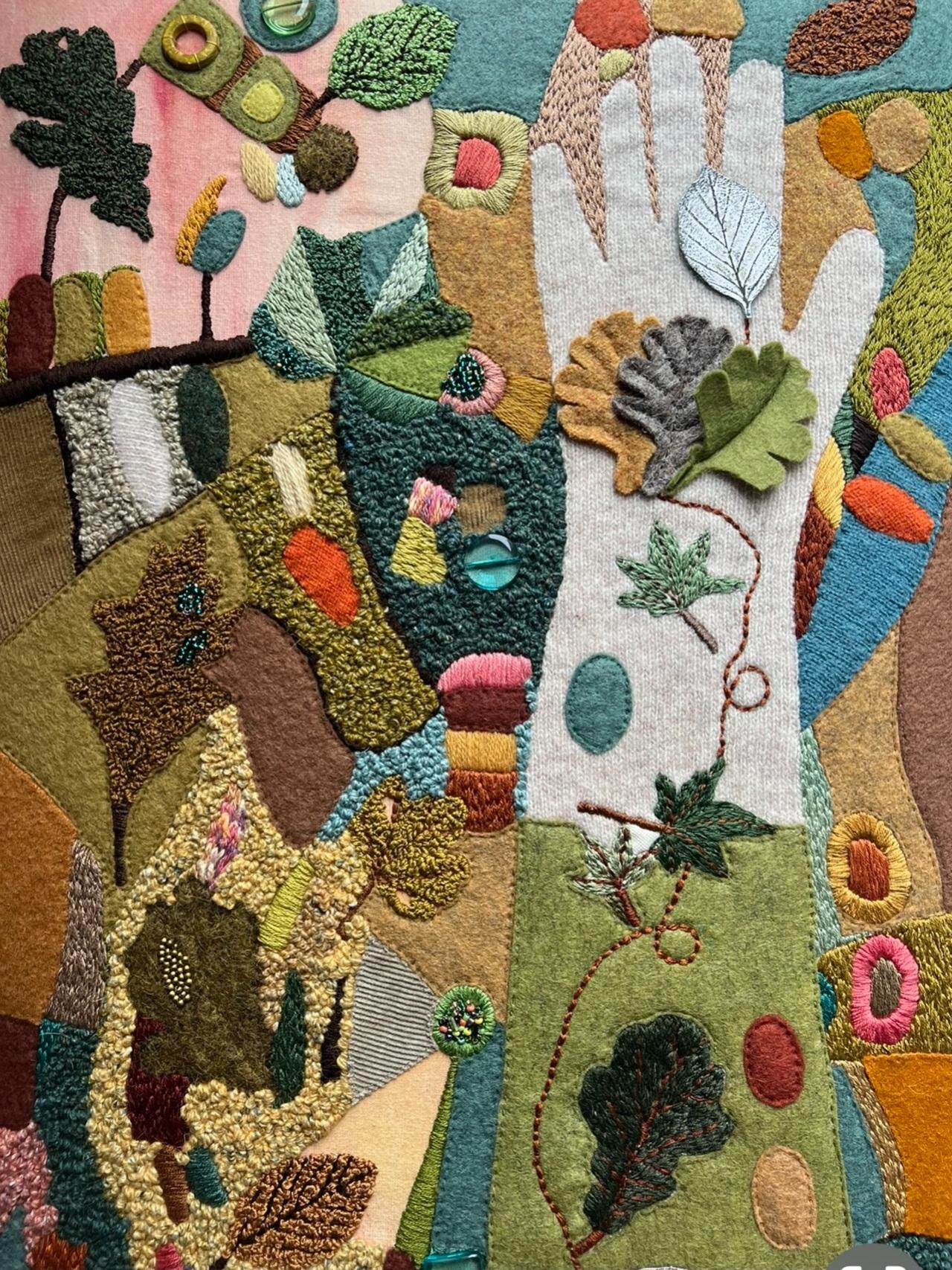
'Patterns in nature 2', by Sabine Kaner.
Your art showcases a remarkable fusion of traditional textile techniques and contemporary design. How do you approach blending these elements to create pieces that resonate with modern audiences while honouring the legacy of textile traditions?
When deciding to work in textiles, I wanted to work in a way that represented the times that we live in, and show how textiles have evolved. Having trained as a fine artist, I am used to experimenting with different techniques, processes and materials. I wanted to blend these together to create a modern interpretation of hand stitch. I layer my work using paint, print and stitch. I then add in diverse materials, often found objects. This new interpretation, using a mixture of traditional techniques and new methods, opens up possibilities for stitch to appeal to a wider audience.
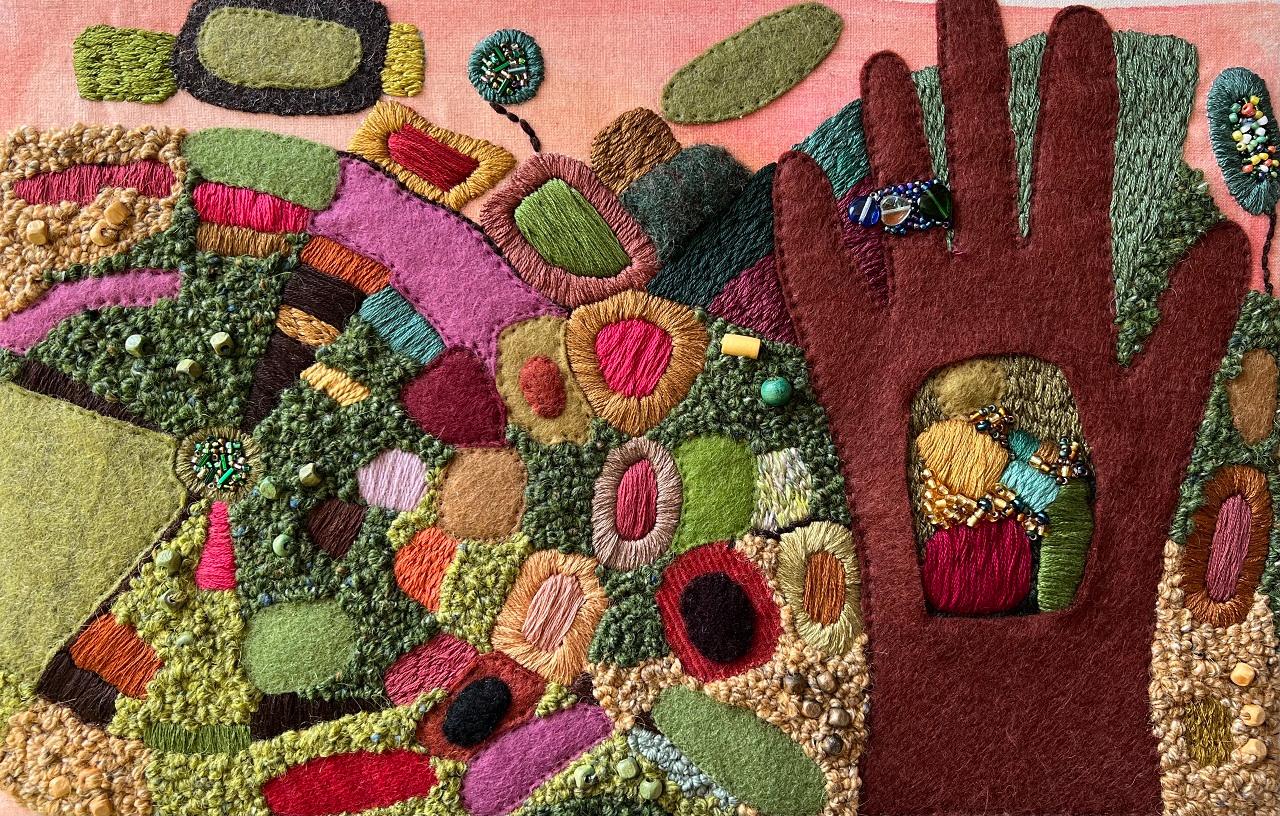
'Patterns in nature 3', by Sabine Kaner.
Your textile art often resonates with themes of identity and belonging, which are deeply connected to the Windrush narrative. What message do you hope your work conveys to both those directly impacted and the broader audience?
Identity and belonging are fundamental to the human psyche. We are social creatures and we all strive for acceptance. When the Windrush Generation arrived in this country, they had hopes and dreams for a better future. They came as part of the British Commonwealth and many had served in the British Armed Forces. In their home countries, they were taught more about British life and history than their own cultures. I hope that my work can fill a gap in areas like textiles, which lends itself to storytelling, but is missing narratives about the different identities and cultures that make up our society.
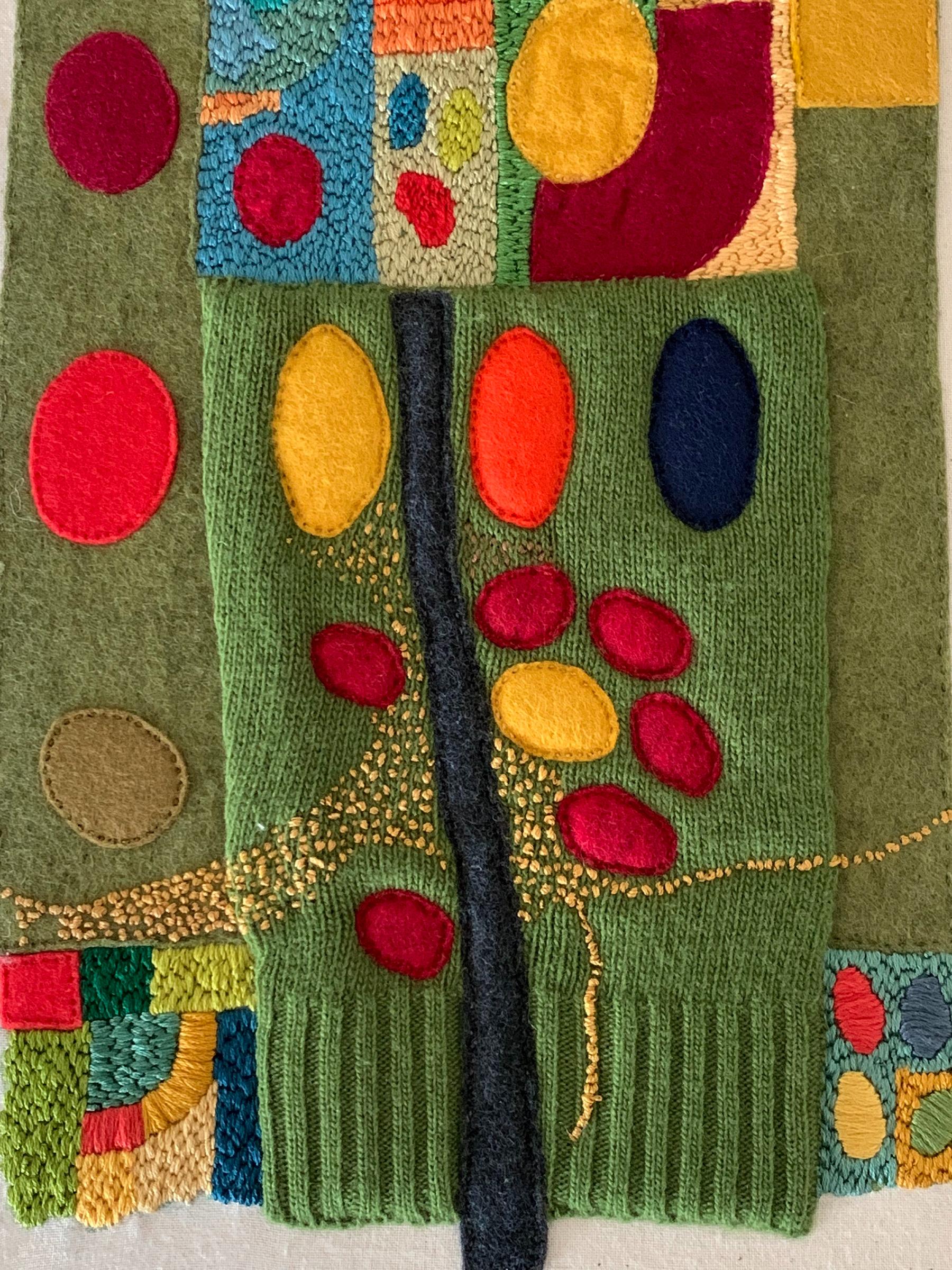
'Greensleeves', by Sabine Kaner.
Sabine Kaner for The Knitting & Stitching Show 2023
Sabine Kaner is a UK fine art textile artist. Her exhibition Hand Stitched Stories at The Knitting & Stitching Show 2023 at Alexandra Palace, London from 5 – 8 October 2023 and Harrogate Convention Centre, Harrogate from 16 – 19 November 2023.
Visit The Quilters' Guild in York for a free Heritage Open Days exhibition exploring the everyday lives of quiltmakers through historic quilts from the Collection. 11–19 September 2026.
SAVE THE DATE - Region 8 Exhibition
UK fine art textile artist Sabine Kaner's work is redolent with themes of identity and belonging. Her exhibition Hand Stitched Stories will appear at the Knitting & Stitching Shows at Alexandra Palace 5-8 October, and Harrogate 16-19 November.
